
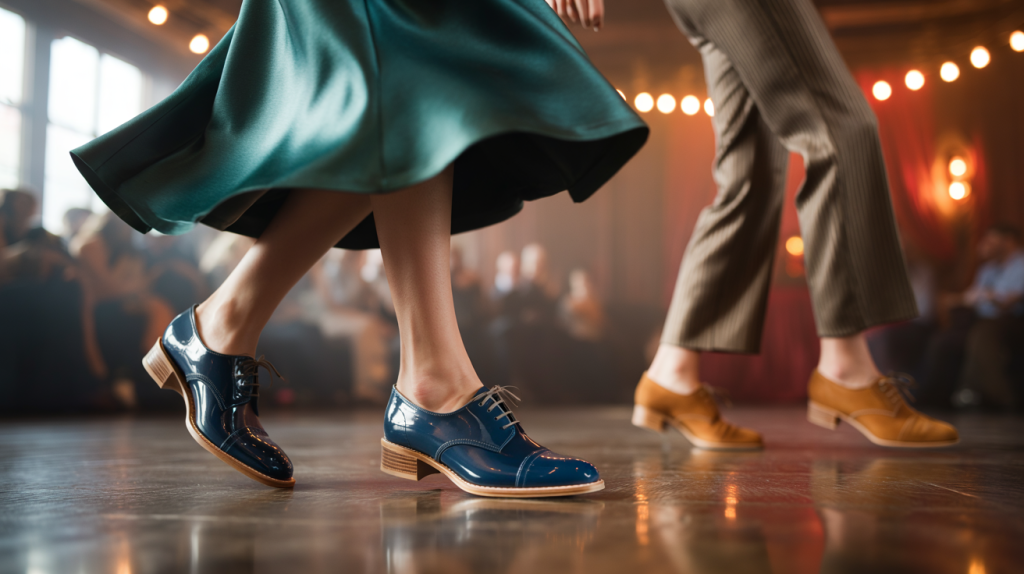
A packed floor, a favorite track, a clean pivot. Elegant women’s derby shoes bring that mix of polish and control dancers crave. With secure laces, a low stable heel and a sleek line under dresses or tailoring, they turn salsa, swing or a wedding set into pure ease instead of a battle with sore feet.
The essentials come fast. Choose a flexible forefoot for smooth rolls, a firm heel counter for locked in stability, and soles that balance glide and grip depending on the floor. Lace adjustment fine tunes the fit across the midfoot, which matters when tempo rises. The goal is simple : elegant derbies that let you dance longer with less effort, and still look sharp in photos.
Why women’s derby shoes shine on the dance floor
Here is the core idea : a derby’s open lacing creates adjustable comfort across the instep, something pumps or slip ons rarely match during turns or quick weight shifts. That adjustability solves the classic problem of swelling through the night, since a couple of eyelets can open the fit without losing stability.
Many social floors ask for versatility. Patent leather gives a glossy, dressy finish for formal events, while smooth calf or suede reads refined without stealing the outfit. The derby shape also keeps the toe profile neat, so you avoid clunky silhouettes that can clip a partner during close work.
Common friction points fade when the shoe flexes where the foot bends. A stitched forefoot that bends near the metatarsal line feels natural in cha cha breaks and swing triples. Add a firm heel cup and the ankle stays centered when the beat pushes faster.
Comfort and stability : what science and podiatrists say
Foot fatigue ruins joy. The American Podiatric Medical Association reported in 2014 that 77 percent of Americans have experienced foot pain, and half said it limited activities (American Podiatric Medical Association, 2014). For dancers, that translates into shorter nights and missed fun.
Low heels help. Harvard Health Publishing noted that a small lift around one inch can reduce strain on the Achilles and plantar fascia compared with dead flat soles, while towering heels ramp up forefoot load (Harvard Health Publishing, 2019). That is why dance friendly derbies usually sit in the low range : just enough elevation to relax the chain, not enough to tip weight forward.
Support details matter under pressure. Look for a stable shank through the midfoot to prevent the arch from collapsing when pushing off. A cushioned insole with responsive foam softens landings without that marshmallow feel that eats precision. When the anatomy is respected, rhythm feels easier and balance more consistent.
Materials, soles and styles that move with you
Material choice changes the ride. Smooth leather molds over a few sessions and breathes better than synthetics, a quiet win on warm floors. Patent leather looks sharp but can feel stiffer, so pair it with a pliable forefoot. Vegan options have improved, with microfibers that offer decent breathability and a refined finish.
Sole selection depends on venue. On polished wood, many dancers prefer suede outsoles for controlled slide in spins without that sticky stop. For mixed or unpredictable floors, a fine rubber or resin sole with light texture keeps confidence through quick direction changes. Outdoor transitions before a party call for rubber, then a clean on arrival to avoid debris underfoot.
Style is not a footnote. Almond or round toes save space during close holds and reduce pressure on the big toe joint. Brogue detailing adds character without making the shoe visually heavy. A thin welt keeps the profile sleek under wide leg trousers and midi dresses alike.
How to choose, fit and care for elegant derbies for dancing
Selection works best with a simple plan. Shop late afternoon when feet are slightly larger, wear the thin socks or tights used for dancing, and lace fully while testing quick steps and a gentle pivot. The heel should feel hugged without pinching, the forefoot flex should line up with your bend point, and the tongue should not bite when you rise onto the ball of the foot.
One concise checklist to keep choices clear :
- Open lacing for micro adjustment across the instep during the night
- Low stable heel around one inch for balance and reduced strain
- Flexible forefoot with a firm heel counter to anchor turns
- Soles matched to floors : suede for polished wood, fine rubber or resin for mixed spaces
- Breathable upper and lining to limit hotspots as tempo climbs
- Swap in supportive insoles only if they do not lift the heel out of the cup
A quick care routine keeps elegance intact. Brush suede before and after events to restore nap. Wipe leather with a barely damp cloth, then condition lightly so it stays supple. Rotate pairs so leather rests a full day between outings, which extends shape and comfort.
The last piece is sizing confidence. European lasts can run a touch narrower than some US fashion brands, so try two nearby sizes and trust the one that locks the heel while letting toes spread naturally. When that truely clicks, the shoe disappears and the music does the rest.
For those who dance between office and party, hybrid models with smooth leather uppers and discreet rubber bottoms bridge both worlds. They read elegant at the desk, then deliver reliable grip after dark. That small strategic choice turns spontaneous invitations into easy yeses.
Sources : American Podiatric Medical Association, 2014; Harvard Health Publishing, 2019.