
Exposition Mickalene Thomas Paris: why the buzz
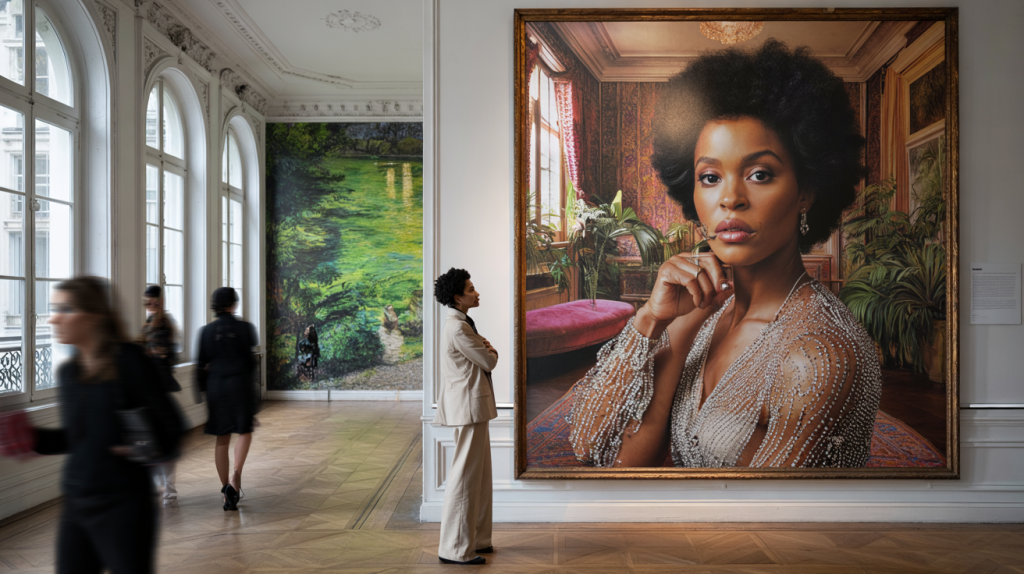
Paris keeps a close eye on Mickalene Thomas for good reason. Her monumental portraits and cinematic interiors, studded with rhinestones and layered with photography, collage, and enamel, rewrite who gets to be seen and how. When an Exposition Mickalene Thomas lands in the city, it draws fashion lovers, museumgoers, and students of visual culture alike.
The context sits clearly in the work. Born in 1971, trained at Pratt Institute and Yale School of Art with an MFA in 2002, Mickalene Thomas has built a practice that reframes art history through Black femininity, intimacy, and staged domestic spaces. France is not a side note here: a 2011 residency in Giverny sparked a suite of lush landscapes dialoguing directly with Claude Monet, and those images often reappear when Paris hosts her.
Mickalene Thomas in France: context, dates, and where shows happen
The artist’s rise accelerated after major museum milestones. In 2012, the Brooklyn Museum presented “Mickalene Thomas: Origin of the Universe”, a breakout exhibition that traveled in 2012‑2013 and put her large-scale interiors and portraits firmly on the global map. Since then, Paris galleries and institutions have kept the conversation alive, with gallery presentations and museum loans feeding a steady interest.
That French thread matters. Work inspired by Giverny in 2011 anchors her relationship with France, while pieces like the 2010 “Le Déjeuner sur l’Herbe: Les Trois Femmes Noires” speak directly to European painting lineages. For visitors, this means a Paris show usually toggles between art history and pop culture, between 19th‑century references and present‑day image economies.
Practical point that helps right away : Paris announcements often roll out in seasonal waves. When dates publish, tickets typically follow on the venue’s site, with timed entries during peak weeks. Galleries may keep entry free, while museums apply standard rates common to their program.
What to expect inside the exhibition: materials, themes, standout works
First observation once inside: scale. The compositions are big, lush, and deliberately staged. Photographs morph into collages, then into paintings crusted with rhinestones that catch the light like theater. The black-and-white of modernism meets saturated 1970s palettes, wood paneling, shag carpet, patterned textiles. It is not quiet art.
The themes stay precise. Beauty as self-definition rather than gaze. Interiors that feel like sets, where models hold the camera with their posture. History gets sampled and recast: Manet, Matisse, and 1970s album covers share the same air. The narrative moves across media, too, with video and photography laying the groundwork for the paintings.
A name to watch for on the wall labels: “Origin of the Universe” (2012). That series engages the canon head-on. Another frequent anchor, when on loan, is “Le Déjeuner sur l’Herbe: Les Trois Femmes Noires” from 2010. Both let visitors read how Thomas folds European references into current portraiture without losing the heat of lived experience.
Plan your visit in Paris: tickets, timing, tips
Visitors often rush the first rooms and miss the narrative flow between photography, collage, and paint. Slow down at the photo-collage stage; it unlocks how the final rhinestone surface is built. Then circle back to the video room if present. Sound and pacing in those films sharpen the reading of the portraits.
For those mapping out the day, keep an eye on the usual Paris players that program contemporary art at scale, alongside leading galleries presenting American artists. Official museum or gallery pages publish ticketing and schedules first, and newsletter alerts beat social posts for early access. When a floor plan is available, start with the smallest media and walk toward the largest. The progression clarifies technique and intention.
Simple prep helps, especially during busy weeks :
- Check the venue’s online calendar for late openings or quiet morning slots.
- Scan the press page for a checklist or brochure PDF to spot key works fast.
- Bring earbuds if the exhibition includes film rooms with QR audio.
- Pair the visit with a nearby collection showing 19th‑century painting to catch the art‑history dialogue in real time.
One last piece that ties everything together: biography as a timeline. Born in 1971, Yale MFA in 2002, major museum breakthrough in 2012, French residency in 2011 fueling ongoing dialogues with Monet and Paris. Those dates are not trivia. They map how the exhbition’s materials – from glittering rhinestones to staged interiors – become a living conversation between New York, Giverny, and the Paris art scene.