
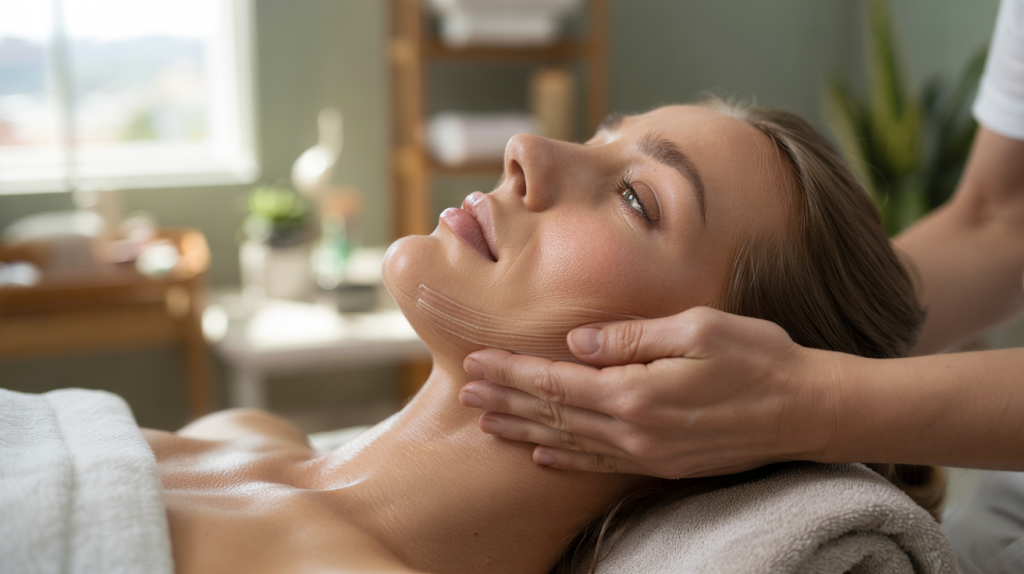
Jaw clenched, features tired, skin looking dull despite decent skincare? Fasciathérapie applied to the face promises lighter features, easier chewing, fewer tension headaches, and a more relaxed glow. Results can appear subtly after one gentle session, then consolidate with regular work as tissues decongest and muscles stop pulling so hard on the skin.
Here is the key context right away: fascia is the body’s connective web. On the face, it links muscles, expression lines, the jaw, even the scalp. Practitioners use slow, precise manual contacts to ease restrictions. Users report softer lines linked to tension, improved comfort in the jaw and temples, and a brighter tone from boosted micro-circulation. Evidence for face-specific outcomes remains limited, yet adjacent research on myofascial release and facial massage helps clarify what is realistic.
Fasciathérapie visage results: what you can see and when
The main idea is simple: when fascia glides again, the face stops fighting itself. Many notice immediate comfort – shoulders drop, the jaw stops gripping. The complexion often looks livelier that same day.
Short term, the work tends to reduce puffiness around eyes and along the jawline as tissues drain better. Expression can look fresher because overactive muscles finally let go. If the masseter has been on overdrive from grinding, that release reads on camera.
Common obstacles do show up. If stress habits continue non-stop or hydration stays low, results fade. People sometimes expect a facelift effect. This is not surgery, it is regulation and balance – often visible, sometimes discreet, always body-led.
What to expect after a session, in plain words :
- A feeling of lightness and warmth in the face within minutes
- Softer jaw and temple tension the same day or by the next morning
- Mild soreness or sleepiness for 24 hours when deep restrictions release
- Brighter skin tone from improved micro-circulation
- More comfortable chewing if bruxism has been active
What the evidence says in 2024: myofascial release, face massage, TMJ
Let’s adress the science first. The National Center for Complementary and Integrative Health notes in its 2022 overview that research on myofascial release is still limited and mixed for many conditions. Translation for the face: promising mechanisms, not many rigorous facial trials yet.
Zoom on related data. A Cochrane Review in 2015 on myofascial release for chronic low back pain found low-certainty evidence of small benefits versus sham or other care. Not the face, true, but it sets the tone on method quality and expectations.
Facial massage is closer to what you feel on the table. An experimental study published in 2018 reported that using a facial massage roller increased skin blood flow for more than 10 minutes after just 5 minutes of application – a plausible reason for that post-session glow. Increased perfusion does not equal wrinkle removal, yet it supports the visible fresh look many describe.
Numbers that matter for jaw tension: the National Institute of Dental and Craniofacial Research estimates that temporomandibular disorders affect about 5 to 12 percent of people, with pain and clenching common. Gentle work on the masticatory fascia can ease comfort for some of these cases, alongside dental care and behavioral strategies.
And yes, background aging plays a role. The American Academy of Dermatology has long cited that collagen production declines by roughly 1 percent per year starting in the mid-20s. So when fascia lets muscles relax and circulation improves, the face can look better, but it does not rebuild collagen like an energy-based device or prescription retinoid would. Different tools, different outcomes.
Technique, session flow, and how many appointments bring change
A facial fasciathérapie session tends to be quiet, hands deep but slow, sometimes almost still. The practitioner works along the jaw, cheeks, temples, scalp, and neck to free lines of pull. People often feel temperature shifts or a gentle spreading under the skin when adhesions ease.
First results often appear the day of or within 48 hours as tissues rehydrate and the nervous system downshifts. For people who clench nightly, effects last longer when paired with a mouthguard or stress management. Skincare sits better because the face is no longer armored.
How many sessions? That depends on goals. Acute jaw flare-ups may calm in a short series, while long-standing bruxism and tech-neck tension require maintenance at spaced intervals. The useful test is simple: photograph before, repeat in natural light after two to three visits, and track comfort in chewing and headaches.
Choosing a practitioner and clear red flags
Training matters. Look for a practitioner with specific education in fasciathérapie or myofascial release for the face, and if possible a regulated background such as physiotherapy or osteopathy. Ask about their approach to the temporomandibular joint and neck – the face rarely acts alone.
Safety first. Anyone with recent facial surgery, active skin infection, uncontrolled acne flares, or acute jaw injury should seek medical clearance before manual work. Sensitive skin types benefit from fragrance-free oils or no product at all during the session.
Promises are a compass. Be wary of claims to erase wrinkles or treat medical conditions outright. Solid practitioners talk about comfort, mobility, and tissue quality, and refer you to dermatology or dentistry when needed. Good collaboration beats big promises every time.
For action now: define one realistic goal – less clenching pain, easier mornings, a more rested look – then book a trial session with clear before-and-after photos and a check-in at 48 hours. The body gives honest feedback, fast.