
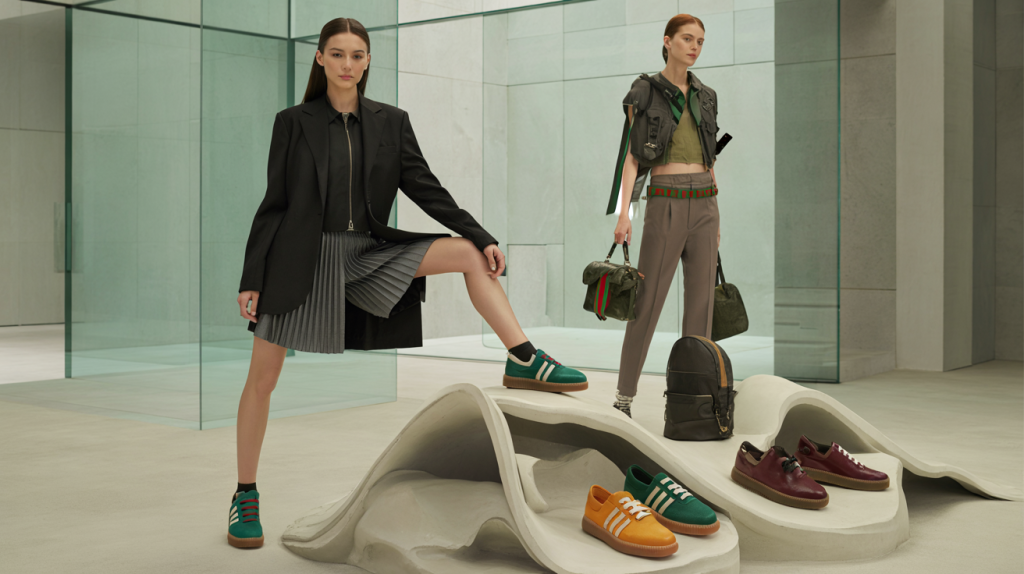
Hyped capsules are landing fast in 2025 and the rules feel different. Luxury houses are teaming up with sportswear heroes and cult creatives, while drops arrive in tight waves that sell out before lunch.
The stakes are clear. Collaborations now drive attention, footfall and full price sell-through. They also anchor brand storytelling at a moment when shoppers expect novelty without compromise on quality or values.
Fashion Collaborations 2025: what changes and why it matters
One observation keeps coming back. The best 2025 collaborations mix immediate desirability with long game value, so the purchase makes sense beyond the first scroll.
The backdrop is not vague. LVMH reported revenue of 86.2 billion euros for 2023, in an update published on 25 January 2024, which underlines the appetite for luxury culture that fuels high profile tie ups. Crocs, a collaboration magnet with designers and artists, disclosed 2023 revenue of 3.96 billion dollars in its February 2024 results. Scale meets buzz.
Names already shaping conversations this year span different lanes. Adidas keeps momentum with design led takes on terrace classics. Nike develops fashion forward capsules around tailoring and women led sport. Luxury houses experiment with utility icons and workwear codes to refresh their silhouette language.
That variety reduces fatigue. A capsule can start as a sneaker story, pivot to knitwear and finish with a micro run of accessories. It creates a rhythm that stays fresh across months, not days.
Proven playbooks from Adidas, Nike, Gucci and more
Data points back up the instinct. Lyst’s Year in Fashion 2023 highlighted the Adidas Samba as product of the year, boosted by collaboration energy and celebrity wear. The lesson carried through 2024 and still resonates in 2025 when a classic model returns with new materials or colors.
Timing matters. Brands that split releases into waves extend attention without overstock, a tactic seen from streetwear labels in 2023 and adopted more widely last year. It mirrors entertainment drop calendars and keeps resale prices stable rather than spiky.
Materials and make also moved center stage. Premium leather, recycled nylon and certified wool show up in product pages with clear sourcing callouts. When a collaboration uses a better last or an upgraded sole, conversion jumps because the difference is visible in hand, not just in photos.
Distribution builds credibility. Capsules that go through a short list of brand flagships and a few specialist retailers drive trust. When the same product appears everywhere at once, shoppers pause. Limited doors send a simple message that aligns with price positioning.
On cultural impact, luxury crossovers with outdoor and utility labels keep rolling. Gucci and The North Face set the template years ago. The current wave sticks to function first pieces that work in real life and photographs, which solves the daily styling problem for many.
How to read a 2025 collab before it sells out
Start with the designer intent. If the capsule brings a new pattern, a revised fit or a construction tweak, it has a reason to exist. If it only adds a logo, the lifespan shrinks fast.
Check the calendar and price ladder. A core drop with fair pricing lands first, then a limited color or material a few weeks later. That cadence invites early adopters while keeping a path open for latecomers who still want in. It feels fair and it works.
Look for sourcing transparency and third party validation. Certifications listed on the product page, or a line crediting an Italian tannery or a Japanese mill, signal substance. Retailers known for tight edits rarely onboard weak collaborations, which is why their buy tells a lot.
Past performance is a clue, not a guarantee. When a partnership has sold through across two or three seasons, it usually means the design chemistry is real. It also reduces the risk of size runs sitting for months. That said, trend fatigue can arrive quietly and all at once. It already has happend to more than one hot shoe.
One more angle is resale behavior. A modest premium on secondary platforms after week one suggests healthy demand and right sizing. Sky high flips fade quickly when supply normalizes, while zero premium points to an audience mismatch or pricing that missed the mark.
All signs point to collaborations staying central in 2025 but with higher expectations. Shoppers want pieces that slot into daily wardrobes, not costume moments, and brands that publish the how and the why behind each item. The most resilient capsules act like small collections with fit, fabric and function dialed in. That is where excitement meets longevity, and where the next great drop often hides.