
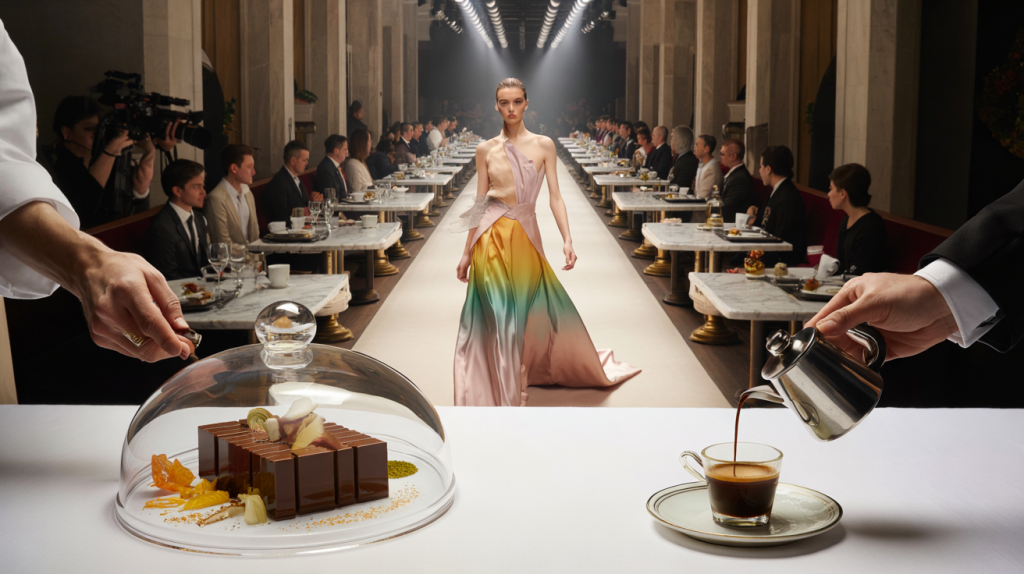
Runways now plate style and flavor. Dates, numbers and real cases explain why luxury brands cook up cafés and Michelin stars to win time, loyalty and buzz.
Spotlights warm the catwalk. Then the room fills with the scent of espresso, toasted brioche, maybe citrus zest. Fashion is not just seen anymore. It is tasted. From Gucci to Louis Vuitton and Dior, the industry pairs shows with chefs, cafés and tasting moments that extend the experience well beyond a 12-minute runway.
The move is not a gimmick. Bain et Company’s Luxury Study 2023 estimated the global luxury market at about €1.5 trillion, noting experiential luxury’s renewed momentum after the pandemic. As attention splinters, brands turn to hospitality to create memory, drive footfall and anchor loyalty during fashion weeks and between seasons.
Why the fashion-food fusion took off : attention, experience, loyalty
The main idea lands fast : audiences crave experiences that feel personal, sensory and shareable. Fashion weeks deliver spectacle, but hospitality keeps people onsite longer and returns them later.
McKinsey et Company’s 2021 Next in Personalization report found that 71 percent of consumers expect personalized interactions, and 76 percent feel frustrated when they do not get them. A coffee poured by a maison, a dessert named after a bag, a chef’s menu tied to a collection theme – these touches convert curiosity into attachment.
During recent seasons, brands framed food as a natural extension of their codes. The problem they aim to solve is classic : a crowded calendar and vanishing attention. A table, a pastry box or a reservation turns a fleeting moment into a ritual that repeats.
Runway to table : concrete cases, real dates
Gucci opened Gucci Osteria da Massimo Bottura in Florence in 2018. The restaurant received one Michelin star in 2020, according to the Michelin Guide. A Beverly Hills outpost followed in 2020, bringing the concept to the U.S.
Prada took an 80 percent stake in historic Milan pastry house Marchesi 1824 in 2014, as announced by Prada Group. The green-boxed candies and marble counters mirror the brand’s retail language and circulate daily, not just during show week.
Louis Vuitton launched Le Café V in Osaka in 2020 inside its Maison Midosuji, with chef Yosuke Suga. In Paris, the patisserie “Maxime Frédéric at Louis Vuitton” opened in 2022 at Cheval Blanc Paris, bringing monogrammed chocolate and seasonal tartlets into the LVMH hospitality ecosystem.
Dior reopened 30 Montaigne in 2022 with Restaurant Monsieur Dior led by chef Jean Imbert, adding a permanent culinary address to a flagship that already houses a gallery and boutique. The table becomes part of the pilgrimage.
The blending predates today’s cycle. Burberry launched Thomas’s café in London in 2015, and Ralph Lauren opened The Polo Bar in New York in 2015. On the runway itself, food-coded scenography still resonates : Chanel’s Fall 2014 “supermarket” set turned a ready-to-wear show into a cultural moment that lived across millions of screens.
Typical mistakes when fashion meets food
Some collaborations stop at the Instagram shot. A logo on a croissant without a clear culinary point of view rarely earns repeat visits, and it can dilute brand equity.
Long lines that block store access or a booking system that crashes during fashion week frustrate guests. The result : negative word of mouth on precisely the day a brand needs goodwill.
Another trap shows up in menu design. If dishes do not reflect the collection’s materials, colors or narrative, the experience feels bolted on. Guests notice. Millenials, too.
What works : a simple playbook for authentic fashion and food
Brands that succeed treat hospitality like a craft, not a prop. The approach stays precise and measurable.
– Partner with chefs who hold clear credentials, ideally verifiable awards or guide mentions. Align menus with collection themes through ingredients, color or texture. Localize pop-ups during fashion weeks with seasonal produce. Offer limited-time items that turn into keepsakes. Track impact with footfall, dwell time and repeat booking rates. Design spaces that photograph beautifully but function as real dining rooms, with acoustics and seating comfort considered. Price transparently to broaden access without eroding luxury cues.
The pattern makes sense. Experiential luxury recovered because people missed gathering, tasting, lingering. Bain et Company’s 2023 reading of the sector underlines that recovery. When a maison plates an experience that matches its craft in leather or tailoring, the runway’s energy flows into a daily habit – a morning coffee, a weekend lunch, a pre-show dessert.
One piece often remains missing : continuity. Seasonal pop-ups spike interest but fade fast. Permanent addresses like Gucci Osteria in Florence or Restaurant Monsieur Dior at 30 Montaigne prove a steadier model. They offer reservations during show week, and a table for the rest of the year, where the brand’s story keeps cooking.