
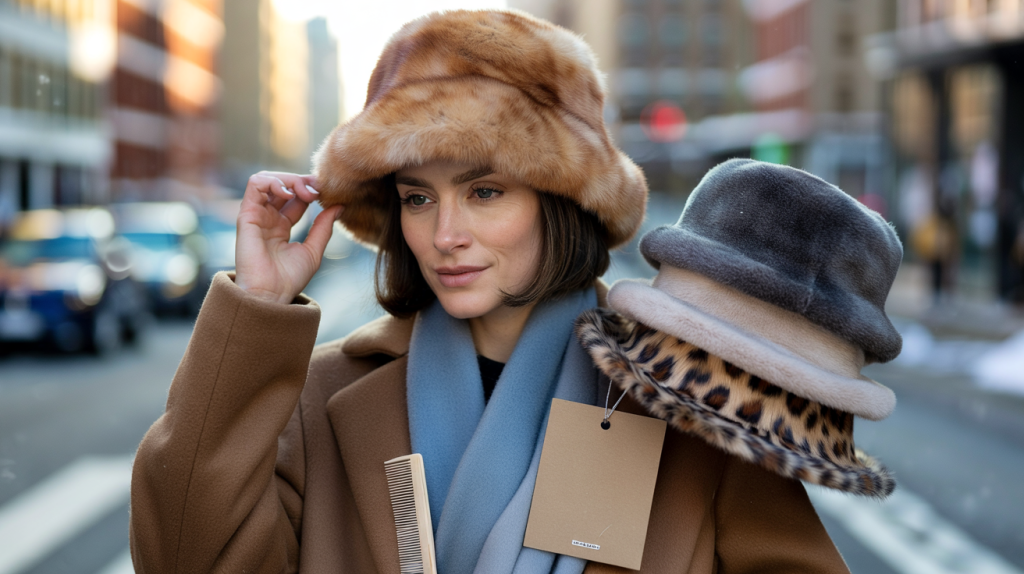
Searches for “chapeau fausse fourrure” spike when temperatures drop, and for good reason. A good faux fur hat delivers warmth, a plush look, and a modern stance on ethics that many readers want right now.
The fashion world already moved. Gucci went fur free in 2017, Prada Group in 2019, Canada Goose in 2021, signaling an industry shift toward alternatives to real fur. Humane Society International estimates 100 million animals are killed for fur each year, while the United Nations Environment Programme links fashion to 8 to 10 percent of global carbon emissions, pushing shoppers to rethink materials and care habits (sources : Business of Fashion 2017, Prada Group 2019, Canada Goose 2021, Humane Society International, UNEP 2019).
Why a Faux Fur Hat Works Now : Style, Warmth, Ethics
First, warmth. Dense pile and a soft lining trap air close to the scalp, which helps on windy commutes and outdoor weekends. A beanie shape reads casual, a bucket adds a fashion kick, and a trapper cut handles real cold.
Then the look. The best faux fur mimics natural guard hairs and underfur with subtle sheen, not a glossy plastic shine. Neutral shades deliver polish. Saturated color turns the hat into the outfit’s focal point.
There is also the value question. A well made faux fur hat can cost less than luxury shearling yet still elevate a wool coat. Everyday wear multiplies cost per use quickly, especially in long winters.
How to Choose a Chapeau Fausse Fourrure That Looks Luxe
Many readers touch the fabric first, then regret the purchase when it mats after a week. Feel matters. Run fingers against the grain and back. If the pile springs up and the base is not visible, the density is decent.
Materials do the heavy lifting. Recycled polyester or acrylic reduces reliance on virgin oil based fibers. Certifications like OEKO TEX Standard 100 limit harmful substances in finished textiles. Labels that state recycled content give transparency that marketing fluff does not.
Fit is often overlooked. A hat that is slightly too tight compresses pile and ruins the silhouette. Interior bands in cotton or soft viscose reduce static and keep hair smoother.
Color choice steers versatility. Camel, chocolate, charcoal and black pair with most coats. Leopard or ice blue are fun for weekends, less flexible at the office. One neutral, one statement piece tends to cover a millenial winter wardrobe.
Quick checklist to buy with confidence :
- Touch test : pile bounces back, base not visible when brushed
- Fiber content : recycled polyester or acrylic with OEKO TEX label
- Lining : smooth, breathable band that reduces static and hair snag
- Shade : one neutral for daily wear, one bold for nights out
- Construction : even seams, no loose threads, shape holds when set down
Care, Cleaning and Longevity : Keep Faux Fur Soft
Most faux fur hats recover with a simple routine. Shake after wear to lift pile. Store on a shelf, never crushed at the bottom of a tote. A wide tooth comb revives flattened spots in seconds.
For cleaning, spot care beats constant washing. A damp microfiber cloth and a drop of gentle soap lift city dust without soaking the base. If a full clean is needed, cold water and air dry preserve shape. Heat flattens fibers and adds shine that looks inexpensive.
There is an environmental angle when washing synthetics. The International Union for Conservation of Nature estimates 35 percent of primary microplastics in the oceans come from synthetic textiles released during laundering, which argues for less frequent washes and protective laundry bags when cleaning at home (source : IUCN 2017).
Prices, Brands and Real Numbers : What the Data Says
Entry level faux fur hats usually start around 20 to 40 dollars. Mid tier designs with denser pile and better linings sit near 60 to 120 dollars. Designer versions climb higher when craftsmanship and limited runs come in.
Longevity links to care and fiber quality more than logo. A dense recycled polyester pile tends to resist matting longer than loosely knit acrylic. Two seasons of regular wear is common with basic care, three or more with mindful storage.
Sustainability claims deserve context. While faux fur avoids animal harm, it relies on synthetics. UNEP’s emissions figure shows why fashion’s impact is under scrutiny, and Ellen MacArthur Foundation notes less than 1 percent of clothing is recycled into new clothing, which makes durable, low wash purchases smarter than impulse buys that shed and get tossed quickly (sources : UNEP 2019, Ellen MacArthur Foundation 2017).
What closes the loop is simple. Pick a hat with recycled content and verified chemical safety, care for it gently, and rehome it when style needs change. Trend power meets practical warmth, without the baggage of real fur.