
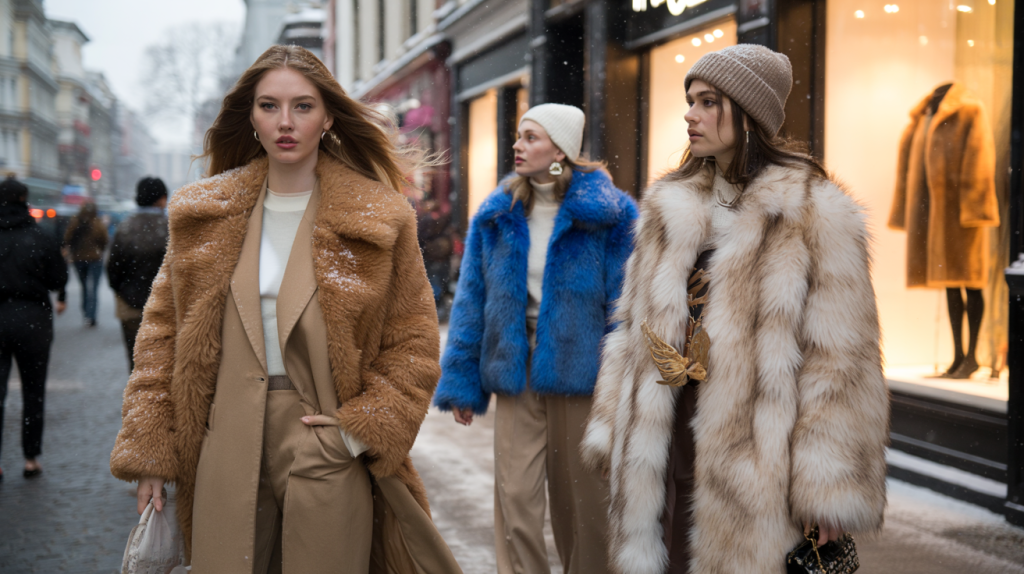
The plush coat trend just roared back. Faux fur is everywhere this winter, from high street to luxury, delivering the big look people want without real fur’s baggage. The shift is not a whisper. Major houses dropped fur, laws changed, and innovative fibers made faux feel and look better than before. Result: a statement layer that reads modern, kind, and warm.
Here is the context that set the tone. Kering said in September 2021 that all its brands would go fur-free from fall 2022. California’s statewide ban on new fur sales took effect on 1 January 2023. Israel became the first country to ban the sale of fur for fashion in 2021. With rules, runway choices, and new materials aligning, faux fur moved from alternative to new winter favorit.
Faux fur’s comeback this winter: style, ethics, and the facts
The main idea is simple: people want drama and comfort that match current values. Faux fur hits both. The silhouettes are voluminous, the colors range from quiet camel to electric blue, and the texture sells the outfit in one zip. Price points vary widely, so access expanded beyond the niche luxury coat.
There was also a problem to solve. Real fur became a reputational risk and a sourcing headache. As more retailers and fashion weeks turned away from fur, brands needed a cozy hero piece that aligns with cruelty-free expectations. Faux fur answered with better handfeel and less plastic shine than a decade ago.
What is driving the return of faux fur coats
Designers and retailers made clear moves. Gucci went fur-free in 2017, Prada in 2019, and Yoox Net-a-Porter Group stopped selling fur in 2021. Canada Goose announced it would end the use of fur by the end of 2022. Copenhagen Fashion Week banned fur on its runways from 2023. Shoppers noticed.
Materials improved fast. Ecopel and DuPont’s Sorona helped launch plant-based blends such as KOBA Fur Free Fur in 2019 with Stella McCartney. Sorona’s polymer uses 37 percent bio-based content by weight, which nudged faux fur away from all-petroleum mixes. The result feels lighter, sheds less, and keeps that rich pile.
There is a sustainability check to consider. Most faux fur still relies on synthetics like polyester and acrylic, which shed microfibers. A 2016 study by the University of Plymouth found that a single domestic wash can release up to 700,000 microfibers. That is why smarter care and better filters are part of the conversation now.
How to choose and care for a faux fur that lasts
People often grab the softest coat and call it a day. Then the lining pills, the pile mats, or the color dates by February. A few practical moves change the outcome and stretch the cost per wear.
Try this short checklist when shopping or maintaining a faux fur:
- Look under the hood : check the lining quality, seam strength, and weight. Good structure keeps the pile from collapsing.
- Prefer recycled or bio-based fibers listed on the label. Recycled polyester or Sorona blends are a step up from virgin acrylic.
- Choose timeless lengths and shades for work and weekend – mid length, black, chocolate, ivory, or camel travel well.
- Spot clean with a damp cloth, air dry flat, and brush with a wide-tooth comb. Save machine washes for emergencies only.
- Use a microfiber-catching bag or filter when washing to curb fiber release, then line dry.
- Store on a broad hanger with space around it, not crammed between heavy coats.
A quick example helps. Swap a glossy, very long shag for a mid length teddy in recycled fibers. The mid length slips under a trench, rides the subway without dragging, and taps into day-to-night looks. It keeps the plush look and dodges the one-season costume effect.
What the numbers say about fashion’s fur-free shift
Signals stack up across policy, brands, and supply chains. Kering’s 2021 decision made fall 2022 fur-free across Saint Laurent, Balenciaga, and others. California’s AB 44 ban started in 2023. Israel’s 2021 regulation ended fur sales for fashion nationally. The Fur Free Alliance reports that more than 20 European countries have banned or phased out fur farming. Fur Free Retailer lists more than 1,500 brands and retailers that committed to going fur-free.
Synthetics still dominate fibers, which shapes faux fur’s footprint. Textile Exchange’s 2021 report showed polyester accounted for about 52 percent of global fiber production in 2020. Recycling lags: the Ellen MacArthur Foundation estimated in 2017 that less than 1 percent of textile material is recycled into new clothing. Those two facts explain why care, durability, and end-of-life plans matter as much as the purchase.
So where does that leave winter style now? The market already shifted away from real fur. Faux fur carries the look and solves the ethics issue, while innovation tackles materials. The missing link is scale in circular systems – better mechanical and chemical recycling, and broader access to microfiber filters. Until then, smart fabric choices, low-wash care, and resale keep that plush coat in rotation and on-trend without the side effects.