
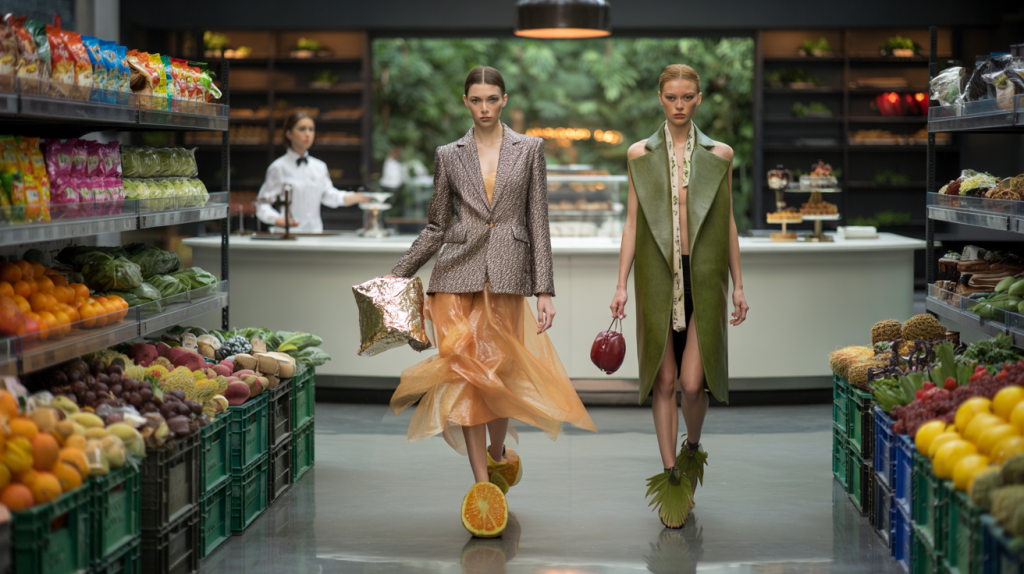
Food is no longer a prop. It steals the show. From cereal-box aisles to chip-bag clutches, runway sets and looks now borrow the language of snacks, restaurants and packaging to spark instant recognition and clicks. The message is simple : taste sells culture, and culture sells collections.
The movement did not appear overnight. Chanel staged a full supermarket for Fall 2014 at the Grand Palais. Demna Gvasalia turned a Lay’s potato chips packet into a Balenciaga clutch during Spring Summer 2023. KFC and Crocs dropped a chicken bucket clog and, according to KFC statements in 2020, it sold out in 30 minutes. Fashion has discovered that food cues create memories, photos and queues.
Why food shows up everywhere in runway shows
Attention is scarce, appetite is universal. Designers now tap taste and smell to make collections feel immediate and shareable, not just beautiful. Hospitality adds another layer : Gucci opened Gucci Osteria with Massimo Bottura in 2018, and the Florence dining room received a Michelin star in 2020 according to the Michelin Guide. Louis Vuitton launched Le Café V in Osaka in 2020, while Prada took a majority stake in the historic patisserie Marchesi 1824 in 2014.
Sustainability also pushes the trend forward. The United Nations Environment Programme reported in 2021 that food waste contributes an estimated 8 to 10 percent of global greenhouse gas emissions. Transforming byproducts into textiles lets brands turn waste into storytelling and function at once.
The result on catwalks : sets that look like markets or cafés, prints that nod to pantry staples, and materials made from orange peels, grapes or cactus. It feels playful. It reads as responsible when done with rigor.
Viral runway moments that changed the tone
Chanel’s supermarket show in 2014 reset the bar for immersive sets, with models browsing branded shelves before walking. The images flooded timelines and taught the industry that grocery iconography can look ultra luxe when reframed with tailoring and tweed.
Balenciaga’s Spring Summer 2023 Lay’s clutch did the opposite move : it shrank a familiar snack bag into an accessory, a sly joke that went everywhere online once the house and Lay’s teased it on Instagram in October 2022. Short, punchy, instantly memed. That is the social engine brands chase.
Collaborations keep the heat on. The KFC x Crocs clogs released in July 2020 sold out in half an hour, a figure KFC highlighted at launch. Dolce and Gabbana peppered prints with pasta and cannoli in 2017, while Fendi Cafes popped up in 2021 from Miami to Dubai to extend a show’s atmosphere into daily life with cappuccinos and monogrammed pastries.
Materials you can almost eat : Orange Fiber, Piñatex, Vegea
Textiles tell a deeper story than props. Orange Fiber, an Italian startup, turns citrus juice byproduct into a silk like fabric. The company notes that Italy’s juice industry produces roughly 700,000 tons of citrus byproduct a year, and Salvatore Ferragamo used the fiber in a 2017 capsule collection.
Piñatex, developed by Ananas Anam from pineapple leaf waste, moved from early prototypes to mainstream capsules within a few seasons, then reached high street visibility through brands experimenting with non leather accessories. H and M featured citrus based fabrics and plant based alternatives such as Piñatex in its Conscious Exclusive collection in 2019, and later showed grape based Vegea in 2020 according to the company’s collection notes.
Designers like this category because it links runway novelty to measurable impact. Less waste from farms, fewer virgin inputs, and a tactile story for sales associates to share when clients touch a bag or skirt.
How brands turn taste into strategy : what works, what backfires
Audiences enjoy the wink, but they punish gimmicks. The winning play joins culture, craft and context, then measures what the moment actually delivers beyond likes.
Here is the practical checklist many teams now use when food crosses fashion on a runway or capsule :
- Anchor the reference in brand DNA : a café, a regional ingredient, a family recipe, not a random meme.
- Pair the show with hospitality : a pop up bakery, a chef residency, or a tasting that extends the collection’s palette.
- Choose materials with receipts : citrus, grape or cactus textiles with traceable sourcing and care instructions shoppers understand.
- Share clear metrics : sell through after show, waitlist length, dwell time at pop ups, press quality not only volume.
- Respect food culture and IP : collaborate with the original brand or producer, credit artisans, and keep legal cleared before the tease.
Real world examples show the logic. Gucci’s Michelin starred Osteria gives diners craft they can taste, then converts that emotion into store visits next door. Prada’s investment in Marchesi 1824 wraps heritage into a pastry box customers carry on the street, a walking campaign. On the runway, Orange Fiber or Vegea turn sustainability from a paragraph into a garment you can touch.
The missing link for many labels remains measurement. Track how a supermarket set or a chef partnership moves product categories, not just reach. If the idea brings millenials to a pop up, convert that footfall into appointments, care services and loyalty data. The moment tastes great. The value comes when the flavor lingers.
Food and fashion now speak the same language because both sell memory. The smartest shows taste local, feel global, and build systems that keep serving long after the last look exits.
Food meets runway : from Chanel’s supermarket set to KFC x Crocs sellouts, discover how designers use taste, materials and hospitality to win attention and sales.