
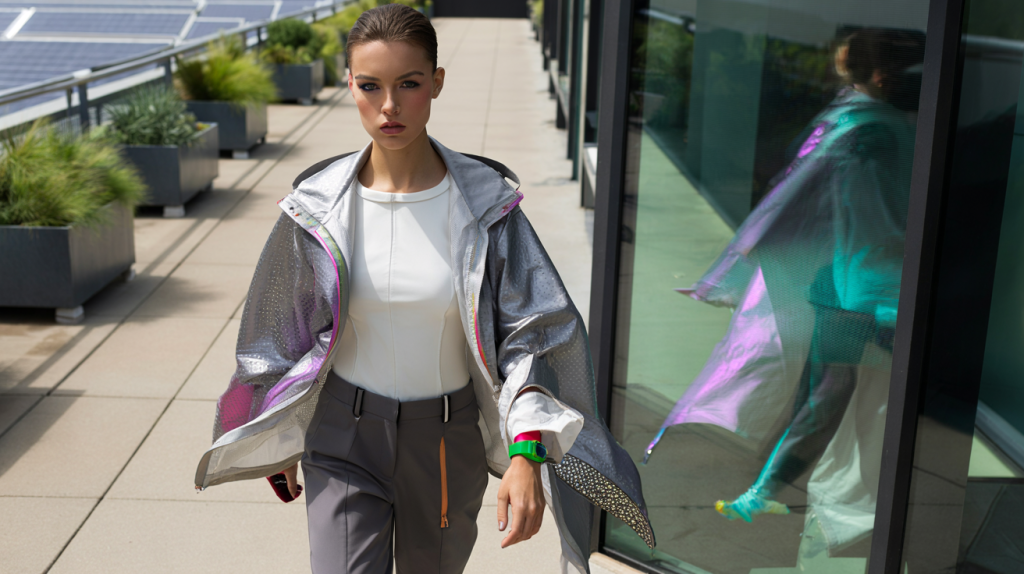
Metallic sheens, clean lines, smart textiles that react to light or heat. Futuristic style has jumped from sci‑fi sets into daily wardrobes, driven by tech and the push for cleaner fashion. The context is real: the fashion industry accounted for about 4% of global greenhouse gas emissions in 2018 – 2.1 billion tonnes CO2e – according to McKinsey et Global Fashion Agenda in 2020. At the same time, consumers embraced connected gear, with IDC reporting 492.1 million wearables shipped in 2022.
This mix – sustainability pressure and rapid tech adoption – shapes what looks modern now. Think recycled high‑gloss fabrics, modular silhouettes, and accessories printed to order. Big players tested bio‑based leathers, and AR try‑ons moved from gimmick to driver of buying confidence. Shopify said back in 2019 that using 3D models could lift conversion rates by up to 94%. So the question is not if the look is coming, but how to wear it without turning into a costume.
Futuristic Style in Fashion: What It Looks Like Now
Sleek, layered, almost aerodynamic. Futuristic style favors monochrome or optic contrasts, reflective trims, and engineered textures that catch the light. The main idea: pieces that feel designed, not decorated.
There is an underlying problem to solve. Style must feel advanced yet easy to live with. Shiny jackets crease, white technical knits stain, and fully silver outfits rarely work at 9 a.m. The sweet spot sits between performance and polish – breathable coatings, water‑repellent pants, and sneakers with sculpted midsoles that look like the future but walk like today.
Materials and Technology Behind the Futuristic Look
Textiles set the tone. Less than 1% of clothing gets recycled into new clothing, said the Ellen MacArthur Foundation in 2017, which explains the rush toward recycled nylon, mono‑material garments, and bio‑based options. Adidas unveiled a Mylo mycelium leather Stan Smith concept in 2021, a clear signal that lab‑grown textures are entering mainstream design calendars.
Production tech changed the silhouette too. The additive manufacturing industry grew 18.3% in 2022 to around 18 billion dollars, according to Wohlers Associates 2023. Designers use 3D printing for lightweight lattice accessories and custom midsoles that would be impossible by hand. On the retail side, AR try‑on and accurate 3D models reduce guesswork. Shopify’s 2019 data on 3D models lifting conversion – up to 94% – showed that better visualization drives action and can cut costly returns.
The wearable layer matters as well. IDC counted 492.1 million wearable devices shipped in 2022, even in a down year. That puts smartwatches, rings, and fitness trackers in the same conversation as belts or bags. A watch face that shifts with the light pairs naturally with iridescent fabrics and heat‑mapped knits.
How to Wear Futuristic Style Every Day
Start simple, then dial it up. A reflective collar or a ripstop overshirt says future without shouting. If the mirror screams spaceship, scale back one element and switch to matte.
Example that keeps its cool: charcoal technical trousers, a white structured tee, a silver‑grey wind shell with micro‑perforations, and one 3D‑printed cuff. Add knit sneakers with a sculpted sole and the look lands clean, not cosplay. Yes, it feels different – but it reads confident.
Care is part of the design. Technical fabrics want gentle cycles and air drying. Bio‑based materials dislike harsh detergents. Treat those rules like features, not chores, and pieces will last longer, which is the futuristic mindset in practice.
Quick moves that work now :
- Anchor with neutrals – black, graphite, optic white – then add one high‑gloss layer.
- Pick modular pieces with zips or snaps to reconfigure length or volume.
- Swap leather for mycelium or plant‑based alternatives when available.
- Try one 3D‑printed accessory for structure without weight.
- Use AR try‑on or 3D views when shopping to validate fit and texture.
- Choose wearables with swappable bands so the tech blends with outfits.
From Hype to Habit: Building a Future‑Proof Wardrobe
Here is the twist. The look only feels modern if the lifecycle does too. That means mono‑material tees that can be recycled, repairable zips, and fewer returns thanks to better visualization. The climate math is written already by McKinsey et Global Fashion Agenda in 2020 – fashion’s 4% share of emissions will not shrink without scaling circular design and smarter buying.
A practical path emerges. Favor brands publishing material breakdowns and care guides, pick items that work across seasons, and lean on on‑demand models when possible. 3D printing small runs, AR sizing to reduce mistakes, and bio‑based textiles for leather‑like touch all push in the same direction. It is not about owning a chrome jumpsuit. It is about assembling a set of adaptable, low‑impact tools that look right in 2025 and still feel right in 2030. Start with one upgrade this week – a reflective shell or a recycled ripstop pant – then iterate. The future rarely arrives overnight, it sneaks in one well‑chosen piece at a time, definitly.
Sources : McKinsey et Global Fashion Agenda, “Fashion on Climate” 2020; IDC, Worldwide Wearables Market 2022; Ellen MacArthur Foundation, “A New Textiles Economy” 2017; Wohlers Report 2023; Shopify, AR and 3D model conversion uplift 2019.