
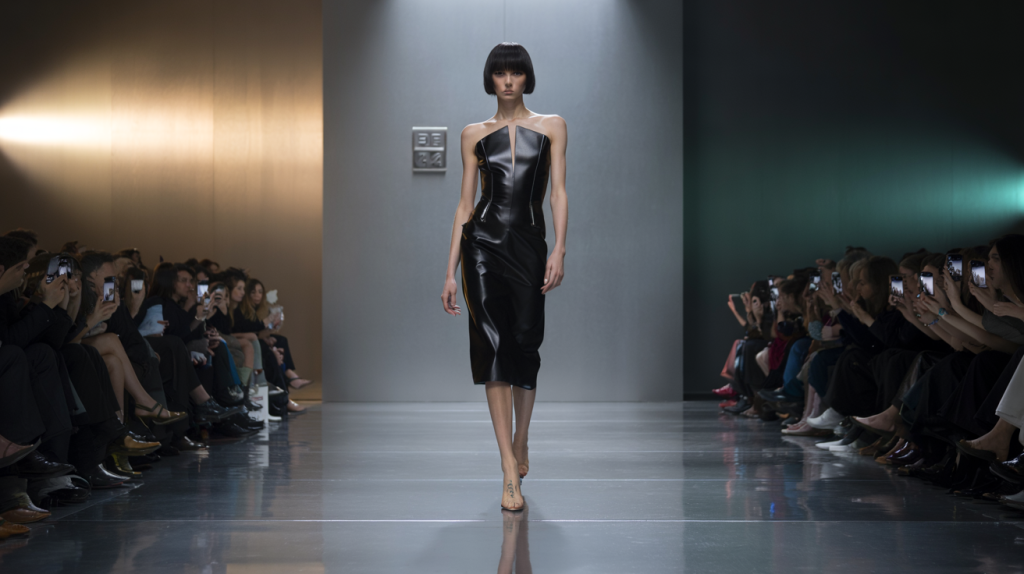
Viral backstage talk meets hard facts : why a single Givenchy runway moment turned into the day’s most-watched fashion clip, and what it really tells about the house now.
Paris Fashion Week tends to crown one headline. This time, it is a Givenchy défilé detail that set social feeds on fire : a mannequin moment that viewers replayed frame by frame, then shared within minutes across Instagram Reels and TikTok. The brand’s stagecraft has long invited scrutiny. Founded in 1952 by Hubert de Givenchy, the house is no stranger to spectacle, and the spotlight only sharpened after creative leadership shifted in June 2020 with the arrival of Matthew M. Williams, then again with his exit in December 2023, both announced by LVMH and the house.
What sparked the buzz at the Givenchy show sits at the crossroads of casting, styling and choreography. One striking walk, a silhouette that felt sharply sculpted, and a camera angle close enough to turn a model into a meme. That formula finds an eager audience. TikTok said it reached 1 billion monthly active users in September 2021 according to the TikTok Newsroom, while short video now drives discovery for fashion at a scale that eclipses front rows. When the clip hit, it travelled fast, which was predictable, almost mechanical.
Givenchy runway buzz explained : what viewers actually see
The recurring pattern is simple. A strong Givenchy look enters. The mannequin silhouette conveys a clear idea, sometimes severity, sometimes purity. Cameras lock on. Then one distinctive element pulls focus, whether a neckline, a heel height or the line of a razor cut bob. Givenchy’s runways are built for that fast read, a tactic honed since Riccardo Tisci’s tenure and sharpened again during Williams’s shows in September 2023 for Spring Summer 2024 in Paris.
There is precedent for viral lift. On 11 September 2015, Givenchy staged its Spring Summer 2016 show in New York under Riccardo Tisci with artistic direction by Marina Abramović, inviting hundreds of members of the public. That night generated wide coverage and cemented a template where one image could anchor the conversation. The brand understands how a single model pass can define perception for an entire season.
Casting choices also frame the conversation. Industry tracking by The Fashion Spot reported record racial diversity on global runways in Spring 2023 at 48 percent models of color, then fluctuations the following seasons as houses recalibrated lineups. While each Givenchy season has its own brief, the brand’s choices sit within that broader shift, which shapes how audiences read a viral clip in 2024.
Why this clip spread so fast : the mechanics of virality around a mannequin
Speed is the tell. Short video algorithms reward sharp silhouettes and clear motion, the kind runway delivers. Instagram and TikTok favor content that draws attention within three seconds, a window perfectly matched to a single model walk. When viewers paused on the Givenchy clip, engagement snowballed. That loop is familiar to digital teams and press offices that plan for it with camera positions, lighting and pacing across exits.
The marketplace context matters too. The Fédération de la Haute Couture et de la Mode’s women’s calendar typically packs Paris with shows across late February to early March and again in late September, concentrating attention on a handful of peak days. In such windows, one standout clip can monopolize fashion discourse for 24 to 48 hours, then echo through recuts and commentary accounts for the rest of the week.
Style codes prime the effect. Givenchy often favors strict tailoring, column dresses, polished leather and exact accessories. Those details read crisply on phone screens. If a heel looks improbable, or a shoulder line appears architectural, audiences react instantly. Not because of outrage, but because the image is that strong. The clip becomes shorthand for the collection’s intent, even when the full show tells a subtler story.
What it signals for Givenchy’s next chapter
When a model moment dominates feeds, it hints at where a house is leaning. After Matthew M. Williams’s December 2023 departure, the studio-led collections kept the runway language tight and minimal while LVMH weighed the next creative appointment. That interlude naturally shifts attention to product and image, which favors internet ready silhouettes and precise casting.
The brand’s historical milestones still anchor expectations. Clare Waight Keller designed Meghan Markle’s wedding gown on 19 May 2018, a cultural flashpoint that demonstrated how Givenchy can move from elite runway to mainstream conversation in a single day. The viral runway clip taps the same ability to communicate in one clean image, just refracted through phones instead of broadcast TV.
There is also the audience’s trained eye. After years of fashion clips circulating at scale, viewers catch micro-gestures and styling tweaks that previously passed unnoticed. A hem length half a centimeter higher, a glove seam, a minor stumble even. That scrutiny can definitley fuel buzz, yet it also credits the atelier’s workmanship when viewers freeze frames to admire a construction line.
In plain terms, the Givenchy mannequin moment works because the house speaks a visual language built for today’s feeds and tomorrow’s headlines. The numbers and dates tell the backdrop. The walk does the rest.