
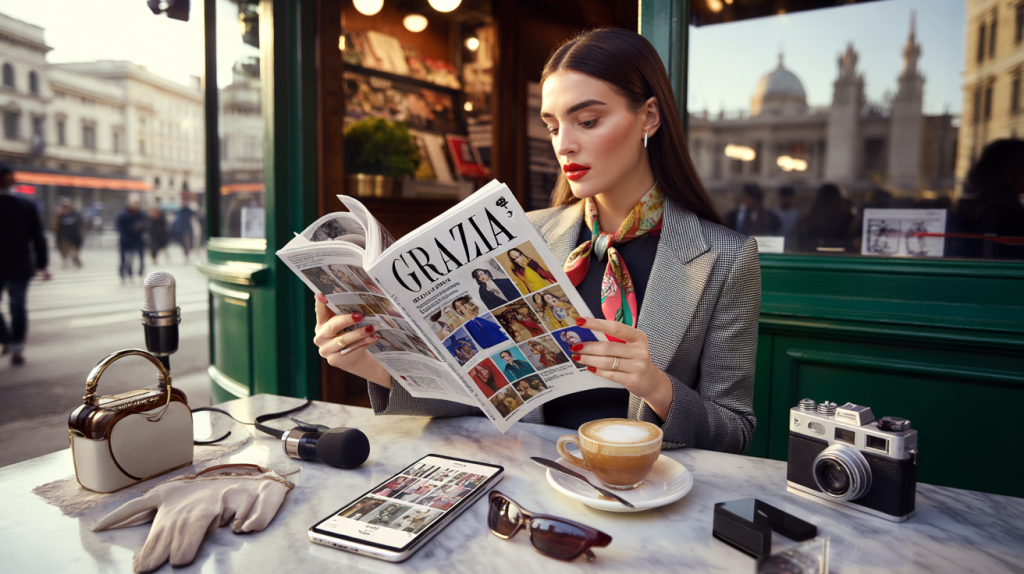
Fashion with a news pulse. That has been Grazia’s calling card since day one, the glossy that blends style edits, celebrity access and cultural talking points without feeling out of touch.
Born in Italy in 1938 and still published by Arnoldo Mondadori Editore, the brand grew into a global network with editions in more than 20 countries. The UK launch in 2005 shook up the weekly market with a faster, modern tone, while India joined in 2008 and Germany in 2010. Print remains strong in Italy, and the digital footprint now carries Grazia to readers far beyond the newsstand.
Grazia magazine, right now : what readers actually get
The main idea is simple : a fashion magazine that treats shopping and culture as part of the same conversation. That mix is what readers search for when typing “Grazia magazine” – covers that make headlines, practical style pages, and interviews that land on social feeds within hours.
Observation after years in kiosks and on phones : Grazia addresses the pace of pop culture while staying edited. A cover story might sit next to a report on work culture or internet trends, then a beauty routine that can be shopped immediately. That balance keeps attention on mobile.
The practical problem many readers try to solve : where to find the right edition and in which format. Between weekly print in Italy, national editions like Grazia UK by Bauer Media and regional versions across Europe, the Middle East and Asia, the brand can feel scattered. A quick map helps.
From 1938 to today : the international Grazia story
Grazia launched in 1938 in Milan at Mondadori, placing fashion journalism inside a general-interest weekly. Decades later came the international expansion that defined the brand’s modern era.
Key dates ground the picture. Grazia UK arrived in 2005 as a glossy weekly with a newsy tone, the first of its kind in the British market at that time. Grazia India followed in 2008 under Worldwide Media, part of The Times Group. In 2010, Germany joined via Mediengruppe Klambt, widening European reach.
In France, the title launched in 2009 and later changed hands when Reworld Media acquired Mondadori France in 2019. Across the network, the promise stayed consistent : fashion-led storytelling anchored by celebrity interviews and culture reporting, then adapted to each market’s voice.
Grazia UK, Italy, India : editions that shaped the brand
Italy is the heartbeat. The original weekly continues under Mondadori with strong fashion shoots and timely covers, the model other editions looked to when building their tone.
Grazia UK, published by Bauer Media, pushed a faster blend of celebrity, shopping and agenda-setting interviews from 2005 onward. Covers often sparked conversation beyond fashion, with stories timed to the news cycle and distributed quickly online.
Grazia India launched in April 2008 and tapped a young, fashion-aware audience, pairing local designers with global names. Features on work, wellness and film made it a staple in metropolitan cities. Different markets, same DNA – a stylish read that moves at the speed readers expect.
How to read Grazia now : print, digital, newsletters
The digital shift accelerated after 2020. Social-first storytelling, shoppable edits and podcasts brought new readers in, while print continued where it remained strong. Navigation can be easy when broken down.
Here is the straightforward way to access Grazia today :
- Italy : weekly print edition on newsstands, plus digital content via Grazia.it under Mondadori.
- United Kingdom : Bauer Media’s site and socials publish daily stories, with special print issues appearing at set moments.
- International editions : local sites and print frequencies vary by country – check the national masthead for schedules and subscriptions.
- Newsletters and podcasts : fashion drops, culture briefings and interview formats distributed through each edition’s digital channels.
Why this matters for readers : the right format depends on habit. Commuters lean on mobile features and Instagram summaries. Collectors still want the physical issue, especially in Italy where weekly cadence remains intact. Both paths deliver the same core – fashion context tied to the cultural moment.
One last piece that often gets missed : the Grazia International Network coordinates licensing and brand standards across markets so that a cover in Milan, London or Mumbai feels connected. That safeguards recognition while leaving room for local voices. Small thing, big effect. It’s definitly what keeps the brand consistent from 1938 to your feed today.