
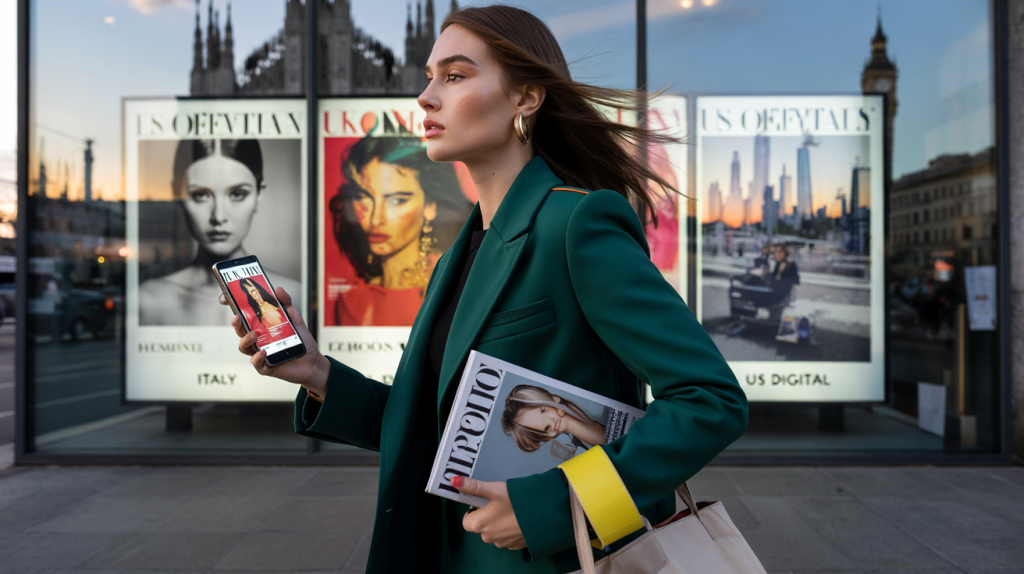
From a 1938 launch in Milan to a 2020 US digital debut, discover how Grazia magazine still sets the pace – and where to read it next.
Grazia magazine started in Italy in 1938 and turned into a global fashion news brand that moves fast, looks sharp, and speaks to how we live now. Born inside the Mondadori Group, the weekly became a staple on Italian newsstands, then expanded to major markets with local voices and smart takes on style, celebrity, culture and politics (Mondadori Group).
The name is everywhere for a reason. In the United Kingdom, Bauer Media launched the weekly edition in February 2005 and built a loyal audience with pop culture covers and agenda-setting features (Bauer Media). In the United States, the brand arrived digitally in 2020 through Pantheon Media Group, signaling where fashion media growth is heading next – mobile-first and social by design (WWD, 2020).
Grazia magazine now : what it is and why readers still click
The main idea is simple : Grazia is a fast weekly read with the authority of a legacy glossy. It blends runway and real life, mixing trend reports with work, relationships and politics. That balance keeps the brand useful when style news overload makes it hard to know what actually matters.
Many readers face the same puzzle : different editions, different tones, and not always the same stories. The Italian weekly looks and feels closer to classic magazine journalism. The UK edition runs punchier service and celebrity coverage. The US operation, born digital in 2020, leans into big interviews and social storytelling (WWD, 2020).
Another observation stands out. Even as print habits change, Grazia’s weekly cadence still helps filter the cycle. The trick is knowing which edition fits what you want – deep features or quick hits – and where to find it legally, on time, and without getting lost in expired links.
Key dates : Mondadori’s original, Bauer’s UK launch, a US digital push
1938 : Arnoldo Mondadori Editore launched Grazia in Italy, setting the template for a women’s weekly with high-fashion visuals and timely reporting (Mondadori Group).
February 2005 : Bauer Media introduced Grazia UK as a weekly, a rare modern success in the crowded British magazine market that quickly became a reference for fashion-meets-pop culture (Bauer Media).
2019 : Mondadori finalized the sale of Mondadori France to Reworld Media, a move that reshaped parts of its French portfolio and signaled a sharpened strategic focus for the group (Mondadori Group, 2019).
2020 : Grazia USA launched digitally through Pantheon Media Group, reflecting a clear industry trend toward platform-native storytelling and marquee digital covers (WWD, 2020).
How to read Grazia in 2025 : print, digital, newsletters
Here is the practical part. Readers want quick, legitimate access without the paywall guesswork. The brand’s ecosystem is broad, but the path can be simple if you start the right way.
One common mistake is mixing up editions and assuming subscriptions or newsletters are interchangeable. They are not. Each market has separate publishing calendars, teams, and sometimes different rights on photos and stories. Always check the masthead and the country edition at the top of the page.
To cut through the noise, go straight to official channels. The Italian weekly remains a print flagship supported by a daily-updated site. The UK edition is weekly in print and runs a strong digital feed under Bauer. In the US, expect digital-first drops timed to social conversation, often teased around big events like fashion weeks (Bauer Media ; WWD, 2020).
Quick ways to access Grazia content today :
- Follow the official websites and country-specific apps for Italy, UK and USA.
- Subscribe to the weekly print editions where available through publisher pages.
- Sign up for newsletters for edition highlights and cover reveals.
- Use verified social accounts for breaking features and cover drops.
- When in doubt, search the edition name plus your country to land on the right hub.
Influence et accountability : when covers make news
Grazia’s influence is not just pretty pictures. Its covers and edits sometimes become the story. In November 2017, Grazia UK issued a public apology to actor Lupita Nyong’o after an image retouching controversy sparked a wider conversation on representation in fashion media (BBC News, 2017). That moment showed what readers expect now – transparency, fast correction, and a willingness to listen.
The French market also underlined how ownership changes ripple through editorial strategies. When Mondadori sold its French arm to Reworld Media in 2019, titles across that portfolio adjusted to new priorities, distribution, and digital setups (Mondadori Group, 2019). Readers felt the shift in frequency, tone, and where content lived online.
So what makes Grazia still resonate in 2025? The cadence and curation. A weekly rhythm that keeps style talk grounded in life. Local editions that speak their markets. And a digital muscle built to catch readers where they are. For anyone choosing between editions, the clearest route is to match the need – a quick weekly digest or a deeper feature read – to the right country hub, then stick to official subscriptions. That is the definitly easiest way to keep Grazia in your routine without missing the stories everyone will talk about tomorrow.