
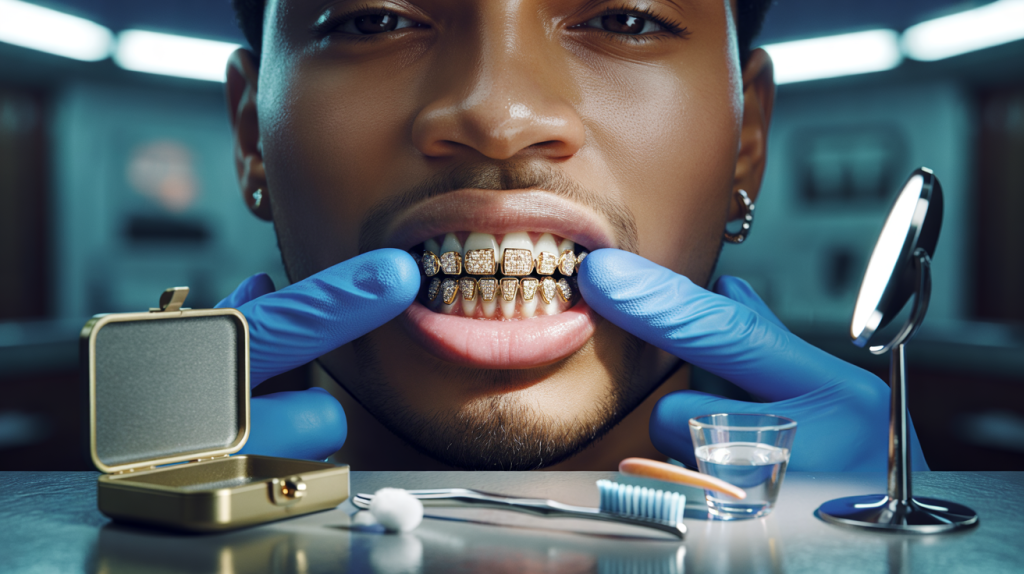
Grillz are back on every feed : but are they safe for your teeth
Shiny dental caps turned mainstream long ago, and the spotlight never really left. From music videos to red carpets, grillz now sit at the crossroads of fashion, identity and cosmetic dentistry. The look is bold. The questions are practical.
Health experts keep repeating the same baseline : wear grillz the right way or risk plaque build-up, gum irritation and cavities. The American Dental Association advises limiting wear time, cleaning removable pieces thoroughly and skipping unknown adhesives that could contain toxins (ADA). That is the part too many people learn late.
What grillz really are : removable caps, custom or ready-made
Grillz are decorative covers that fit over one or several teeth. Some are one-size kits, others are fully custom, molded from impressions the way a dentist would prepare a mouthguard. Materials range from stainless steel and silver to gold and platinum, sometimes set with diamonds or gemstones.
The cultural wave started years back. Nelly’s single “Grillz” hit No. 1 on the Billboard Hot 100 in 2005, pushing the look into malls and studios alike. The style evolved, but the core idea stayed the same : high shine, quick transformation, zero drilling when pieces are removable.
Safety facts dentists highlight about grillz
There is a catch. Removable caps can trap food and bacteria near the gumline. The ADA notes that wearing grillz for long stretches increases the risk of enamel wear and decay if hygiene slips (ADA). That warning lands harder when seen against oral health numbers.
Nearly 47.2 percent of U.S. adults aged 30 and older have some form of periodontal disease, according to the Centers for Disease Control and Prevention (CDC). Worldwide, oral diseases affect close to 3.5 billion people, says the World Health Organization’s 2022 report (WHO). Add a plaque-trapping accessory to that picture, and daily care stops being optional.
Quick pre-buy checklist :
- Choose precious metals or medical-grade alloys, ask for documented composition and avoid unknown nickel content if sensitive.
- Prefer a custom fit from a licensed provider, not a boil-and-bite kit that rubs or pinches.
- Wear short periods only, remove before eating and sleep, and clean teeth and grillz every time.
- Skip glue and products not designed for oral use, and keep up with professional cleanings.
Materials and fit : gold karats, alloys and why precision matters
The metal mix drives comfort. Pure 24K gold is soft, so many opt for 18K, 14K or 10K. For context : 18K contains 75 percent gold, 14K contains 58.3 percent and 10K contains 41.7 percent. Lower karat often means harder alloy and a lower price, yet it may include more base metals. People with nickel sensitivity should ask in writing what the alloy contains.
Fit makes or breaks the experience. A custom grill made from a professional impression hugs teeth without rocking, scraping or touching the gums. Friction points irritate tissue and collect bacteria. That is how tiny mistakes turn into swollen gums, bad breath or enamel scuffs. If the piece clicks or shifts, it needs an adjustment, not wishful thinking.
Cleaning routine and buying tips : keep the shine, protect the smile
Think of grillz like a retainer with bling. Remove them before meals, rinse right away, then brush teeth and the grill separately. Use a soft brush plus non-abrasive cleanser designed for oral appliances. Harsh toothpaste scratches metal and makes tarnish or biofilm stick faster. Dry completely before storage to avoid a damp micro-environment.
Look for documented materials, a return policy that covers fit issues and a provider who explains aftercare clearly. Ask about polishing protocols, stone settings that do not snag and storage cases with ventilation. Hypoalergenic claims need proof, not just a line on a flyer. A quick skin patch test on the inner arm can help spot contact reactions before any mouth time.
One more layer of realism : regular dental checkups matter even more with accessories. The CDC data on gum disease shows how common inflammation already is (CDC). A hygienist can spot early redness where a cap touches and stop a small issue from becoming a costly one. That is the quiet difference between a weekend flex and a long-term problem.