
Handbag trends for 2026 decoded with data, shapes, colors, and materials. See what to buy now, what to skip, and how prices and resale shift the game.
Handbag Trends 2026: What Changes and What Stays
Looking for the real tendance sac à main 2026 without fluff. Expect a pivot to medium sizes, soft yet structured silhouettes, discreet branding, silver hardware, and hands-free carry. Micro bags fade. Two-in-one crossbody-to-shoulder designs take the lead, tuned for phone-first lives and light travel.
The market backs the shift. McKinsey and The Business of Fashion projected fashion sales to grow 2 to 4 percent in 2024, with accessories more resilient on margins than apparel. Bain and Company sized personal luxury goods at 362 billion euros in 2023 and highlighted leather goods as a growth engine. At the same time, the resale tide keeps rising. ThredUp’s 2024 Resale Report estimated the U.S. secondhand market at 73 billion dollars by 2028 and the global secondhand apparel market near 350 billion dollars by 2028. All signs point to durable, repairable, and recognizable bags holding value into 2026.
Materials and Sustainability 2026: Plant Leather, Repair, Resale
Shoppers want longevity and lighter footprints. Brands answer with recycled nylon canvases, chrome-free tanning, and plant-based alternatives made from apple, cactus, or mycelium. Repairs move from niche to normal in stores and via certified workshops, because a fixable bag resells faster and for more.
Policy and platforms nudge the trend. The European Union’s textile strategy pushes durability and repair by 2030, a timeline that already influences design briefs today. Resale platforms scale the effect on pricing and demand. Search spikes often mirror viral moments. Lyst’s Year in Fashion 2023 reported The Row Margaux driving a 264 percent jump in searches during the quiet-luxury wave, a signal that minimalist, non-logo leather can dominate for multiple seasons.
What does this mean on shelves in 2026. Expect pebble-grain and smooth calf leathers with lighter linings, modular straps, and replaceable feet or clasps. Plant-leather mixes show up on entry-premium models, while heritage houses roll out take-back or refurbish services to defend value retention.
Shapes, Sizes, and Colors: From Quiet Luxury to Useful Tech
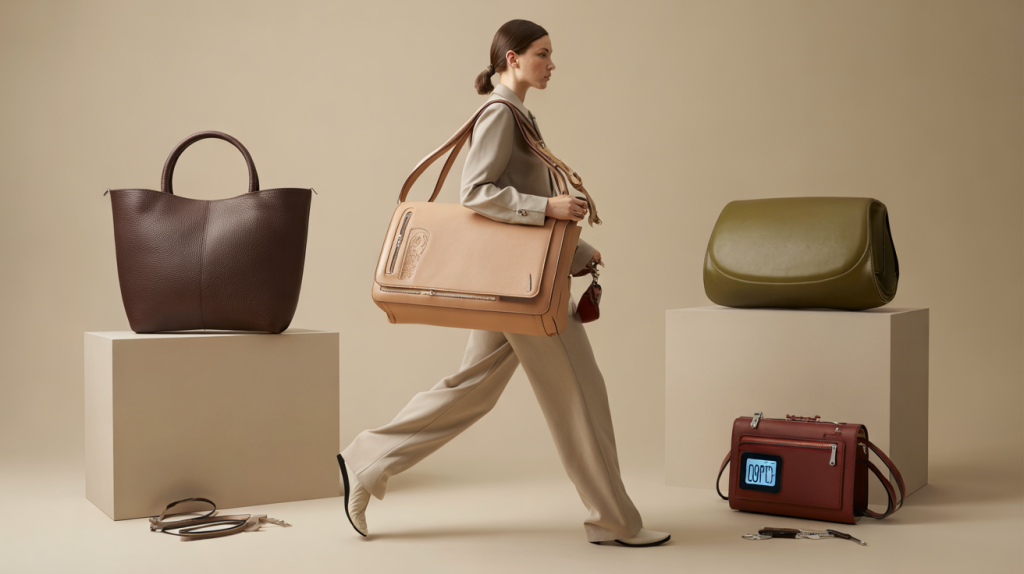
The silhouette settles into three winning families: soft-structured totes that can stand, saddle and hobo shapes that hug the body, and compact rectangular crossbodies with zipped phone slots. Designers reduce weight by trimming internal boards and swapping heavy chains for woven or tubular straps.
Color tells the rest of the story. Buttery neutrals, dark chocolate, oxblood, and olive anchor the palette, with one high-energy accent per drop. Electric blue and acid green appear as limited runs, not season-long staples. Hardware cools to palladium-like silver. Logos shrink to tone-on-tone embossing or heritage closures only.
Function stays visible. RFID pockets, AirTag sleeves, and easy-clean linings pop up without shouting. Everyday capacity returns. A 26 to 32 centimeter width hits the sweet spot for a tablet, a small water bottle, and a pouch. That is the bag that goes office to dinner without feeling try-hard.
How to Buy Now for 2026: Checklist and Price Pointers
Search intent right now is practical: what to choose today that still feels right in 18 to 24 months. Price behavior helps. After sharp highs, luxury is normalizing growth while defending icons. Entry-premium labels upgrade materials to capture value-conscious shoppers who still want polish. Resale spreads the risk across both ends, because liquidity matters when trends cool.
- Pick a medium size that fits a tablet and a bottle. Skip ultra-mini and ultra-mega.
- Choose soft-structured leather or recycled canvas with visible grain. Lightweight counts.
- Go convertible: top handle plus long strap. Hands free wins commutes and travel.
- Keep branding discreet. A heritage closure or subtle stamp ages better.
- Favor silver-tone hardware and earth neutrals. Add one accent color only.
- Check repair options and spare parts availability. Resale value depends on this.
- If buying trend-forward, test via resale first. ThredUp and similar platforms reduce risk.
- Track data-led signals: Lyst search surges often preface retail waitlists.
Examples already pointing at 2026 shape the map. The Row Margaux and Bottega Veneta Andiamo cement quiet luxury in wider sizes. Miu Miu Arcadie, Gucci Horsebit lines, and Loewe Puzzle Tote refresh heritage codes with softer edges. Alaïa Le Teckel shows the slim baguette’s second life, now offered with longer straps for crossbody practicality.
Styles fall into three price lanes with different logic. Icons and semi-icons at the top guard equity through limited seasonal tweaks and stronger aftercare. Mid-tier premium pursues value with better leather and fewer gimmicks. Access-priced labels compete on feather-light builds, recycled textiles, and clever pockets. Across lanes, the bag that survives rain, rush hours, and crowded trains wins hearts and receipts.
A last note on timing. Trend cycles move faster than production, yet data gives a head start. McKinsey flagged accessories’ resilience for 2024, Bain quantified leather goods’ pull in 2023, and ThredUp charted the resale runway through 2028. Reading those curves together, 2026 favors adaptable shapes, maintenance-friendly materials, and styles that hold liquidity in secondary markets. Buy with that lens, and the bag stays relevant and useful, not just photogenic.