
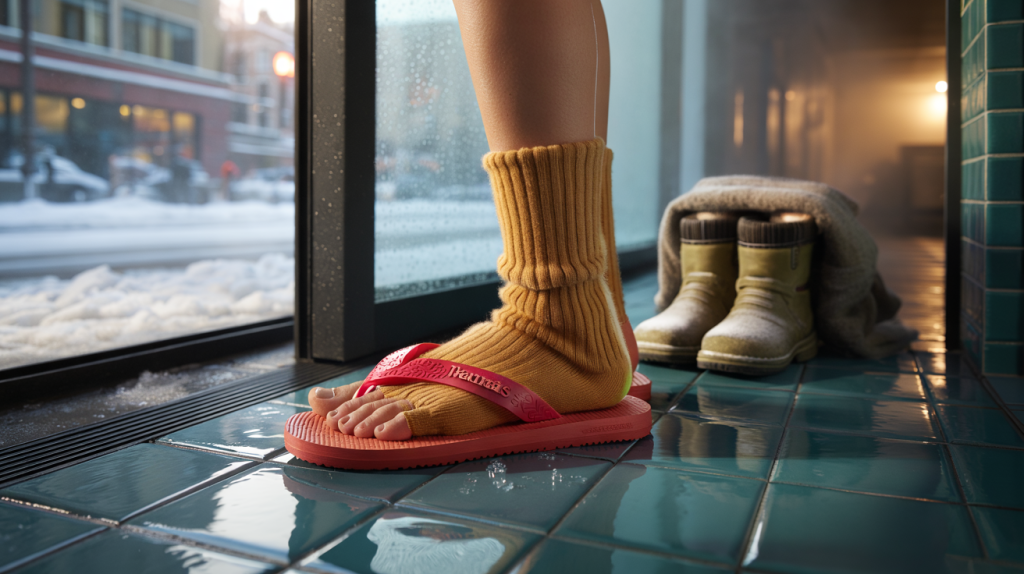
Havaianas in winter : what works, what does not
Yes, Havaianas in winter can be a thing. Indoors, at the spa, by the gym pool, on a mild-city errand, or on a winter sun trip. No, they are not a match for freezing streets, black ice, or slushy commutes. The line is thinner than it looks, and it mostly comes down to temperature, moisture, and ground grip.
Here is the context. Havaianas is a Brazilian icon created in 1962, built around a soft rubber sole and a simple thong strap. Comfort is real, ventilation too. Yet winter adds risks: cold exposure, wet skin, and surfaces that get slick. The goal is not to shame a choice, it is to help decide where flip flops make sense today and where closed shoes win by a mile.
Cold facts : health and safety limits for exposed feet
Cold thresholds come first. The U.S. National Weather Service wind chill chart shows exposed skin can develop frostbite in about 30 minutes at minus 28 °C and in roughly 10 minutes at minus 34 °C. That is not theory. Wind and moisture speed up heat loss, which turns a quick walk into a real risk on harsh days.
Moisture matters just as much. The American Podiatric Medical Association notes the feet contain around 250,000 sweat glands, which means damp skin if socks or shoes do not manage moisture. Damp plus cold multiplies discomfort and blisters, and on porous flip flops it lingers.
Falls are the other big factor. The Centers for Disease Control and Prevention reports that one in five falls causes a serious injury among older adults. Winter increases slick surfaces from frost and ice. Minimal tread and open heels are simply not built for that. Grip upgrades help indoors, not on an icy curb.
Style, socks et layers : making flip flops work off season
There is a way to wear Havaianas when the weather dips, without playing roulette with your toes. Think context first, then styling. Indoors or sheltered spaces are the sweet spot. Outside, keep it short, dry, and mild.
Layering tricks are simple. Warm socks that are moisture wicking, a longer coat that blocks wind to the calf, and a tote to carry proper shoes for later. Clean, unworn socks only at pools and gyms, since many facilities still ask for bare feet on deck. Etiquette counts.
Practical checklist for winter use that actually works :
- Indoors : home, office showers, locker rooms, hotel spas, heated pools.
- Dry days above 10 °C : quick errands on clean sidewalks, no ice or slush.
- Travel : airport security and flights to warm destinations, pack closed shoes for arrival.
- Post-workout : let feet breathe after training, switch to insulated sneakers outdoors.
- Care routine : wash soles with warm soapy water, fully dry to reduce slip and odor.
- Grip check : replace pairs with worn treads, especially if the rice-grain texture feels smooth.
Buying guide and care : Havaianas materials, grip and longevity
Materials set the tone. Havaianas uses a flexible rubber blend with a rice-grain texture on top and a brick pattern underfoot, a combo designed for comfort and basic grip on dry ground. It feels great on warm tiles and clean locker rooms. It is not engineered for packed snow or oiled pavement.
Fit is non negotiable in colder months. A snug strap reduces toe clenching, which limits fatigue on short walks. Size up only if socks are part of the look. Thick ribbed socks can accomodate a classic strap, while plush winter socks can push the foot forward and compromise balance.
Care prolongs safety. Rinse salt and de-icing residue right after contact. Dry fully, including under the strap, since trapped moisture softens rubber and attracts dirt. Store flat and away from heaters to avoid warping. If the outsole loses definition, retire the pair, even if the top still looks new.
Where the brand fits in winter wardrobes is clear. There is room for flip flops during the cold season, just not on icy streets or in freezing wind. Indoors and in mild dry spells, the classic thong keeps its place. For the rest, insulated sneakers or boots do the job that physics requires.