
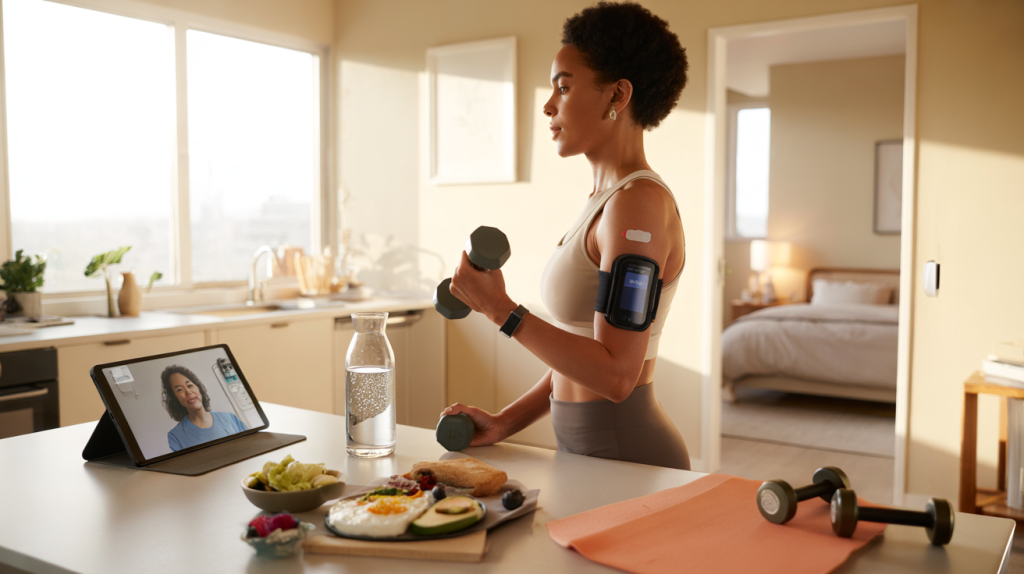
Health and wellness in 2026 is not about flashy hacks. It is about evidence, daily systems, and less noise. The wellness economy already hit 5.6 trillion dollars in 2022 and is forecast to reach 8.5 trillion dollars by 2027, according to the Global Wellness Institute, which signals a cultural shift with money behind it Global Wellness Institute, 2023. That growth only makes sense alongside stubborn realities: 1 in 8 people worldwide live with a mental disorder WHO, 2022, and 1 in 3 adults do not get enough sleep CDC, 2016.
By 2030, physical inactivity alone could drive almost 500 million new cases of preventable disease, with a 300 billion dollar cost if nothing changes WHO, 2022. That is the context shaping 2026: strong demand, tight attention, and a clear need to move from endless wellness choices to a few habits that actually work.
Health and Wellness Trends 2026: The Big Picture
The market expands fast, but routines simplify. People want fewer apps, fewer promises, more results. After a pandemic spike, telehealth has stabilized at roughly four times pre‑pandemic use in the United States, a sign that virtual care is now an established channel rather than a novelty McKinsey, 2022. That matters because 2026 trends point to integrated care: sleep, stress, movement, nutrition, and medical guidance in one flow.
The obvious problem to solve: people know what to do yet struggle to keep doing it. So the winning trend is not a new gadget. It is behavior design supported by clean data and small, repeatable wins. Sounds simple. It is not easy.
Sleep, Mental Fitness and Recovery: The Core Reset
Sleep becomes the non‑negotiable. With one in three adults short on rest, 2026 products and services lean into circadian rhythm support, light timing, and recovery planning over raw intensity CDC, 2016. Mental health shifts from crisis response to daily hygiene. The WHO’s finding that one in eight people live with a mental disorder anchors a new norm: mental fitness drills short and often, like brushing teeth for the brain WHO, 2022.
Common mistake seen everywhere: stacking goals. Training for a race, changing diet, and cutting caffeine all at once backfires. A better approach pairs one anchor habit, like a fixed bedtime, with one flexible add-on, like a 3‑minute breath practice before meetings. Real life first, then performance.
Smarter Tech, Not More Tech: Telehealth, Wearables, Precision
The most useful tech in 2026 does less but coaches better. Expect wearables that translate metrics into one or two clear moves for the day instead of a dashboard maze. Telehealth continues as a practical bridge for check‑ins, prevention, and medication management, while in‑person care focuses on testing, treatment changes, and complex cases McKinsey, 2022.
Precision nutrition and metabolic awareness mature too. Continuous glucose insights go mainstream inside programs, not as a solo gadget, to support energy stability and weight management. The signal matters more than the device. Data without a simple plan still creates fatigue. Definitly seen that before.
Food, Movement and Longevity: Practical Moves for 2026
On movement, the science is steady. Adults should aim for 150 to 300 minutes of moderate activity a week and muscle‑strengthening on 2 or more days WHO Guidelines, 2020. With one in four adults insufficiently active and big disease costs looming, 2026 momentum favors short strength sessions, walking meetings, and recovery stacked into the day rather than weekend warrior spikes WHO, 2022.
Food trends level out, too. Less ultra‑processed snacking, more protein at breakfast, fiber with every meal, and hydration that is not sugar by disguise. Longevity is not a biohacking badge in 2026. It is consistent basics, supported by screening and smart follow‑ups.
Five practical moves that fit busy weeks:
- Guard a 90‑minute pre‑sleep window: dim light, no heavy meals, light stretch.
- Lift something twice a week: 20 minutes, push‑pull‑legs, progress slowly.
- Plan a stress circuit: 2 minutes of breathwork before tough calls, every time.
- Eat protein early: 25 to 35 grams at breakfast, add vegetables for fiber.
- Make care hybrid: telehealth for follow‑ups, in‑person for decisions and tests.
The trajectory is clear. The wellness economy grows fast, the health burden stays high, and 2026 rewards routines that reduce friction. One habit at a time, backed by numbers and supported by care that meets people where they are.