
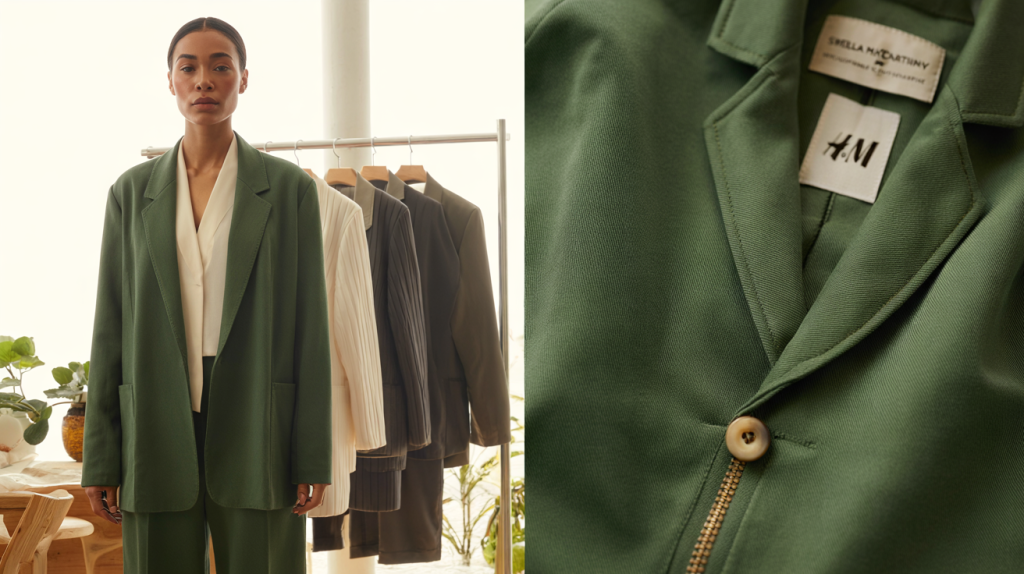
When a high-street giant teams up with a sustainability pioneer, expectations rise fast. The H&M x Stella McCartney collaboration puts a simple question on the table: can a fashion capsule be truly durable – and still look sharp – without leaning on leather or heavy-impact textiles?
Context matters. H&M targets 100 percent recycled or more sustainably sourced materials by 2030 and aims to be climate positive by 2040, with a Science Based Targets initiative-approved goal to cut absolute emissions 56 percent by 2030 from a 2019 baseline. Stella McCartney has refused leather and fur since 2001, pushing lower-impact fibers and innovation over status quo. That sets the bar higher than a typical drop.
H&M x Stella McCartney: durability meets design
Designer collaborations usually chase hype, then fade. This one has a different lens: lasting wear. Past McCartney projects have centered on material innovation and traceable fibers, while H&M’s recent innovation capsules prioritized recycled inputs and circular design principles tested for multiple life cycles. Put together, the brief is clear – keep shape and surface after repeated wear, not just on day one.
Durability in this context means two things. First, construction that resists seam strain, pilling and color loss. Second, fiber choices with stable performance across seasons, so a blazer hangs right in month twelve and a knit does not balloon after three washes.
Materials that last: organic cotton, lyocell, recycled fibers
Organic cotton twills and denims wear in, not out, when woven tightly. They avoid the harsh chemical finishes that can weaken yarns. Lyocell – a regenerated cellulose fiber often branded as Tencel – has high wet strength and drape that holds up after laundering, useful for tailored trousers and fluid shirts.
Recycled polyester and recycled polyamide bring abrasion resistance and shape recovery for suiting blends, outerwear and rib knits. The trick is balance. Too much synthetics can trap heat and feel scratchy; blended responsibly with cellulose or wool alternatives, they boost lifespan without that plastic handfeel.
Viscose can be elegant yet prone to seam slippage if the weave is loose. Look for heavier GSM and crepe or twill constructions. Buttons made from corozo or recycled metal beat brittle plastics over time. Zippers from established suppliers often glide longer with fewer tooth breaks.
How to spot durable pieces in the capsule
There is a quick, practical checklist to assess quality in minutes – no lab coat needed, just your hands and eyes.
- Seams : Turn the garment inside out. You want locked or flat-felled seams with tidy overlocking, no loose threads, and at least 1 cm seam allowance on stress areas.
- Fabric density : Hold it up to light. For wovens, less show-through signals tighter weave and better snag resistance.
- Stretch recovery : Gently pull a knit at cuff or hem for five seconds. It should spring back without waviness.
- Pilling risk : Lightly rub two fabric surfaces together. Excess fuzz immediately? That knit may pill fast.
- Hardware : Test every button, snap and zipper. Smooth action, no wobble. Reinforced button shanks last longer.
- Care label : Favor 30 °C wash instructions, not dry clean only for everyday items. Practical care means you will actually keep it in rotation.
Care, repairs and the sustainability math
The greenest option is the one worn often and long. WRAP’s research shows extending a garment’s active life by nine months can cut its carbon, water and waste footprints by roughly 20 to 30 percent. That is not marketing – it is a measurable shift in impact tied to durability and use.
H&M has been building reuse and care pathways around this logic, from its Pre-Loved resale launch in the United States in 2023 to in-store take-back programs that channel textiles into reuse or recycling streams. Those systems do not excuse flimsy clothes. They amplify value when a piece is built to endure and then resold or repaired rather than binned.
What does that look like day to day? Wash less and colder to preserve fibers and dyes. Steam to refresh instead of a full cycle. Mend loose hems before they ladder. Stella McCartney’s long-standing materials stance – no leather, no fur – nudges innovation into plant-based, recycled and next-gen textiles that can be cared for at home, not babied at the dry cleaner.
There is also the fit test. Durable pieces only serve if they are worn, so try sitting, stretching, reaching in the fitting room. Fabrics that feel supportive but not stiff will keep shape after the break-in period. If a seam pulls in the first try-on, it will not magically fix itself – adress it now or skip.
One more data point that supports patience over impulse: H&M Group reports a 2030 target of 100 percent recycled or more sustainably sourced materials across its collections, with SBTi-validated emissions cuts of 56 percent by 2030. Buying into a capsule aligned with those goals makes most sense when the piece earns 30, 40, 60 wears – not five.
The bottom line for this collaboration is practical. Choose dense weaves, sturdy seams and balanced blends. Follow low-intensity care. Lean on resale and repair when style evolves. That is how a designer-high street capsule proves its durability promise – in months and years, not minutes on a feed.