
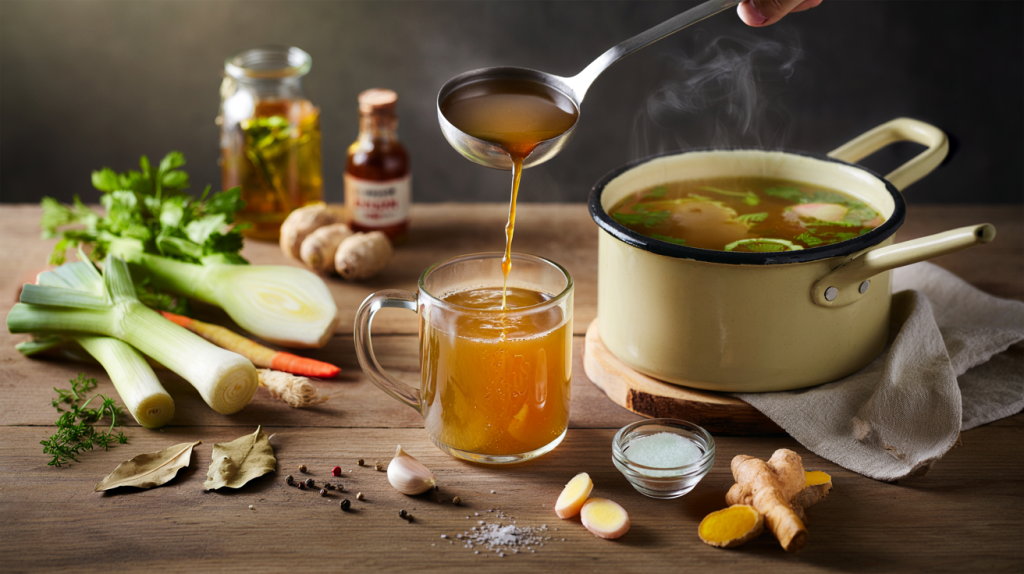
Craving something light that still feels like real food. A clear, savory broth brings warmth, hydration and a gentle reset, without the bloat or the heavy lift of a full meal. Here is the homemade detox broth recipe everyone searches for in January and ends up using all year.
The idea is straightforward. Simmer a pot of vegetables, herbs and a touch of citrus, season with restraint, then sip through the day or use it as a base for bowls. It answers a practical need. According to the National Academies of Sciences, Engineering and Medicine, daily fluid intakes sit around 3.7 liters for men and 2.7 liters for women (2004 report), and a well seasoned broth helps get there while keeping sodium in check with the World Health Organization’s advice of less than 2 grams of sodium per day published in 2023.
Why a homemade detox broth makes sense right now
Observation first. Many people want a break from ultra rich meals without going hungry. A clear vegetable bouillon brings flavor, potassium and hydration with very few calories, which supports satiety between meals.
There is also a simple reality. Only about 10 percent of US adults eat enough vegetables, said the Centers for Disease Control and Prevention in January 2022. A pot of broth quietly adds carrots, celery, leeks, fennel and parsley to the day, even for picky eaters.
And no, broth does not magically remove toxins. Public health guidance is clear on that point. The NHS explains that detox diets do not eliminate toxins from the body. The body already has a liver and kidneys for that job. Broth helps in another way. It is gentle, hydrating, and makes vegetables easier to consume.
The recipe that works every single time
Rinse everything well. Dirt ruins delicate flavors. Cut 2 carrots, 2 celery stalks, 1 leek, half an onion and a small fennel bulb into big chunks. Add a small piece of fresh ginger and the peel of half a lemon. Toss in parsley stems, 1 bay leaf, a few peppercorns and 1 small clove of garlic.
Cover with 2 liters of cold water. Bring to a quiet simmer. Skim any foam that rises in the first minutes for a clean sip. Leave it gently bubbling for 45 to 60 minutes. The color turns golden and the kitchen smells like a calm evening.
Season near the end. Start with a pinch of fine salt, then taste. You want roundness, not a salty punch. Off the heat, add a squeeze of lemon juice for lift. Strain through a fine sieve. Drink hot, or chill for up to 4 days. It also freezes well in jars.
Small tweaks change everything. Add a piece of kombu during the first 30 minutes for a whisper of umami, then remove it. Drop in turmeric slices for a warmer profile. If you love heat, finish with a few drops of chili vinegar rather than more salt.
Ingredients and smart swaps in one place
- Base vegetables : carrot, celery, leek, onion, fennel. Swap in celeriac, zucchini or mushroom stems when the fridge looks bare.
- Aromatics : parsley stems, bay leaf, peppercorns, a garlic clove, lemon peel. Add fresh thyme or a small sprig of rosemary for a woodsy vibe.
- Lift and umami : lemon juice or apple cider vinegar for brightness, kombu or dried porcini for depth, optional turmeric or ginger for warmth.
- Salt strategy : season late and lightly to align with WHO sodium guidance. If using soy sauce, choose a low sodium version and add by the teaspoon.
- Serving ideas : sip as is, pour over cooked quinoa and greens, or use as cooking liquid for beans and grains to layer flavor without heaviness.
Common mistakes, the science behind the sip, and how to dial it in
Over salting shows up as the most frequent misstep. Start with less. If the broth tastes flat, add acidity first. Lemon juice often fixes what salt cannot, while keeping total sodium within daily limits highlighted by the WHO 2023 guideline.
Another trap. Boiling aggressively. A rolling boil muddles flavors and can turn the broth bitter. A gentle simmer extracts aromas slowly and keeps the finish clean. It also preserves more of that fresh herb character we actually want.
One more thing that trips people. Expecting a health miracle. Evidence on detox claims is thin. The NHS points that out very directly. What you do get is an easy way to hydrate while eating more plants. That lines up with public health goals and the CDC data on low vegetable intake among adults.
Now the numbers that matter when building your own pot. Vegetables like celery and fennel bring potassium, which helps balance sodium intake. The National Academies and WHO both underline the role of sodium and potassium on blood pressure in their guidance. A cup of clear vegetable broth typically lands under 40 to 60 calories depending on vegetables used and how concentrated you reduce it. That means you can sip it between meals without derailing energy goals.
Practical action today. Make a two liter batch on Sunday evening. Keep one bottle cold for quick mugs during the week. Freeze the rest in small jars so nothing goes to waste. If the taste feels too delicate, extend the simmer by 10 minutes, then brighten with citrus. You will definitly feel the difference between a rushed broth and one that had time to bloom.
For hydration, aim to weave broth into your overall fluids, alongside water, tea and watery foods like fruit. The National Academies placed adequate intakes at 3.7 liters for men and 2.7 liters for women back in 2004, and a warm cup of broth is simply another friendly way to get there without leaning on sweet drinks.
One last adjustment to make this complete. If you need more protein at lunch, whisk in a spoonful of miso once the broth cools slightly, or drop in soft tofu cubes. If you want a richer mouthfeel with no cream, simmer a handful of chopped mushrooms in the last 15 minutes, then strain. Same method, new mood.
Sources : National Academies, Dietary Reference Intakes for Water, 2004 | WHO sodium guidance, 2023 | CDC MMWR, Jan 2022 fruit and vegetable intake | NHS on detox diets