
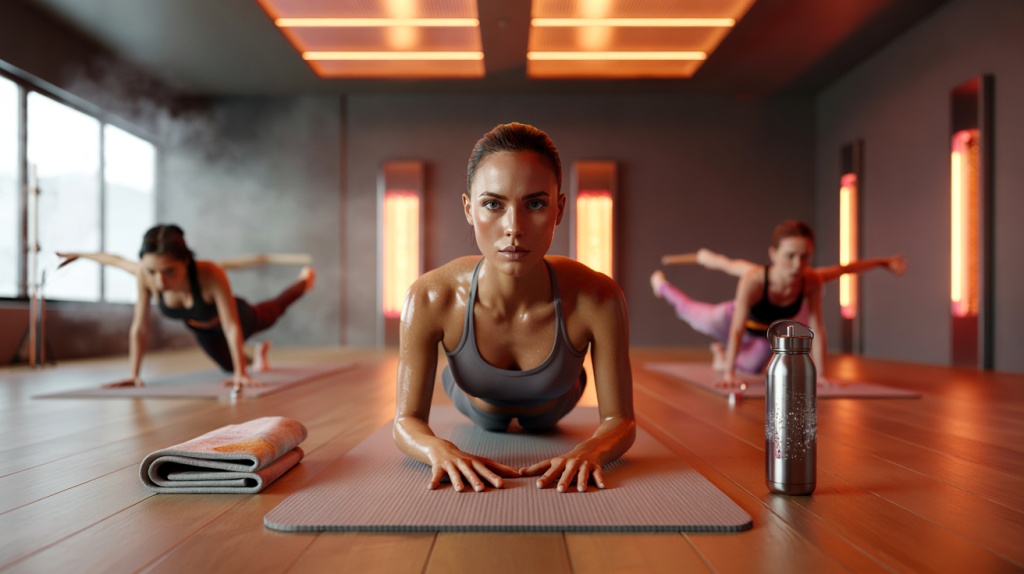
Infrared heat supercharges Pilates with a deeper sweat, faster warm-up, and a calmer room. Curious if Hot Pilates infrarouge is worth it? The facts land here.
Studios using infrared panels promise muscle activation without the swampy feel of steam. The concept is simple : far-infrared panels warm the body directly while the air stays comparatively cooler than traditional hot rooms. That shift changes how a session feels – quicker mobility, steadier breathing, and a sweat that arrives early. For anyone searching a low-impact workout that still bites, Hot Pilates infrarouge targets the core, glutes, and stabilizers while heat nudges circulation and perceived effort.
Hot Pilates infrarouge explained : how infrared changes the room
Infrared systems heat objects and bodies, not just air. In saunas, this technology typically runs at 45 to 60°C with lower humidity, which many find easier to tolerate than classic steam heat (Cleveland Clinic, 2021). Translated to a mat class, that means joints feel warm quickly and range of motion often arrives sooner. The training stays Pilates – controlled, low impact, form first – but warmth can encourage deeper muscle recruitment while keeping pace smooth.
The appeal sits in comfort and consistency. Heat ramps heart rate at a lower workload, so sessions feel challenging without jumping or sprints. And because the room is less stuffy than steam-based hot settings, breathing usually feels clearer, a detail beginners appreciate.
What the numbers say : calories, heat, and recovery
Baseline energy burn for Pilates is modest to moderate : Harvard Health Publishing lists about 120 to 178 kcal in 30 minutes for a 125 to 185 pound person during a general Pilates session, and up to roughly 254 kcal for advanced work in that window (Harvard Health, 2021). Add heat, and expenditure can climb. In a related hot modality, a Colorado State University analysis found participants burned approximately 330 kcal for women and 460 kcal for men during a 90-minute Bikram class, with average heart rates at 57 to 63 percent of maximum – a steady aerobic zone (Colorado State University, 2014).
Heat exposure itself has been studied outside the studio. Regular sauna bathing correlated with lower cardiovascular mortality in Finnish cohorts, with session frequency linked to benefit, according to a review in Mayo Clinic Proceedings in 2018. Those data reflect dry sauna, not Pilates, yet they suggest heat can complement training when used sensibly.
Hydration remains the non-negotiable. The American College of Sports Medicine notes that losing about 2 percent of body mass through sweat can impair performance and thermoregulation (ACSM, 2007). Workplace heat guidelines from NIOSH advise roughly one cup of water every 15 to 20 minutes in hot conditions, spread out rather than chugged (CDC/NIOSH, 2016). Salt and carbohydrate intake matter for longer or very sweaty sessions.
How to start Hot Pilates infrarouge without guesswork
New to heated classes and want a safe first run? Plan like an athlete and keep the ego quiet for the first two or three sessions. The muscles will fire, yet the goal is form, not collapse.
Most useful prep lands in small, practical moves. Test a beginner-friendly class, arrive early to choose a cooler spot away from panels, and let the instructor know about injuries. The pace can feel intense once heat kicks in – short water sips often, steady nasal breathing when possible, and breaks on the mat are normal.
Fast checks help avoid common mistakes like overdressing or arriving dehydrated. Studios rarely announce it, but prehydration two to three hours before class supports safer sweat, and a light snack with sodium aids balance.
Starter kit for a smoother first class :
- Water with electrolytes – sip before, during, after
- Light, moisture-wicking layers – no cotton
- Non-slip mat plus towel – infrared sweat ramps grip issues
- Paced breathing – exhale on exertion to keep core engaged
- Exit plan – sit or leave the room if dizzy, no hero moves
Who should skip the heat, and when it helps
Some groups need clear lines. The American College of Obstetricians and Gynecologists advises avoiding activities that risk overheating such as hot yoga or sauna during pregnancy (ACOG, 2020). People with cardiovascular disease, low blood pressure, or autonomic issues should speak with a clinician before trying infrared or any hot class. Medical centers like Cleveland Clinic note that while infrared rooms are generally well tolerated, individual conditions can change the risk profile.
On the flip side, those with stiff mornings, desk-bound backs, or recovering from low-impact phases often report quicker warm-ups and less joint tug under heat. Evidence on Pilates itself supports this direction : a Cochrane Review found Pilates provided improvements in pain and disability for chronic low back pain compared with minimal intervention, though effects were small to moderate and vary by program and supervision (Cochrane, 2015). Heat does not replace good coaching, yet it can make controlled mobility work feel more accessible.
What ties it together is progression. Infrared heat nudges heart rate and sweat, Pilates builds control and strenght, and smart safety – hydration, pacing, and instructor feedback – keeps the experience productive. For many, the missing piece is not more intensity but a room that encourages consistency. That is where Hot Pilates infrarouge tends to shine.
Sources : Harvard Health Publishing 2021 ; Colorado State University 2014 ; Mayo Clinic Proceedings 2018 ; American College of Sports Medicine 2007 ; CDC/NIOSH 2016 ; Cleveland Clinic 2021 ; Cochrane Review 2015.