
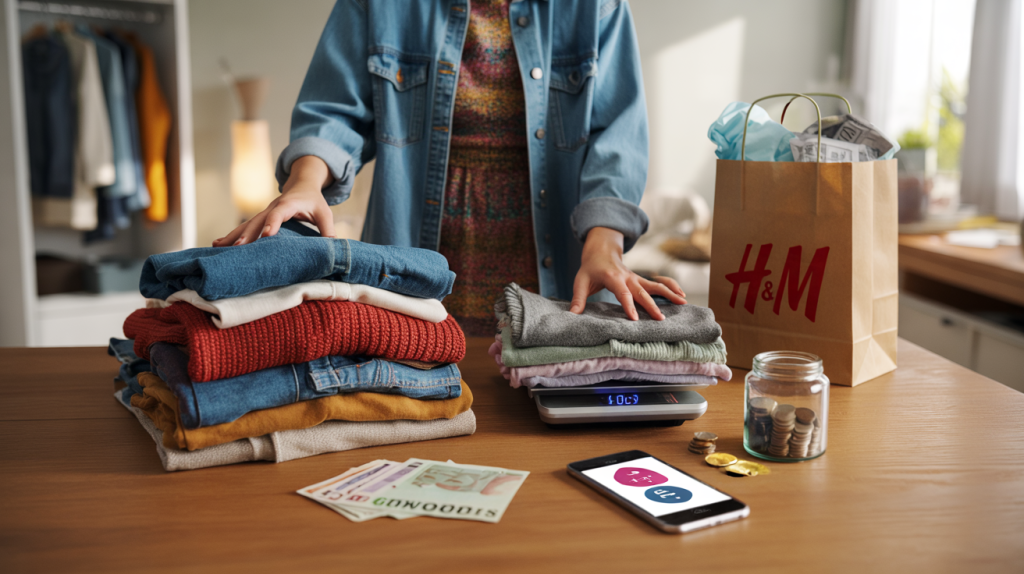
Sorting clothes can pay. From Vinted to cash for clothes, see real fees, per kilo rates and voucher tricks to turn a tidy closet into quick money.
That pile at the back of the wardrobe looks harmless. Then the question lands: how much does sorting those clothes actually bring in. The short answer is that money is on the table, and the right channel makes the difference between coins and solid payouts.
The context matters. Most garments never see a second life, while the resale boom grows fast. The Ellen MacArthur Foundation reported in 2017 that less than 1 percent of clothing material returns to new clothing, and a truckload of textiles goes to landfill or incineration every second worldwide source. Keeping items in use pays twice, fewer impacts and actual cash. The precise euros depend on where each piece goes.
Clothing resale or recycling: the money problem to solve
Three routes sit on the table. Sell piece by piece on apps, hand items to a consignment or buy sell trade shop, or drop them at weight based collectors for instant cash. Each route flips the same question, time versus payout.
People often start with the wrong bag. Basics with wear rarely sell fast online, while branded or trend pieces do. On the flip side, weight buyers want volume and do not pay for labels. That mismatch kills earnings.
Fees also change the maths. Some platforms charge sellers, others charge buyers. Missing those small lines in the fee pages leads to disappointment later.
Where the money comes from: Vinted, Depop, eBay, consignment, cash for clothes
Vinted charges sellers 0 in commission in many European countries. Buyers pay a service fee on top of the sale price, so the seller often pockets the full agreed price source.
Depop takes a 10 percent selling fee, and payment processors typically add around 2.9 percent plus a fixed amount per transaction according to Depop’s fees page source.
eBay lists a final value fee that commonly sits near 12.9 percent in Fashion categories for private sellers, plus a small fixed fee per order. Exact figures vary by country and account type source.
Buy sell trade stores pay on the spot but keep a large share. Buffalo Exchange states payouts of about 25 percent in cash or 50 percent in store credit for accepted items source. Online consignment like thredUP uses a sliding scale. thredUP’s public payout chart shows roughly 3 to 80 percent depending on the selling price and category source.
Weight based collectors pay quickly with no listing work. In the UK, MoneySavingExpert tracks typical “cash for clothes” rates around 40p to 70p per kilogram, and warns that some sites pay less for damaged items source. Brand take back schemes add non cash value. H&M’s Garment Collecting program offers a voucher, historically 15 percent off one item per bag of textiles, with country specific terms source.
- Peer to peer apps for higher value pieces
- Consignment or buy sell trade for convenience
- Cash for clothes by weight for quick clear outs
- Brand take back vouchers for worn out textiles
So, how much can sorting clothes bring in
Numbers land once the pile is split. Keep wearable, branded or seasonal items for peer to peer. Move ordinary basics or worn pieces to weight buyers or take back bins.
Here is a simple scenario. Imagine 10 kilograms of mixed clothing, roughly 50 to 70 items depending on fabric. Sell 12 good pieces online at 12 euros each. On Vinted, with 0 seller commission per its help center, that yields about 144 euros before any optional promotion. On Depop, the same 144 euros sale value becomes roughly 144 minus 10 percent Depop fee minus payment processing, so close to 124 to 127 euros using the fee structure above.
Now move the remaining 8 kilograms to a weight buyer at 0.60 pounds sterling per kilogram, the mid point in MoneySavingExpert’s tracked range. That returns about £4.80. Switch that to a brand take back and the return arrives as a voucher, not cash. One H&M bag grants a single discount that can cut the price of a future purchase under the program’s terms.
Avoid common mistakes and maximise payout from wardrobe decluttering
Photograph well lit, true to color images. Buyers scroll fast, so the first photo carries the click. Describe flaws clearly to prevent returns and wasted time.
Bundle low value items. A set of three T shirts in the same size sells more easily than single pieces at micro prices. It saves shipping too.
List in season. Coats sell in October, not in May. Search the platform for similar sold items and price just under the median to win the algorithm nudge.
Check fees before posting. eBay’s category fees change, Depop adds processing, thredUP payouts drop for low price items. Use each site’s live fee page for the current numbers linked above. Then pick one channel and stick to it for a month to build reviews.
There is also the climate upside. WRAP’s research found that extending the active life of clothes by just nine months can reduce carbon, water and waste footprints by around 20 to 30 percent in the UK market, update published in 2017 source. Some buyers care and pay for that story when the listing reads clean and credible.
The missing piece is speed. Need money this week, use buy sell trade or weight buyers and accept a lower return. Have time, list the best items where seller fees are light. Keep damaged textiles for take back boxes and use the voucher on a planned purchase. Sorted this way, even small wardrobes can recieve meaningful cash instead of sending fabric to waste.