
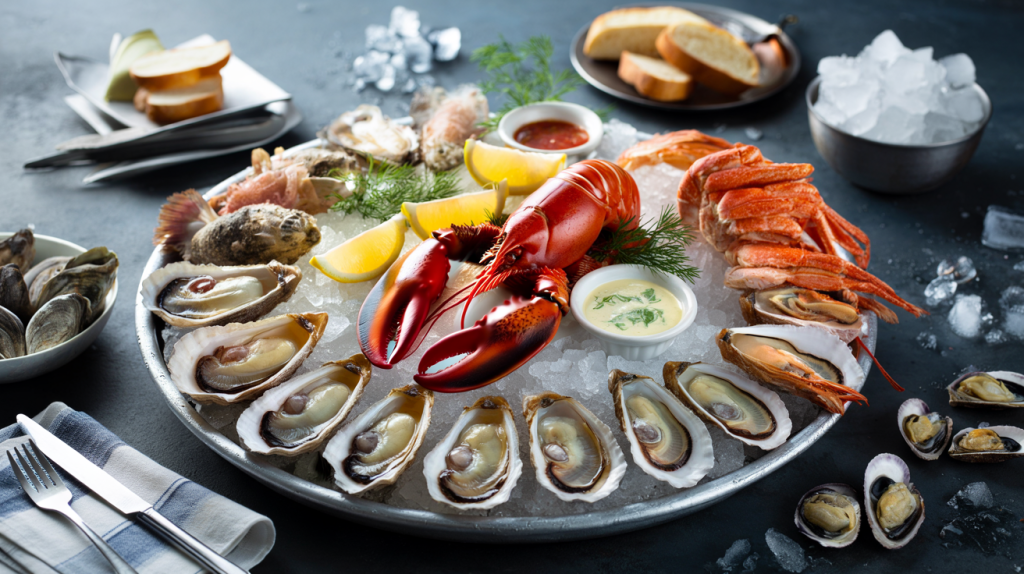
Crushed ice, bright oysters, sweet shrimp, lemon quarters that shine. That restaurant scene can happen in your kitchen today, without panic or guesswork. The method is simple : shop smart in the morning, chill hard, cook one or two easy items, then build layers of cold freshness that look like a tide pool.
The essentials land fast : plan 6 oysters per person, 120 to 180 grams of peeled shrimp, plus a shareable star like crab or lobster. Keep seafood at or below 4 °C or 40 °F on ice and respect the two hour rule for serving at room temperature, one hour if the room runs above 32 °C or 90 °F. That is not a detail, it is food safety backed by the FDA and USDA guidance from 2022 and 2024. And yes, raw oysters are a risk in warm months, with the CDC attributing about 80 percent of Vibrio infections to May through October and estimating 80,000 illnesses and roughly 100 deaths in the United States each year as of 2023.
How to Prepare a Homemade Seafood Platter
Here is the plan that works on a busy weekend. Buy fresh in the morning, get a big bag of crushed ice, then chill a serving tray or sheet pan. Cook the shrimp right away if buying raw, shock in ice water, dry well, refrigerate. Keep live oysters and clams cold and dry, covered with a damp towel, cup side down.
Anxiety usually comes from timing and tools. Solve both. Block one hour before guests for shucking and assembly. Set out a folded kitchen towel, a short oyster knife, seafood crackers for crab, small bowls for sauces and plenty of napkins. The platter feels luxurious when nothing drips and every shell sits snug on ice.
Freshness beats variety if budget is tight. One great species in peak condition tastes better than four tired ones. Ask the fishmonger for harvest dates and smell the fish counter. Clean ocean scent is right, anything sharp or sour means no sale.
What to Buy : Oysters, Shrimp, Crab and Lobster
The mix below feeds most tastes without waste. Scale quantities to appetite and occasion, then add bread, good butter and lemon.
- Oysters : 6 per person for starters, 8 to 10 for a main. Choose a single region for clean flavor.
- Shrimp : 120 to 180 g per person cooked weight. Large size, tails on for easy handling.
- Crab : 1 whole cooked crab serves 2 to 3. Or 250 g picked meat per person for simplicity.
- Lobster : 1 lobster of 600 to 800 g serves 2 to 3 when mixed with other shellfish.
- Clams or mussels : 6 small clams or 12 mussels per person if you want extra brine.
- Ice : 3 to 4 kg for a six person platter, plus a chilled metal tray.
- Extras : lemons, shallots, red wine vinegar, fresh herbs, mayonnaise, hot sauce, crusty bread.
Season shapes choice. Oysters shine in cold months, and while aquaculture offers safe product year round, warm water raises risk. The CDC notes that most Vibrio cases arrive between late spring and early fall in its 2023 update. Ask for harvest tags, which show the date and location, and keep them until service.
Safety and Storage : Ice, Timing and Temperatures
Cold control decides everything. The FDA recommends storing seafood at or below 4 °C or 40 °F, with crushed ice as a reliable buffer against temperature spikes, guidance reaffirmed in 2022. Build the platter last, not first, and return it to the fridge if guests are late.
The USDA two hour rule applies to your table service in 2024 guidance. Perishables can sit out up to two hours at typical room temperature, but only one hour if the space is hotter than 32 °C or 90 °F. After that, discard leftovers from the platter. No reheating for raw shellfish.
Live oysters and clams need air. Store in a bowl, covered with a damp towel, never sealed in water, never submerged in fresh tap water. Place shells cup side down to keep liquor inside. For cooked items, the USDA sets 63 °C or 145 °F as the safe internal temperature for fish and shellfish. If reheating crab claws or lobster, steam gently until hot through rather than boiling hard.
Risk is not abstract. The CDC estimates about 80,000 Vibrio infections annually in the United States and around 100 deaths as of its 2023 data, with raw oysters a well known source. People with chronic liver disease, diabetes, or weakened immunity should skip raw bivalves and opt for cooked shrimp, crab and lobster instead.
Plating, Sauces and Final Touches
Think layers. Lay crushed ice across a rimmed metal tray. Nestle ramekins first, then the largest shells for structure, then oysters in tight rings so they do not tip. Tuck lemon quarters and herbs between clusters for color. Keep an extra bowl of ice nearby to refresh the melt.
Sauces keep it bright. Mignonette comes first : very finely diced shallot, red wine vinegar, a big pinch of cracked pepper, rested ten minutes. Classic cocktail sauce next : ketchup, grated horseradish, lemon juice, a little Worcestershire. Also offer good mayonnaise or aioli for crab and lobster, plus hot sauce for the heat lovers.
Texture makes the platter feel generous. Add thin slices of dark rye or baguette and a cold slab of salted butter. If you want a warm accent, pass a small plate of griling shrimp skewers from the oven while the platter lands on the table. Tools matter too, so bring oyster knife, folded towel, seafood forks, and shell bowls so guests feel free to dig in.
One last detail elevates the moment. Chill the serving tray for at least 20 minutes, pile ice high, then wipe the rim before carrying it out. The shine, the scent, the order on the tray, that is what turns good seafood into a showpiece at home.