
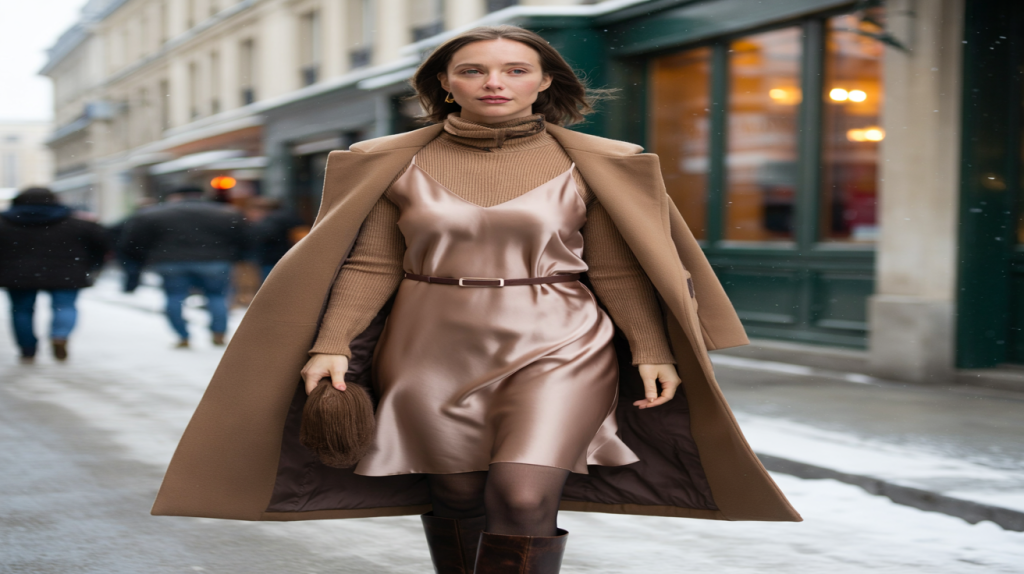
A slip dress in January sounds bold. It works when the outfit treats the nuisette as a hero layer, not the only layer. Start with a heat-holding base, add insulating tights, wrap it in knits, then lock it in with boots and a real coat. Result : soft glamour that actually functions in cold air.
The idea is simple. Create warmth with thin-but-smart layers that trap air, keep moisture off the skin and balance proportions. A midi or maxi nuisette over a breathable base, plus 80 to 200 denier tights, ankle or knee boots, and a long wool coat turns a summer piece into a winter uniform. Office at 9, dinner at 8, no shivers in between.
Winter-proofing a nuisette: the fast answer
Pick the right slip first. Satin or silk cut on the bias drapes cleanly, avoids bulk and slides over layers. Choose a midi length for better coverage, a V-neck for neat layering with turtlenecks, and straps wide enough to hide a base layer.
Then stack: ultra-thin merino or heat-tech style base under the nuisette, opaque thermal tights, tall socks, leather boots, chunky cardigan or fitted blazer, wool or down coat. One standout accessory – a belt or a brooch – keeps it polished instead of bundled.
Layering that keeps heat: fabrics, tights and real numbers
Material matters. According to The Woolmark Company, merino wool can absorb moisture vapor up to 35 percent of its dry weight while staying comfortable. That helps a slim merino turtleneck or bodysuit feel warm without the sweat chill under a silky nuisette.
Indoors set the baseline. The World Health Organization recommended a minimum indoor temperature of 18 °C in its 2018 Housing and health guidelines. If the commute and platforms felt icy, that target explains why fine layers under a slip are enough once inside a cafe or office.
Tights decide a lot. Go opaque at 80 denier for desk days, push to thermal or fleece-lined versions on frosty mornings. Leather or lined boots add a wind block. Silk or modal slips glide over bases so nothing bunches when moving.
Quick winter slip-dress checklist :
- Base layer : thin merino turtleneck or long-sleeve top in skin tone or exact dress color
- Underlayer bottom : thermal shorts to stop static and add a warm panel
- Legs : 80-200 denier tights, or fleece-lined tights when temps drop
- Footwear : knee boots for maximum coverage; ankle boots with tall socks for midi hems
- Top layer : chunky cardigan for volume, or sharp blazer for structure
- Outerwear : long wool coat or insulated parka on wet, windy days
- Add-ons : belt over knit to define shape, scarf to seal the neckline
Style moves from office to night out
Office hours liked clarity. A black satin nuisette over a fine grey merino turtleneck, 100 denier tights, block-heel boots and a navy blazer reads tailored, not party. The blazer went on at the desk, the long coat for outdoors, same base layer all day.
Evening called for texture. Swap the blazer for a chunky fisherman cardigan, cinch with a slim leather belt at the waist, switch to knee boots and add a velvet ribbon in the hair. Lace-trim slips pair beautifully with matte knits, the contrast looks intentional and warm.
Color helps the illusion. Tonal stacks – cocoa base, bronze slip, camel coat – look expensive and reduce visual clutter. High contrast feels bold, but it can chop the line. If the slip is bias-cut, let it move. The layers should hug, not grip.
Care, sustainability and budget that stretch the season
Fabric care keeps the plan alive. Silk prefers a delicate wash or hand wash, then flat dry. Satin polyester tolerates machine cold cycles in a mesh bag. Reduce friction so layers glide – a touch of anti-static spray on tights solves winter cling.
On materials, context matters. Textile Exchange reported polyester accounted for about 54 percent of global fiber production in 2022 in its 2023 Preferred Fiber and Materials Market Report. Choosing recycled polyester satin or certified merino upgrades warmth and footprint, without losing the sleek slip look.
Cost per wear drops fast in winter. That summer dress suddenly worked for three extra months, which stretched budgets while closets stayed smaller. One small tweak inspried the rest : swap bare skin for a base layer in a near-skin shade, then match the dress with heavier textures elsewhere so the outfit feels seasonal, not summery.
When temperatures plunged, proportion solved what insulation could not. A long coat that fully covers the nuisette, a taller shaft boot, a scarf sealing the neckline – these moves blocked wind and held heat. Add gloves, keep jewelry close to the body, and the slip kept its soft shine without sacrificing comfort.