
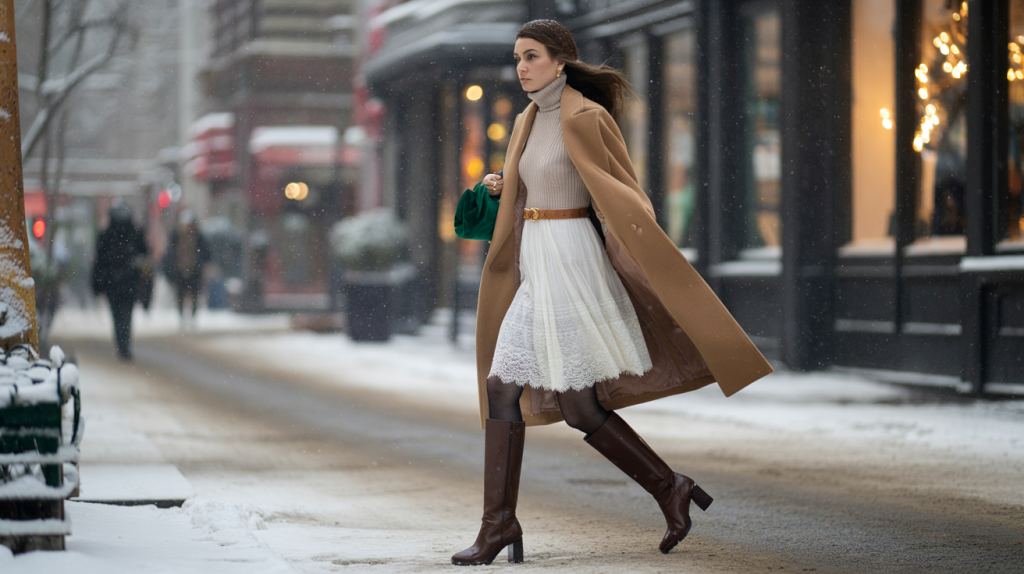
Snow outside, lace on. That duo can work when warmth leads the styling. A white lace dress turns into a winter power move with smart layers, plush textures and grounded accessories that keep the chill out without dulling the romance.
Readers land here for straight answers: what goes under and over, which tights, what shoes, how to keep the look crisp yet practical. The plan below solves the warmth-versus-style puzzle fast, so the dress feels coazy, photogenic, and ready for real weather.
White Lace Dress in Winter: solve the warmth-versus-romance puzzle
Start with structure. Lace is airy, so the base layer does the heating: a thin merino turtleneck or long-sleeve top under the dress, plus a seamless slip to stop cling and add opacity. If the dress has sheer sleeves, try a fitted mesh or merino layer in near-skin tone to keep the visual light.
Then build volume on top. A chunky cable knit, cropped cardi or a tailored blazer sharpens the silhouette and traps air – the real insulator. Outside, a knee-length wool coat keeps proportions balanced with lace hems showing a clean line rather than bulk.
Footing matters. Knee-high leather boots or lined ankle boots seal warmth and steady the look. If the dress is midi, a sleek sock boot closes the gap. Evening event on icy streets? Swap stilettos for block heels to stay elegant and upright.
Fabric science that keeps you warm in lace
Merino earns its place under lace. The Woolmark Company reports that fine Merino can absorb moisture vapor up to 35 percent of its dry weight while still feeling dry, which helps manage indoor-outdoor temperature swings without the clammy feel.
Indoor comfort targets help, too. The World Health Organization’s Housing and Health Guidelines (2018) recommend at least 18 °C for healthy indoor temperatures. That means a thermal base plus 80 to 120 denier tights usually covers office to evening. On bitter days, fleece-lined tights or a thin legging under an opaque tight adds stealth heat.
Lace type changes the game. Cotton lace feels matte and daytime-friendly; nylon or viscose blends drape smoothly and resist creasing in coats. A lined lace dress reads dressier and blocks wind better than an unlined one, so it becomes the simplest winter-ready option.
Colors, textures and where to wear it
Winter white glows when contrasted with depth. Think ecru dress with camel coat and chocolate boots for day, or optic white with black tights and patent heels for night. Metallic knitwear – pewter or soft gold – warms up the palette without stealing focus from the lace.
Work, party, wedding guest – same dress, different layers. Office hours: merino roll-neck under a knee-length lace shift, leather belt, knee boots. Holiday drinks: cropped mohair cardigan, sheer-black tights, slingbacks. Cold-weather wedding: satin slip under a long lace dress, wool wrap, satin pumps in a deep jewel tone.
Quick checklist to build the outfit in 60 seconds
- Base: thin merino or heat-retaining top that matches your skin tone for discreet warmth.
- Mid-layer: seamless slip for opacity and smoother drape under lace.
- Legs: 80-120 denier tights for everyday, fleece-lined on sub-zero days.
- Shoes: knee-high or sock boots for coverage; block heels for icy sidewalks.
- Outerwear: structured wool coat that hits at the knee to frame lace hems.
- Accessories: belt to define the waist, small satin bag, minimal jewelry to let texture talk.
- Emergency: mini stain stick for salt splashes and lipstick near white lace.
Care, brightness and impact
Re-wearing beats rebuying. The United Nations Environment Programme estimated in 2023 that fashion accounts for 2 to 8 percent of global carbon emissions. Styling the same white lace dress across winter occasions reduces new purchases while keeping variety through layers and accessories.
Wash routines save both fabric and energy. Energy Saving Trust guidance (2024) notes that washing at 30 °C can use up to 40 percent less energy than higher settings. Place lace in a wash bag, choose a gentle liquid, skip chlorine bleach, and dry flat to protect the pattern. For brightness, oxygen-based whiteners work on dinginess without the fiber damage of harsh bleaches.
Storage matters between events. Hang the dress on a padded hanger, slip a breathable garment bag over it, and tuck acid-free tissue between layers so the lace does not snag. Spills from winter streets? Blot with cool water first, then target clean – rubbing spreads grit into delicate threads.