
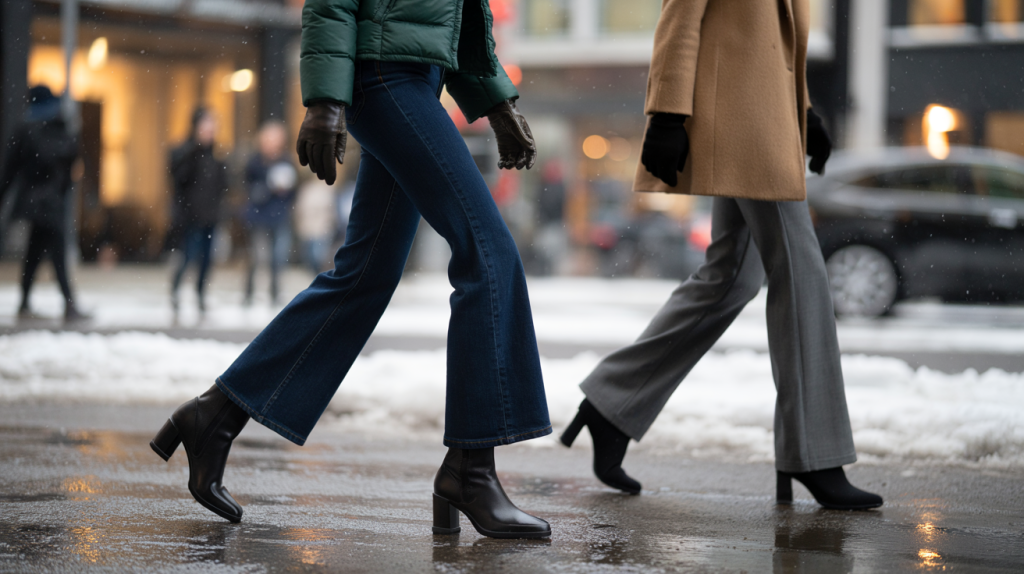
Meta description : Flare pants with boots in winter: exact boot heights, hem rules, and outfit formulas that flatter et stay warm. Real tips, fabrics, and fit notes.
Pantalon flare avec bottes hiver : quick rules that rescue your winter look
Yes, flare pants play beautifully with boots in winter. The secret sits in three levers : boot shaft height, heel height, and hem length. Put them in the right order and the leg line turns long, clean, warm. Get one wrong and the flare collapses on the shoe, gets wet, or looks bulky.
Here is the big picture. Ankle to mid‑calf boots give the flare room to drape. Block heels add lift so the hem clears slush. A hem that kisses the top of the boot without trapping it keeps the silhouette fluid. Think of it as a neat stacking puzzle, not a trend you need to fear.
Proportions that flatter : shaft heights, heels, et hems
Start with shaft height. Ankle boots that hit just above the ankle bone keep the flare moving. Mid‑calf styles can work too, as long as the shaft tapers under the pant leg instead of ballooning. Tall knee boots rarely play well under flares because the fabric catches mid‑calf.
Now heel height. A 3 to 6 cm block heel or platform lifts the hem off puddles and lengthens the leg line. Stiletto heels sink into winter grates and cobblestones, so they read fussy. Lug soles add grip and a tiny height boost, which helps balance wider hems.
Hem length matters most on wet days. Aim for a gentle break that sits 1 to 2 cm above the ground when standing. No dragging. A tailor can shorten flares while keeping the original hem, and that tiny tweak transforms the whole look.
Try these evergreen outfit formulas that just work :
- Dark denim flare + black ankle boot with 4 cm block heel + cropped puffer
- Wool‑blend flare trouser + smooth mid‑calf sock boot + long tailored coat
- Corduroy flare + suede lug‑sole ankle boot + chunky knit
- High‑rise flare jean + platform Chelsea boot + leather jacket
- Office‑ready flare + square‑toe heeled boot + blazer layered over a thin roll‑neck
Warmth, grip, and material choices for real winter
Cold sidewalks demand traction and insulation. Look for rubber lug soles and a tread that channels slush away. Leather uppers block wind, while treated suede needs a protector spray before the first outing. A slim sock boot with stretch paneling slides under flares without bumps.
Layering does more than style. According to The Woolmark Company, wool can absorb up to 30% of its dry weight in moisture while remaining warm to the touch, which makes thin merino socks a stealth upgrade on icy commutes. That small layer keeps feet dry when temperatures swing.
Care counts too. Levi Strauss et Co. found in a 2015 lifecycle analysis that a single pair of jeans uses about 3,781 liters of water across its life. Washing less, line drying, and spot cleaning keep the fade intact and the hem crisp while saving resources. It also preserves that tailored break you paid for.
Sustainability enters the chat for a reason. The Ellen MacArthur Foundation reported in 2017 that global clothing production doubled in the previous 15 years, while average garment use fell by 36%. Choosing resolable boots and dense denim that lasts two or three winters beats chasing disposable fixes that never sit right.
Mistakes to avoid et real‑life fixes
Too‑long hems soak through fast. The fix : micro‑hem flares so they hover just above the ground in your winter boots, not your sneakers. Test the length at home with the actual pair you plan to wear most.
Bulky bunching around the calf kills the line. The fix : pick ankle boots with a slim shaft or sock‑style stretch boots so the flare falls cleanly. If the fabric grabs the boot, size up the flare or go down in shaft volume.
Soft, flimsy flares collapse in wind. The fix : choose heavier denim or wool‑blend trousers with a bit of drape. Even 1 to 2% elastane helps the fabric recover after a day under a coat and tote bag.
Slippery streets create hesitation. The fix : lug soles, micro‑platforms, and winterized rubber compounds. Test the sole by pressing a fingertip into the tread at room temperature. Slight give equals better grip. If the boot feels like plastic, it will slide.
When in doubt, photograph the outfit in daylight. The camera catches drag lines and proportions the mirror missed. Adjust the hem, swap heel height, or switch shaft shape. Small edits add up fast, ocassionally faster than buying another pair.