
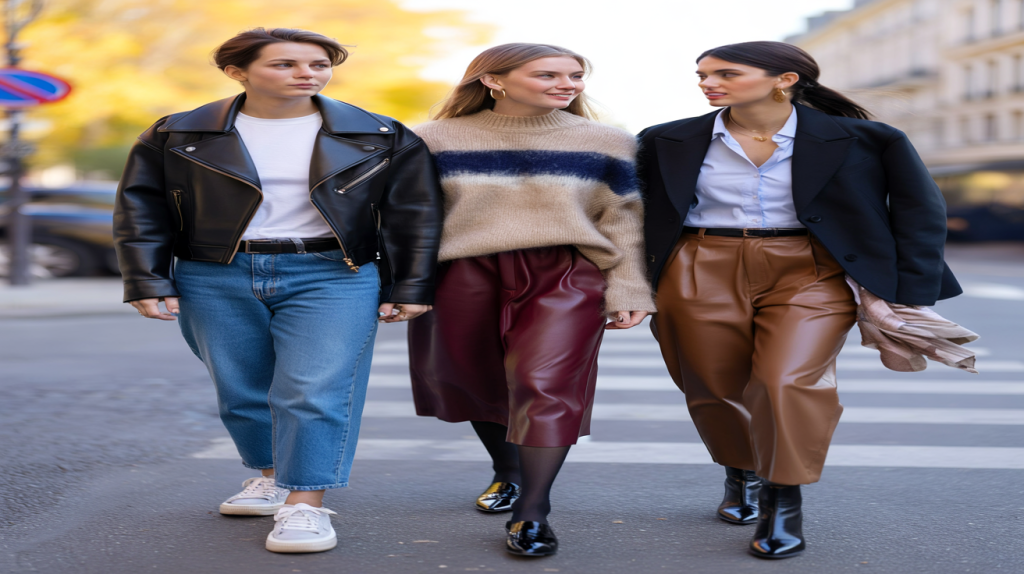
Leather signals confidence at a glance. The trick is wearing it in everyday life without looking heavy or overdressed. One strong piece, paired with soft textures and relaxed cuts, turns a classic biker, skirt, or boots into a modern uniform that works from commute to cocktails.
Trends shift, yet leather keeps coming back when temperatures dip and layers matter. The question isn’t “should leather be worn?” but how to balance style, comfort, and impact. Cow leather sits inside the livestock system that the Food and Agriculture Organization measured at 14.5% of global greenhouse gas emissions in its 2013 assessment. Good news : better sourcing and secondhand quickly improve the picture and keep the look timeless.
How to wear leather today : the rule of balance
Start with one hero item. A leather jacket, trousers, skirt or boots set the tone. Everything else stays softer – cotton tees, ribbed knits, fluid trousers, clean sneakers. That balance reads effortless, not try-hard.
Color does a lot of heavy lifting. Black looks sharp near the face with a white tee or striped knit. Chocolate and tan warm up denim. Burgundy works nights without shouting. If in doubt, go matte rather than ultra-shiny.
Texture mixing keeps things modern. Pair smooth leather with fuzzy mohair, waffle knits, crinkled poplin, or raw denim. The contrast gives dimension and dodges the biker-costume vibe.
Three foolproof outfit formulas that just work :
- Classic biker + white tee + straight blue jeans + low-profile sneakers
- Midi leather skirt + chunky knit + sheer tights + loafers
- Leather trousers + cotton shirt slightly untucked + tailored blazer + ankle boots
Leather jackets, pants, skirts : outfits that feel effortless
Jackets: cropped to the hip flatters most bodies and layers cleanly. Keep hardware minimal for the office, add a scarf or hoodie on weekends. For evenings, swap sneakers for pointed boots and a slim belt.
Pants: straight or slightly tapered lands more wearable than super skinny. Aim for a soft, lined pair that moves when walking. A polished loafer or sleek trainer makes them daytime-friendly.
Skirts: a knee or midi cut hits the sweet spot. A-line reads easy with a tucked knit; pencil shapes love a relaxed button-down. Neutral tights and low heels elongate without effort.
Shorts and culottes: better with opaque tights outside summer. Keep the top calm – a fine-gauge rollneck or simple cardigan – and add structured outerwear for balance.
Real, vegan or secondhand : smarter choices backed by data
Choosing with context helps. Real leather wears in and can last decades when cared for. That durability matters. The UK charity WRAP reported in 2012 that extending the active life of clothing by nine months cuts carbon, waste and water footprints by 20 to 30%. Buying vintage leather or repairing a jacket taps directly into that benefit.
Vegan options vary. Polyurethane blends feel light and modern, while PVC should be avoided for quality and environmental reasons. If going vegan, look for thicker, fabric-backed PU that resists peeling, and prioritize lined pieces so breathability improves.
Sourcing cues steer better purchases. Leather Working Group certification indicates audited tanneries with stricter water and chemical controls. Brands stating vegetable tanning or chrome-free tanning reduce certain chemical risks. Labels rarely tell the whole story, yet these tags are practical signals when comparing two similar items.
Care, fit and storage : make leather last
Fit comes first. Sleeves should kiss the wrist bone, shoulders sit on the shoulder point, and jackets close without strain. Trousers need a clean drape with slight break at the shoe. A good alterations tailor can tweak hems or add tiny waist darts; leather can be adjusted, just not as much as wool.
Daily habits pay off quickly. Air items after wear, brush off dust with a soft cloth, and rotate shoes so leather rests 24 hours between outings. Keep away from radiators and direct sun that dry fibers.
Conditioning is light-touch. Use a neutral cream sparingly every 3 to 6 months on full-grain and smooth finishes, testing on a hidden spot first. Suede prefers a protective spray and a gentle rubber brush – no heavy creams. Zips glide longer with a touch of beeswax.
Storage is simple. Hang jackets on wide wooden hangers, stuff bags loosely with tissue, and add cedar blocks to deter moths. For boots, use shoe trees to keep shape. Spills? Blot, do not rub, then consult a specialist cleaner for oil or dye transfer. Small scuffs can be polished at home, yet large color losses deserve a pro touch.
For accessories, keep hardware wrapped during travel and avoid overfilling so seams do not stretch. Yes, even the best leather stretches under stress, and no bag enjoys being packed with too many daily accesories.