
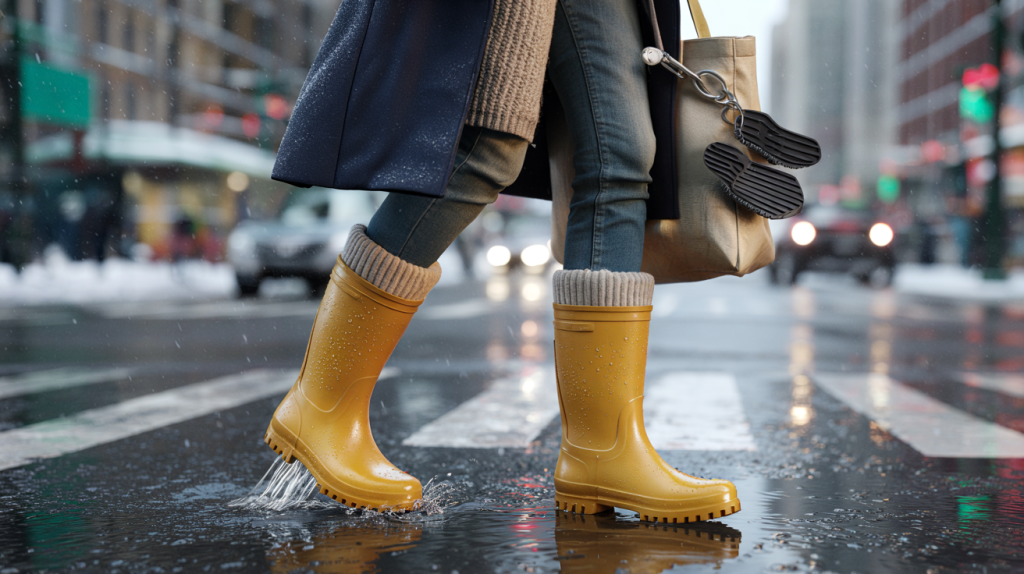
Turn rain boots into cold‑weather allies: smart socks, liners, grip tricks and outfit ideas backed by real data to stay warm without losing style.
Snow that melts to slush, freezing rain on the sidewalk, morning commutes that feel like obstacle courses. The big question pops up every winter: can rain boots handle the cold season? Yes, and well. With insulation inside, traction outside, and simple outfit tweaks, rubber boots go from puddle gear to everyday winter partners.
Here is the core: keep warmth by adding liners and thermal socks, manage sweat so feet stay dry, and upgrade grip for icy days. Feet hold about 250,000 sweat glands each, so moisture control is non‑negotiable (American Podiatric Medical Association). Wool keeps insulating even when damp and can absorb up to 30% of its weight in water, helpful on slushy streets (The Woolmark Company). On harsher days, wind chill bites fast: frostbite can begin in around 30 minutes at a wind chill near -28 °C, or -18 °F (National Weather Service, Wind Chill Chart, 2023).
How to wear rain boots in winter : the essentials for warmth and grip
Rubber blocks wind and water, yet it does not insulate on its own. The trick is turning the boot into a micro‑climate: add heat underfoot, add loft around the foot, and let sweat escape.
Real life fix, step by step, with simple pieces you likely own already.
- Start with a thin moisture‑wicking sock, then add a medium or heavy wool layer on top for insulation.
- Drop in a removable insulating insole to stop conductive cold from the ground.
- Clip on ice cleats or micro‑spikes when sidewalks glaze over; remove indoors to protect floors.
- Pick a taller shaft for deeper slush; choose a roomier fit to accommodate socks without compressing them.
- Seal hems: tuck slim jeans into the boots or let wide trousers break just over the shaft to block spray.
- Rinse salt off after outings and dry boots at room temperature to protect rubber.
The right socks and liners for rain boots : wool, fleece, merino
Warmth begins with socks. Cotton stays wet and chills, while merino or blended wool traps air, still working when damp. That 30% moisture absorption capacity means fewer cold toes in slush or light rain (The Woolmark Company).
Use two layers on cold, dry days: a thin synthetic liner to move sweat, then a cushioned wool sock for loft. On wetter commutes, swap the top layer for a boot‑specific fleece liner or a neoprene sock to add windproof structure. Do not size down. Compressed socks lose air space and warmth fast.
Think about sweat, not only cold. Feet produce notable moisture through the day, so rotate socks when returning from lunch or a gym session. Breathable socks reduce odor and help preserve that cozy feel in rubber shells (APMA).
Outfits that work with rain boots in winter : coats, jeans, skirts
City or trail, the silhouette matters. Slim or straight jeans tuck neatly into mid‑calf boots and keep lines clean. Wide trousers drape over the shaft for a classic look. Cropped wool trousers pair well with taller boots, leaving a narrow gap filled by thick socks.
Coats set the tone. A long wool coat plus glossy black rain boots reads sharp on workdays. A quilted parka pairs with matte boots for weekend errands. Skirts work too: knee‑length with opaque tights and a chunky sweater balances the boot’s utility vibe with warmth.
Color helps more than expected. Dark olive or navy rubber hides salt marks, while bright red or yellow boots become the statement under neutral layers. On very cold mornings, a shearling insole adds stealth insulation without changing the outfit.
Care, traction and real world data : safety and durability
Grip decides comfort on icy blocks. When temperatures drop and freezing rain is forecast, traction add‑ons make a clear difference. The National Weather Service notes that frostbite risk rises quickly as wind picks up, which often coincides with slick ground; layering for warmth and adding ice cleats reduces both cold stress and slip risk (NWS, 2023). If black ice occured overnight, switch to a lugged sole or carry micro‑spikes in a tote.
Daily care keeps rubber flexible. Salt draws out moisture from materials, so a quick rinse after the commute, a wipe dry, and a rest at room temperature preserve the boot shell. Avoid heaters that can crack rubber. Replace insoles each season to keep cushioning and warmth consistent.
One last touch is fit. A thumb’s width at the toe box leaves room for air and thicker socks, which maintains insulation. For those who run warm, use a thin liner and a medium merino sock, then open a coat zipper slightly to vent on the go. For those who run cold, choose a taller boot with a fleece liner, then add a wind‑blocking outer layer around the calf, like a longer coat hem, to stop drafts above the shaft.
Put together, these moves turn simple rain boots into winter tools: dry outside, warm inside, and steady underfoot, all while keeping outfits easy and clean.