
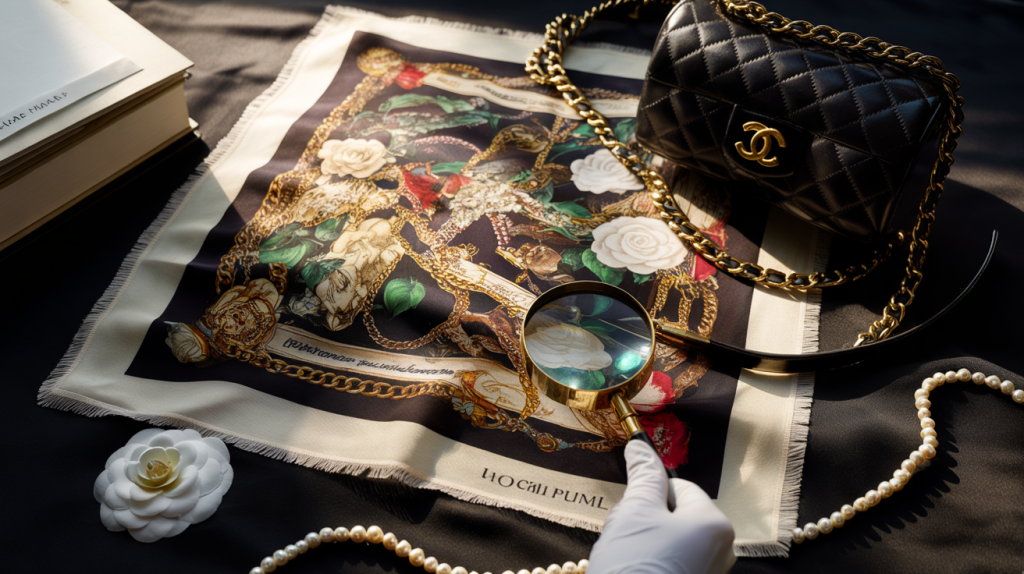
Imprimé oublié Chanel: why a forgotten print is suddenly everywhere
When a Chanel print disappears for years then resurfaces on a scarf, blouse or lining, collectors call it an “imprimé oublié” – a forgotten motif pulled from memory and the archives. The chase starts fast. Vintage dealers post a single close-up, and phones light up. That little square of silk can carry decades of house codes in one glance.
The context matters. Chanel has leaned on symbolic prints since the early days: the camellia, chains, pearls, lucky stars, the two Cs. Under Karl Lagerfeld from 1983 to 2019, bold logo graphics and trompe-l’oeil bijoux exploded on silks and ready-to-wear. Since 2019, Virginie Viard steered the studio until 2024, often revisiting heritage themes with a quieter hand. So yes, a rediscovered print instantly reads like a time stamp – and a style shortcut.
What “imprimé oublié” really means for Chanel lovers today
At heart, the phrase describes an archival or out-of-production motif that vanishes from current lines, then reappears on the resale circuit or in an editorial flashback. It can be a 1990s scarf covered in chain links, a silk blouse dotted with camellias, or a lining that mirrors a classic bijoux pattern.
Dates anchor the story. Gabrielle Chanel opened her first hat boutique in 1910, launched Chanel No. 5 in 1921 with perfumer Ernest Beaux, and introduced the 2.55 bag in February 1955. Each era added visual codes. The Lagerfeld years in particular pushed prints into pop culture, then paused, then revived. That ebb and flow is exactly how a motif slips into the “forgotten” bucket – until it doesn’t.
The search intent is practical: identify the print, authenticate, understand value, then style it with confidence. That is solvable with a few tactile checks et some archived references.
Spotting an authentic vintage Chanel print: fabric, finish, signature
Authenticity starts in the hand. Chanel vintage silks typically feel weighty and fluid, not crunchy. Hand-rolled hems curve inward, never sharp or perfectly flat. The brand signature sits discretely within the artwork, not floating awkwardly at the edge.
Labels tell a lot. Many scarves and blouses are marked “Made in Italy” or “Made in France”, with composition listed as 100 percent silk. Fonts look clean, spacing even. Hardware on buttons or charms mirrors current house typography. If the print includes the double C, edges appear crisp, no feathering.
For a fast field check, run through this short list before committing :
- Fabric : dense silk twill or crepe that drapes and rebounds when scrunched.
- Hem : hand-rolled, slightly plump, stitches barely visible from the front.
- Signature : “Chanel” integrated into the artwork, proportionate to the motif.
- Color : saturated with clean separations between shades, no bleeding.
- Provenance : receipt, boutique stamp, or consistent reseller history when possible.
Where these prints come from: runway echoes and archive clues
The most sought “forgotten” motifs often trace to the early 1990s, when runway styling layered chains, medallions and pearls across everything. Campaign imagery from that decade turned prints into icons. Fashion archives on Vogue Runway and Chanel’s own platforms help pin a season to a pattern without guesswork.
Cataloge references help too. Look for period magazines with full-page scarf ads, or auction listings that cite exact seasons. The dates create a chain of custody. When a silk shows a camellia grid that matches an early 1990s lookbook, that match becomes a strong anchor.
Cross-check against house milestones. A motif featuring the 2.55’s quilted diamond nods directly to February 1955. A perfume-bottle scatter channels 1921. Lagerfeld-era graphic repeats align with his tenure from 1983 to 2019. Recent studio pieces under Virginie Viard between 2019 and 2024 sometimes revive those graphics in softened palettes.
Buying smart now: care, price logic, and long-term wear
Pricing follows condition, scale of the artwork, and season specificity. Pieces tied to a documented runway or campaign usually command more than generic repeats. Scarves with intact hand-rolled hems and saturated color rise higher than sun-faded examples.
Maintenance is simple. Store flat, away from light. If needed, rely on professional dry cleaning familiar with silk twill. For blouses, a mesh garment bag reduces friction during gentle care. Avoid pinback brooches directly on dense prints to prevent snags.
Styling keeps the print current. Let the motif carry the outfit with neutral tailoring, or echo one accent color in a single accessory. A square scarf can shift from neckerchief to hair ribbon to bag handle in seconds, making a heritage piece feel new without alteration.
One last step completes the puzzle: document the find. Photograph labels, hems, and the entire artwork laid flat. Note dates that align with house history – 1910, 1921, 1955, 1983, 2019, 2024. That mini dossier supports resale and preserves the story behind an “imprimé oublié” Chanel treasure.