
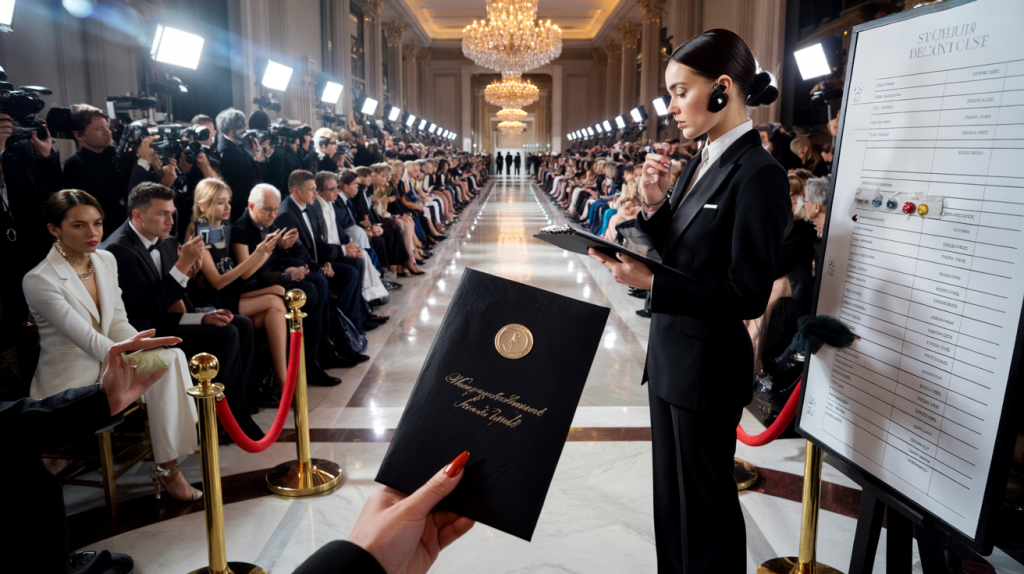
Go past the velvet rope : real routes into VIP fashion events, the calendars that rule invites, and the business reasons gatekeepers say yes.
Velvet ropes are not just theatre. Exclusive VIP fashion events set trends, spend, and headlines in one room. The stakes are huge : Bain et Altagamma sized the personal luxury goods market at €362 billion in 2023, up 4 percent at current exchange rates, which explains the obsession with the front row and its ripple effect on sales and culture (Bain & Company, 2023).
The industry still grows, cautiously. The Business of Fashion and McKinsey projected fashion to expand 2 to 4 percent in 2024, a reminder that access to the right rooms can tilt a season for brands and talent alike (BoF and McKinsey, 2024). So yes, the guest list is a business tool. And those who understand how the calendar, PR filters, and etiquette work, get in.
Exclusive VIP fashion events : what they are, who decides
From runway shows and couture presentations to showroom previews, after-parties, high jewelry unveilings and museum galas, these events are invite-only by design. Guest lists typically mix editors, buyers, celebrities, clients, and creators, filtered by the brand team and their PR agency. Names like KCD, Karla Otto and PR Consulting sit at the switchboard. One seat change can shift coverage. One misstep can close doors.
Gatekeeping is not just glamour. It protects product reveals, controls embargoes, and aligns the right eyes with the right collection. That is why invites are personalized, timed, and often non transferable. There is a reason phones are sometimes stickered, backstage is restricted, and seating charts are guarded like prototypes.
Fashion Week access and calendars : the road map to the room
The global spine is predictable, which helps. The four major fashion weeks – New York, London, Milan, Paris – run twice a year for womenswear, typically in February or March and again in September or October. Schedules are published by the CFDA, the British Fashion Council, Camera Nazionale della Moda Italiana, and the Fédération de la Haute Couture et de la Mode.
Paris Haute Couture Week sits apart, in January and in late June or early July, under the same Fédération. These dates matter because accreditation and invitations roll out around the official calendars, and off-calendar shows orbit them closely. Checking the Fédération de la Haute Couture et de la Mode, CFDA Fashion Calendar, British Fashion Council, and Camera Moda gives the baseline you build around.
Right now, most brands manage requests through PR contacts listed on show notes or press releases. Media outlets, retailers, stylists, and creators with a proven audience or buying power usually get priority. Charity galas and brand client nights are different : high-spend clients or donors are courted first, with a few tables left for partners.
How to get invited : practical plays that actually work
Access is rarely random, and it rewards discipline. Seen over a full season, these moves compound.
- Choose a professional lane : editor, buyer, stylist, photographer, or creator. Then show months of consistent work, not a week of hype.
- Pitch with receipts : recent stories, lookbooks, sales data, or audience metrics. One clean deck beats ten emails. Keep it short and tailored to the brand.
- Start with emerging designers and presentations. Seats are fewer, but the doors are more open. Relationships begun here often graduate to the big houses.
- Work through PR gatekeepers like KCD, Karla Otto, Purple, PR Consulting. Meet at previews, respect embargoes, send coverage links fast.
- Use legitimate pathways : retailer events, museum partners, and charity galas. Donations and client tiers sometimes include access to private viewings.
Example that repeats season after season : a regional buyer proves quarterly sell-through and requests a Milan appointment, not a front row. The showroom confirms, the buyer shows up on time, shares reorder data a week later, and is on the next runway guest list without asking. Simple, but definitly effective.
Mistakes that backfire, and a smarter 12-month plan
Spam blasts to dozens of PR addresses get flagged fast. So does asking for plus-ones, ignoring dress codes, shooting in no-photo zones, or posting looks before embargo times. Arriving late, then demanding to be seated, is remembered.
A better path looks steady. Map the year against the two main fashion cycles and couture months, then stack touchpoints : request lookbooks early, attend public exhibitions tied to collections, book showroom appointments during market weeks, and deliver coverage or orders promptly. Off-calendar experiences – stores opening nights, pop-up ateliers, trunk shows – act as on-ramps when the main runway feels out of reach.
The risk-reward is clear in the numbers mentioned above : a market counted in hundreds of billions and industry growth still in the low single digits mean brands must place invites where impact is measurable. Those who bring verified audiences, real buying power, or cultural heat are the ones moving up the list. The calendar will not change. The inputs you control can, starting with the next request email you send and the follow-up you deliver three days later.