
Meta description: Step inside Jacques Garcia’s restored Château du Champ de Bataille in Normandy: grand gardens, lavish rooms, and practical tips for a memorable visit.
Behind the gates of Château du Champ de Bataille, Normandy reveals a surprising scene: a 17th-century palace revived by designer Jacques Garcia, with theatrical gardens stretching as far as the eye can travel. This is not a museum piece. It feels alive, layered, and frankly dazzling.
Set in Sainte-Opportune-du-Bosc in the Eure countryside, the estate carries a classical French soul yet reads modern in its ambition. Jacques Garcia acquired the château in 1992 and began a meticulous, privately led restoration that continues more than thirty years on. The result is a lived-in showcase of Grand Siècle taste, inspired by the rigor of Versailles and the poetry of André Le Nôtre’s geometry, launched at Versailles in 1661.
Jacques Garcia and the rebirth of Château du Champ de Bataille
The main idea is simple: take a partly faded 17th-century residence and return its stature without freezing it in time. Jacques Garcia, known for Hôtel Costes in Paris and sumptuous historic interiors, chose this Norman landmark as a life project. He restored façades, revived axial perspectives, and reinstalled period decorative arts so rooms once again tell coherent stories.
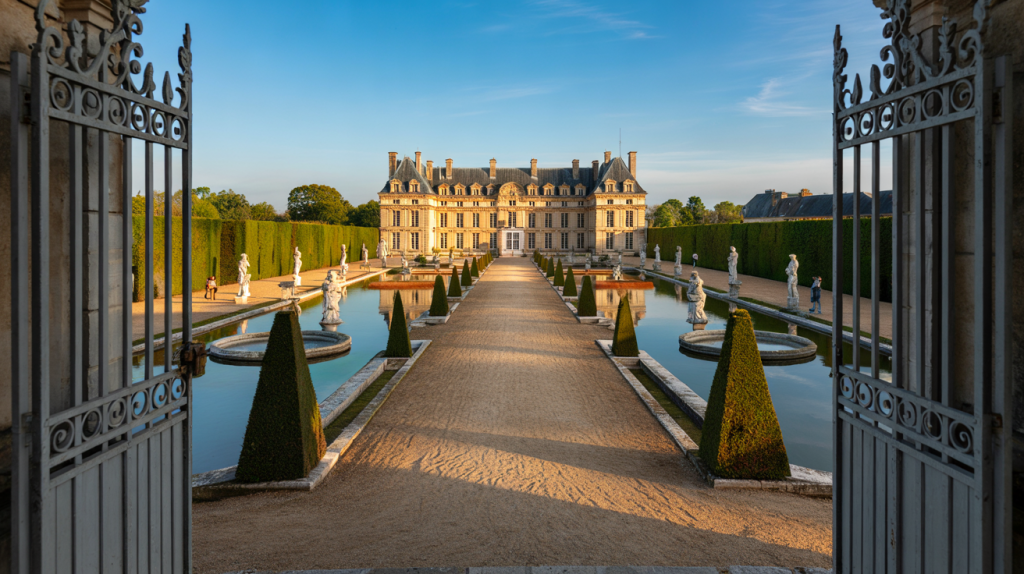
Many visitors arrive expecting a pretty château. They meet a comprehensive vision. The approach begins on a long central axis, a classical trick that sets up drama before the first step inside. Restoration here favors authenticity and effect in equal measure, and that balance is what wins hearts.
There is a practical side to this dream. The estate opens seasonally, with interiors and vast grounds accessible on specific days. The aim is not mass tourism. It is quality time in a place written for slow looking.
Gardens of Champ de Bataille: power lines, mirrors of water, quiet drama
Numbers help. The formal grounds extend over more than 40 hectares, organized on terraces that descend from the château like a cascade of green rooms. Each parterre has a purpose, whether a mythological allée, a water mirror that doubles the sky, or a bosquet designed for shade and silence.
The historical backbone is unmistakable. Central perspective and strict symmetry echo 17th-century codes, while contemporary plantings keep the scene fresh. Visitors will notice how light hits stone at midday, how clipped yew sculpts shadows, how the horizon closes the composition like a theater backdrop. It reads classical, but it feels cinematic.
Evening events sometimes light the water basins and statues, turning the grounds into a moving set. That is the moment the garden’s architecture takes over, when straight lines look almost liquid. It is opulant in the best sense.
Inside the château: gilded rooms that speak in layers
Step indoors and the temperature changes. Woodwork, tapestries, and period furniture rebuild the ceremonial rhythm of a great house. The décor privileges the 17th and 18th centuries, with deep colors, portraits in dialogue, and carefully placed objets that add texture rather than noise.
The logic is scholarly but not stiff. A salon might pair a tapestry with a marble console so materials argue with each other. A cabinet room condenses rarities to a near-whisper. Floors creak, silk catches light, a fireplace anchors the scene. The cumulative effect delivers atmosphere, not a checklist.
This is where Garcia’s training shows. Rooms are legible from the door, always with a focal point, always with an axis. The eye moves the way a guest would have in the 1600s, from entrance to state spaces to more intimate corners. It is history told through staging, yet every piece earns its place.
Plan a visit to Château du Champ de Bataille
The observation is clear: the château rewards unhurried visits. Arrive with time for both house and gardens, and plan for changing light. Normandy’s weather shapes the experience, especially in late afternoon when tones soften.
Common pitfalls are easy to avoid. Rushing the gardens cuts them in half, since many terraces reveal their logic only when walked end to end. Skipping interiors misses the dialogue with the parterres outside. Checking the official calendar matters, as programming and access can shift during the season.
Concrete details help set expectations. The estate sits about two hours by car from Paris, with Rouen and the Seine valley offering natural pairings for a day or weekend. The story here belongs to the 1600s, yet the restoration began in 1992 and has unfolded steadily since, terrace by terrace, room by room.
To make the most of the trip, a short checklist keeps things simple :
- Walk the main axis first, then explore side parterres to read the garden’s tiers.
- Plan interiors when the sun is strong, gardens when light turns soft.
- Look for seasonal night events that reveal the water features differently.
- Pair the visit with nearby Normandy highlights to round out the day.
What ties it all together is coherence. A 17th-century château, gardens engineered for perspective, and a late 20th-century restoration that respects both scholarship and pleasure. The missing ingredient is only time on site, because the scale of more than 40 hectares and the density of the décor reward a slow pace and an extra look back down the axis before leaving.