
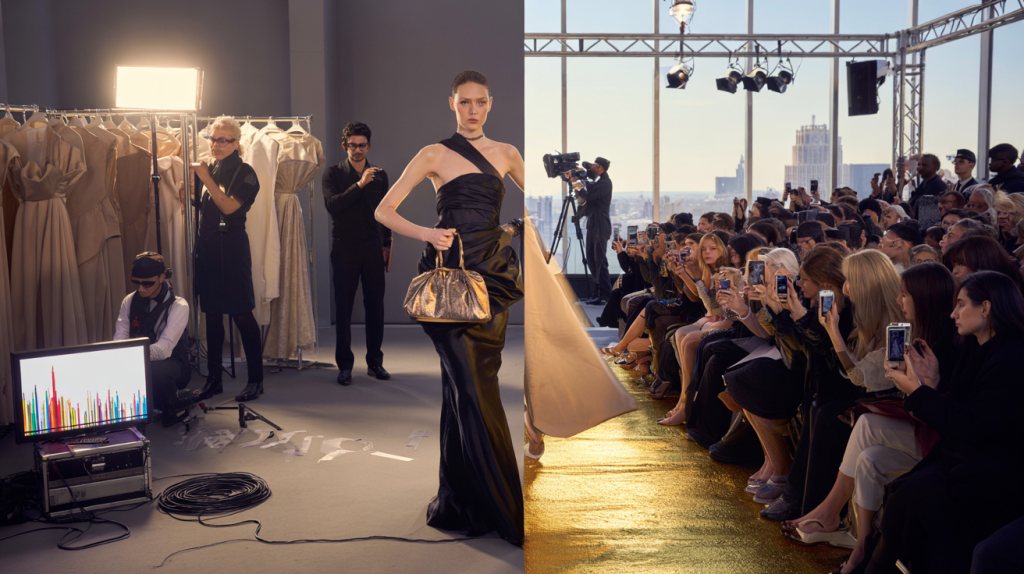
VIP Fashion Launches: What Really Happens Behind the Velvet Rope
Lights cut, music snaps, phones lift. A VIP fashion launch explodes in 10 minutes, yet it can move millions in sales and status. That is the promise brands chase when they gather celebrities, editors, buyers and creators in one tight room.
There is a financial spine to the sparkle. Bain et Company reported the personal luxury goods market reached 362 billion euros in 2023, up 8 percent at current exchange rates, with growth expected to steady through 2024. Events fuel awareness at the top of that funnel, then social content does the heavy lifting. The influencer marketing sector alone is projected to hit 24 billion dollars in 2024 according to Influencer Marketing Hub, which shows why front rows look the way they do.
Backstage Choreography at Fashion Week Launches
The main idea is simple : a launch compresses brand storytelling into a short, high stakes performance. The observation is less glamorous. Backstage is a grid of garment racks, running orders, seat maps, lighting cues, camera lists, VIP handlers. Every look must fit, every guest must be sat, every lens must catch the moment.
New York City has measured the ripple effect. A study for the Council of Fashion Designers of America by the New York City Economic Development Corporation in 2016 estimated New York Fashion Week’s annual economic impact at about 887 million dollars. Different city, similar logic. The event is a content engine for weeks, not hours, which helps explain why brands invest.
So the problem to solve : timing. A late A‑lister throws the runway order. A missed seating card breaks a sponsor shot. A dress that needs one last stitch can hold the entire show. Teams design redundancies, from duplicate looks to alternate camera angles, to accomodate the unexpected without breaking the narrative.
Celebrities, Influencers and the ROI Question
Brands do not invite randomly. They design a matrix of celebrity reach, audience fit, purchase power and geography. One true thing : a single well timed post can outrun a billboard for awareness. That said, not all attention converts equally.
Evidence matters. Bain’s 2023 study signals resilient demand for top luxury houses despite macro headwinds, which aligns with the strategy to anchor launches with household names while layering in niche creators for depth. On the other side of the ledger, influencer marketing’s 24 billion dollar scale in 2024 shows that paid and earned creator distribution is now a line item, not a side bet. The calculation gets sharper when teams track cost per view, cost per qualified visit and press clippings against clear revenue windows.
A concrete example helps. A capsule unveiled to 300 guests can seed thousands of assets within an hour, then cascade into retail stories and e‑commerce banners the same day. When sell‑through on hero SKUs lifts by a double digit percentage in the first week, the event often deserves part of the credit, but only if the path from content to cart is clean.
How to Build a VIP Launch That Works
Here is the missing piece many overlook : the show is not the strategy. The strategy is everything around the show, from invite wave to last‑mile product drop. Teams that win treat the night as a node in a larger system.
- Lock the narrative early : three visuals, two sound bites, one product hero. Every guest touchpoint repeats them.
- Seat with intent : cluster audiences that talk to each other, then place a bridge guest who connects worlds.
- Design for phones first : sightlines, lighting temperatures, and textures that photograph without filters.
- Map conversion : QR on programs, product live online at showtime, store staff briefed for next day traffic.
- Measure what matters : combine press clippings, view‑through rates and week one sell‑through, not vanity likes.
Common mistakes keep happening. Overbooking creates a fire hazard and a PR headache. Last minute outfit swaps break look cohesion. Ignoring local regulations turns a pop up into a fine. And yes, underfeeding crews ruins the last hour of any build. Simple fixes exist, starting with a budget that reflects reality. Production, venue, insurance, security, glam, casting, travel, content capture and post‑production each need a line. The number climbs fast, which is why some brands opt for smaller formats that travel better on social.
The logic behind the best launches feels almost journalistic. Lead with what matters, show proof, then give people a reason to care now. Numbers set expectations. Bain’s 362 billion euro context proves the category can justify ambitious moments. NYCEDC’s 887 million dollar impact shows cities benefit when the fashion machine rolls. The creator economy’s 24 billion dollar size explains why seating charts look like media plans. Tie those threads together and a VIP launch stops being a party and starts being a system that ships culture and product at the same time.