
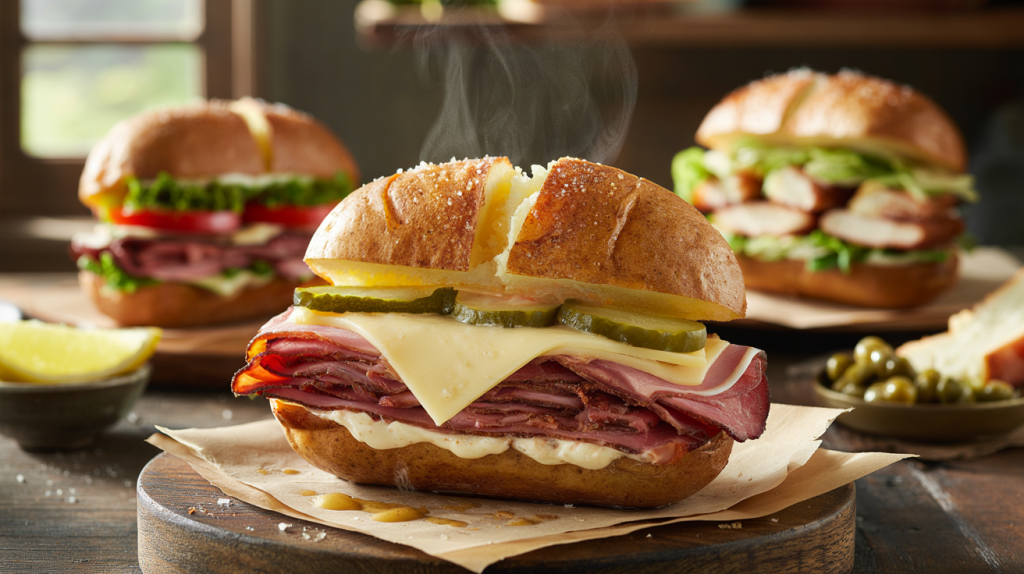
Crispy potato outside, melty center, zero soggy bread. Meet the jacket sandwich: the craveable mashup solving quick lunches and budget dinners in one go.
Searches for jacket sandwich keep spiking because the idea is disarmingly simple : use a well-baked jacket potato as the “bread” and pack it with classic sandwich fillings. Think BLT, tuna salad, chicken Caesar, even a club – only wrapped in crackly skin with fluffy potato inside.
It hits several needs at once. The bite is hot and comforting, the fillings stay bold, and there is no loaf to stale. For anyone watching gluten or just tired of bland slices, this swap lands flavor, texture, and satiety. Yes, you read that right.
What Is a Jacket Sandwich and Why It Works
At heart, a jacket sandwich is a jacket potato split and gently pried open, then stuffed like a deli favorite. Heat turns potato starches creamy, the skin goes shatter-crisp, and the filling locks in. Bread can wilt under mayo or tomatoes. A baked potato does the opposite – it buffers moisture while staying structured.
There is a cultural wink here too. The sandwich soared in 1762 with John Montagu, 4th Earl of Sandwich, who popularised eating meat between bread so work would not stop. Swapping the loaf for a potato keeps the same grab-and-go spirit, just with a different edible carrier.
How To Make a Jacket Sandwich : Crispy Outside, Fluffy Inside
Choose a floury potato like russet or Maris Piper about 300 to 350 g. Scrub and dry it. Prick several times. Rub with 1 teaspoon oil and a pinch of salt. Bake on a rack at 200 °C – 220 °C for 60 to 75 minutes until the skin feels firm and a skewer slides in easily. Air fryer fans can go 200 °C for 45 to 55 minutes, turning once.
Rest 5 minutes. Slice lengthwise without cutting through the base. Pinch the ends to fluff the interior. Add a thin layer of butter or olive oil for a moisture shield. Then pile in your filling while the potato is steaming hot. A quick press of the halves creates that handheld, sandwich-like grip.
Want extra crunch? Brush the cut sides with a little oil and return to the oven for 5 minutes before stuffing. That “double-crisp” move pays off when fillings are saucy.
Common mistakes happen when potatoes are rushed or overloaded. The fix is easy : give the bake enough time and layer wetter fillings between drier ones so the jacket holds its shape.
- Overloading: layer lettuce or shredded cabbage at the base, then proteins, then sauces up top.
- Undercooking: if the center feels tight, add 10 to 15 minutes – crispy skin is non‑negotiable.
- Watery fillings: drain tuna or tomatoes and blot before adding.
- Flat flavor: season inside the potato with salt, pepper, and a squeeze of lemon before the filling.
Fillings That Shine : Turn Favorite Sandwiches Into Jackets
BLT: crisp bacon, shredded lettuce, ripe tomato, a swipe of mayo. The heat softens the tomato just enough while bacon stays snappy.
Tuna salad: tuna, finely diced celery, lemon zest, light mayo, capers. Finish with parsley and black pepper. It tastes like a deli roll minus the heft.
Chicken Caesar: rotisserie chicken, chopped romaine, Parmesan, Caesar dressing. Add crunchy breadcrumbs for the “crouton” effect.
Veggie club: smashed chickpeas, avocado, cucumber ribbons, pickled onions, a touch of mustard. Bright, filling, entirely plant-based.
Hot pastrami melt: warm pastrami, Swiss, dill pickle, quick mustard. Return to oven 3 to 4 minutes for a gooey finish. Careful – that cheese stretch is definitly photogenic.
Nutrition, Safety, and The Numbers Behind the Trend
Potatoes quietly bring nutrients to the table. According to USDA FoodData Central, a medium baked potato with flesh and skin – about 173 g, no salt – provides roughly 161 kcal, 4.3 g protein, 36.6 g carbohydrate, 3.8 g fiber, and 926 mg potassium per serving (USDA, FoodData Central, FDC ID 171705). With the FDA Daily Value for potassium set at 4,700 mg, that single potato lands near 20 % DV (U.S. Food and Drug Administration, Reference Values).
Swapping bread for a potato also changes the macro profile. A typical white sandwich roll of 70 g often sits near 190 to 200 kcal with lower potassium and fiber compared with the baked potato reference above. For anyone chasing fullness, that fiber plus heat helps.
Food safety still rules the build. The USDA Food Safety and Inspection Service advises keeping hot foods at or above 60 °C – 140 °F and cold foods at or below 4 °C – 40 °F when holding or transporting meals (USDA FSIS, Cooking and Food Safety Guidelines). That matters if packing a jacket sandwich for the office or sending it in a lunch bag.
One last note on timing : bake potatoes in batches on Sunday, refrigerate, then reheat at 200 °C for 15 minutes to restore the crisp jacket before stuffing. The method keeps weeknights quick without compromising that crackly skin everyone wants.
In short, the jacket sandwich borrows the sandwich’s simplicity, the jacket potato’s texture, and today’s need for practical comfort. Pick the right potato, nail the bake, build with balance – then enjoy the kind of lunch that actually tastes better halfway through.