
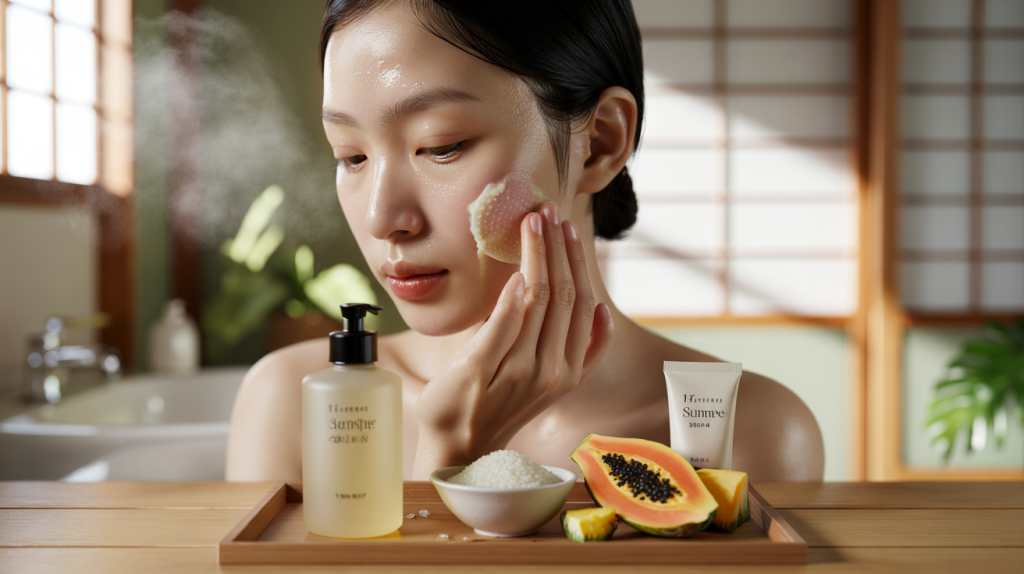
Searches for “gommage enzymatique japonais” are spiking for a reason. This Japanese-style enzyme peel promises that fresh, glassy look without harsh grains or stinging acids. It uses fruit and rice-derived enzymes to nibble away at dead cells on the surface, so tone looks clearer, pores appear tighter, and makeup glides. No sandpaper effect, no drama.
Here is the core: instead of scrubbing, enzymes like papain and bromelain digest the protein bonds holding dull cells together. That means smoother texture with less risk of microtears than many scrubs. For complexions that react to strong acids, this lands as a relief. And yes, it fits a minimalist routine. The method grew from Japan’s love of skin clarity and gentle care, not quick fixes.
What Is Japanese Enzyme Gommage and Why Skin Loves It
Think of it as a rinse-off gel or milk that softens and rolls away buildup. The action targets only the outermost layer, so skin feels clean yet comfortable. That’s key when cell turnover slows with age. According to DermNet New Zealand, epidermal renewal takes around 28 days in younger adults and stretches to 40–56 days in older adults, which explains lingering dullness and rough patches.
Fans reach for it when scrubs leave redness or when acid toners feel too punchy. The texture tends to be lightweight, sometimes forming tiny pellets as you massage, helping lift loosened debris. Results look immediate: a healthy sheen, less shadowing around pores, and a softer cheek line. The sensation is low drama – just that satisfying rinse.
Papaya, Pineapple, Rice : The Science Behind the Peel
Two fruit enzymes show up again and again. Papain (from papaya) and bromelain (from pineapple) break down keratin-rich bonds on the skin’s surface. A 2019 review in the journal Molecules described bromelain and papain as proteolytic enzymes used topically for gentle desquamation. Their size and activity keep the action focused where we want it: the stratum corneum.
Japanese-inspired formulas often add rice elements. Fermented rice filitrates and rice bran bring calming antioxidants plus polishing starches that support a smooth glide. The skin’s surface sits slightly acidic; broad research places average skin pH near the mid-4s, which helps enzyme activity feel balanced rather than aggressive.
Post-exfoliation sun care matters. The American Academy of Dermatology states that SPF 30 filters about 97 percent of UVB rays. That number is the safety net after any form of exfoliation, enzyme or not.
How to Use a Japanese Enzyme Gommage at Home
A simple ritual tends to work best. Keep the routine short, keep the skin damp-not-dripping, and listen to the tingle scale, not the timer.
- Start with a gentle cleanse. Pat until skin is just slightly damp.
- Apply a thin layer of enzyme gommage. Leave it on as directed, usually 30–90 seconds.
- Massage with soft, circular moves for 20–30 seconds to help lift loosened buildup.
- Rinse with lukewarm water. No hot splash, no rough towel.
- Follow with a simple hydrator and a ceramide or squalane-rich moisturizer.
- Daytime: finish with a broad-spectrum SPF 30 or higher.
Frequency stays low. The AAD generally suggests exfoliating less often for sensitive skin and adjusting based on retinoids or acne treatments in the routine. Many do well 1–2 times per week. Those on nightly tretinoin often space it out further to avoid over-thinning the barrier.
Who Should Use It, What To Avoid, and How To Pick One
Reactive skin, rosacea-prone faces, and anyone who hates grit usually appreciate this route. A quick check helps: if cleansers sting and scrubs create patchy redness, enzyme formulas feel kinder. For acne routines with benzoyl peroxide or prescription retinoids, keep enzyme days and actives on separate nights to reduce flare-ups.
Common mistakes keep coming up. Leaving it on for several minutes trying to chase a stronger result. Layering acids on top. Scrubbing with a cloth after massaging. Each one sabotages the promise of a gentle peel. Skin likes small, steady nudges, not a bootcamp.
Choosing a bottle gets easier once labels make sense. Look for papain, bromelain, or pumpkin enzymes high on the list, plus soothing allies like glycerin or panthenol. Fragrance-free options tend to behave best around redness or perioral dermatitis patches. For combination skin, a gel format keeps T-zone light; for drier cheeks, a milk or balm-gommage cushions the glide. Patch test on the jaw for 24 hours when trying a new brand – boring step, big payoff.
One last piece to keep the glow: nourish the barrier you just smoothed. A humectant serum, then a lipid-rich cream, seals the work. Daytime, SPF 30 or higher stays non-negotiable, especially in the first 48 hours. That’s the window when freshly polished skin looks amazing but needs backup. Frequency can increase slowly, from weekly to twice weekly, if skin stays calm and bouncy. If irritation pops up, pull back; steady wins. For those wondering, enzyme gommage pairs well with a retinoid on alternate nights and with vitamin C in the morning. Dermatologists often recommand that split to balance results and comfort.