
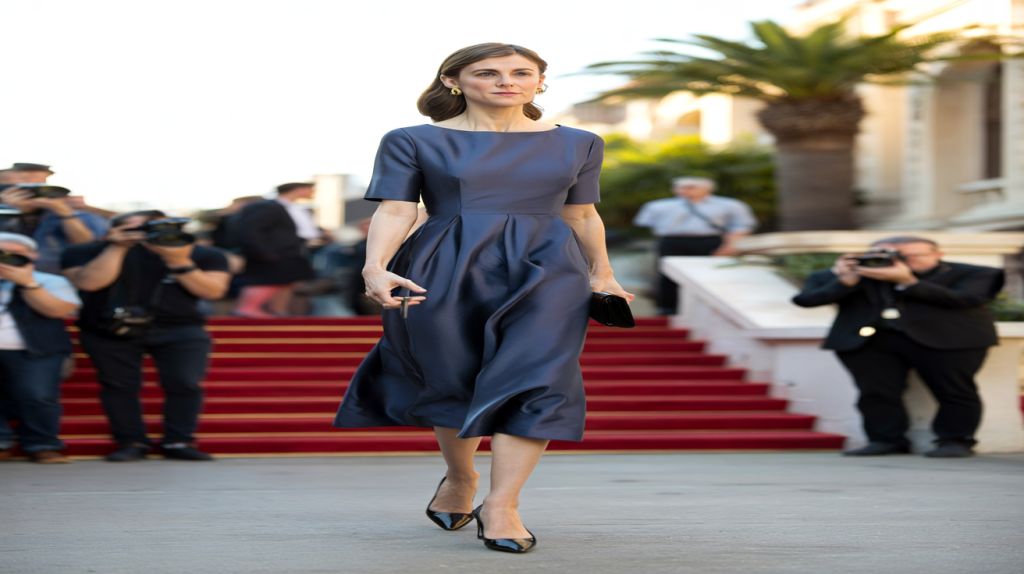
Julie Gayet and the quest for the perfect dress
When Julie Gayet steps out, the dress looks effortless yet exact. Clean lines, fluid fabric, a waist that skims not squeezes. The effect : polished, light, unmistakably French. That is why the search for “Julie Gayet robe parfaite” keeps rising. People want a formula that works at a dinner, a premiere, or a city hall ceremony without shouting for attention.
Context matters. Julie Gayet, born in 1972, is an actress and producer who married François Hollande in 2022 in Tulle, and her public wardrobe follows a clear code : modern minimalism with a soft, human touch. Red carpet or daytime, the dress sits at midi length, plays with matte textures, and relies on smart tailoring. The point is not extravagance. It is presence.
From red carpet rules to daily life : what actually works
The main idea is simple : a robe parfaite balances structure and ease. On camera, this avoids glare, clinging, or fussy details. In real life, it means freedom to move and a silhouette that photographs well under mixed light.
A quick look at the calendar helps. The Festival de Cannes 2024 ran from 14 to 25 May for its 77th edition, per the official program, and those famous stairs count 24 steps. Harsh sun, flash, and a tight schedule punish tricky fabrics. That is why matte crepe, silk blends, or dense jersey show up so often around French talent. The dress survives the day and still looks sharp at night.
Past informs the present. Vogue introduced the “little black dress” to a mass audience in 1926, and the idea still anchors French wardrobes : neutral color, unfussy cut, decisive accessories. Julie Gayet’s take feels softer than strict minimalism. Think quiet structure, then a detail – a boat neckline, a covered button, a slightly asymmetric hem.
The common mistakes when chasing a Julie Gayet look
Many readers share the same snag : loving a dramatic dress, then realizing it overwhelms the room. The fix is not to go plain. It is to raise quality while lowering noise.
Three pitfalls show up often. First, shiny fabrics that read cheap under flash. Second, cuts that pinch at the waist or gape at the bust – photos never forgive. Third, colors that fight with skin tone. Industry context backs the shift to quieter pieces : The Business of Fashion and McKinsey projected fashion sales growth of 2 to 4 percent in 2024 in the “State of Fashion 2024”, with core wardrobe items leading stable demand. People invest in keepers, not one-night wonders.
A concrete example helps. A matte navy midi with a gentle A-line and bracelet sleeves does what a risky bright mini cannot : it lengthens the body, hides creases, and pairs with black pumps or nude sandals. Add small gold earrings, stop there. Yes, that simple.
How to find your own robe parfaite inspired by Julie Gayet
Julie Gayet co-founded Rouge International in 2007 and has lived on film sets and festival carpets long enough to know what lasts. The home version keeps that same backbone but adapts to daily light, commute and budget.
Try this short checklist before buying :
- Color : start with black, navy, deep forest or ivory – shades that flatter skin and handle day-to-night.
- Cut : a midi that hits mid-calf, with a defined but relaxed waist and a clean neckline – boat, square or soft V.
- Fabric : matte crepe, wool blend, or weighty jersey that does not shine under flash or office LEDs.
- Fit test : sit, raise arms, take a photo in daylight and in bathroom light – if it creases or clings, pass.
- Shoes and bag : closed-toe pump or refined sandal, compact bag with minimal hardware to keep focus on the dress.
Why this works : the eye reads proportion first. A stable mid-calf line, a quiet shoulder, and a balanced neckline create a long, calm silouette. Color then does the emotional work. If black feels severe, choose navy or bottle green, both friendly on camera and kind to most undertones.
One last note on tailoring. Small alterations change everything. Hem to the strongest part of your calf, close a gap at the bust with a hidden snap, or add a thin belt stitched at the side seams for stability. That is the missing element many skip. Red-carpet dresses are almost always adjusted, and the same logic, thoughtfully scaled down, makes a high-street piece look custom.
And if an occasion calls for a little sparkle, keep it close to the face. A satin collar or a pair of luminous earrings lifts the frame without risking glare across the skirt. The dress remains the anchor, the detail becomes the signature.