
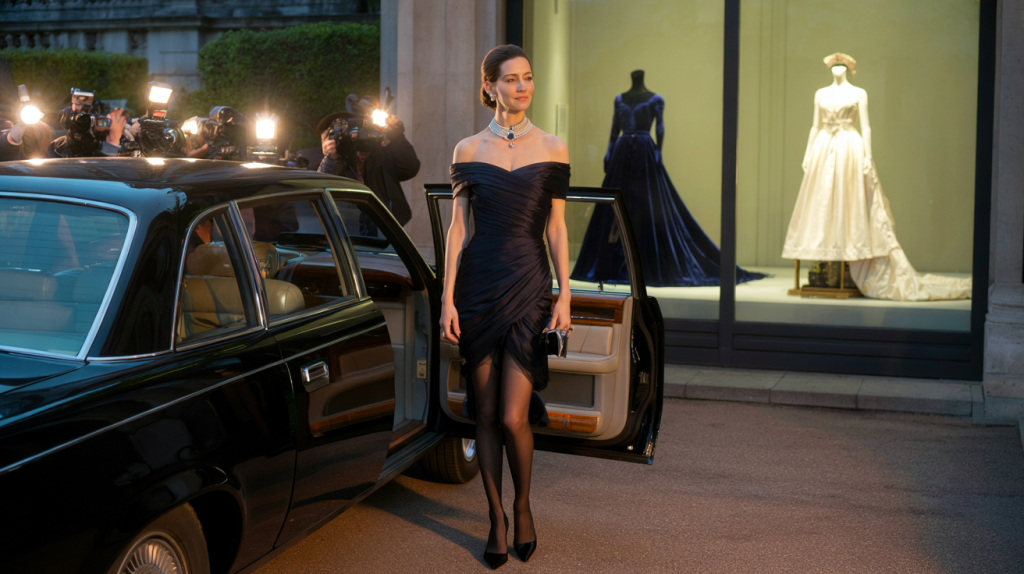
One black dress changed royal fashion forever. On 29 June 1994, Lady Diana arrived at the Serpentine Gallery in a ruched, off‑the‑shoulder Christina Stambolian cocktail dress. The timing was surgical: that same night, a television interview aired in which Prince Charles addressed his affair. The image raced around the world and the phrase “revenge dress” entered the culture.
That look became the shortcut for a historic shift in image – confident, modern, in control. Yet it sits inside a much wider wardrobe story. From the record‑breaking 1981 wedding gown by David and Elizabeth Emanuel to the midnight‑blue Victor Edelstein “Travolta dress”, the numbers, dates and museum buys show how these garments moved from news to lasting heritage.
Why the 1994 “Revenge Dress” by Christina Stambolian still defines Lady Diana’s iconic dress
The essentials first. The dress was black silk with an asymmetric hem and a soft sweetheart neckline, paired with a multi‑strand pearl choker set with a sapphire. Photographer flashes caught a silouette that broke older royal style codes and signaled a new phase.
Designer Christina Stambolian later explained the piece had been in Diana’s wardrobe for years before she chose that night to wear it. The choice read as precise rather than improvised, a controlled answer through clothing instead of words.
Right place, right time, and a dress that said everything. That is why search interest keeps circling back to this single look when people ask for Lady Diana’s most iconic dress.
The other gowns that built the legend of Princess Diana
Icon status did not happen in one evening. Several pieces created the visual timeline fans know and museums preserve.
- 1981 wedding gown – David and Elizabeth Emanuel designed the ivory taffeta dress with a 25‑foot train. The BBC has put the global TV audience for the ceremony at around 750 million viewers, a scale that cemented the image from day one.
- 1985 “Travolta dress” – Victor Edelstein’s midnight‑blue velvet gown worn at the White House as Diana danced with John Travolta. Historic Royal Palaces confirmed its acquisition in December 2019 at Kerry Taylor Auctions for £264,000.
- 1989 “Elvis dress” – a Catherine Walker pearl‑encrusted jacket and column worn in Hong Kong. It later featured in Christie’s New York sale of 25 June 1997, part of the 79‑dress auction that raised $3.25 million for charity, according to Christie’s.
What the data and sources show about impact and value
Numbers tell the long story. The 1997 Christie’s auction, organized with Princess Diana’s approval shortly before her death, totaled $3.25 million for AIDS and cancer causes. Christie’s recorded the date and result, marking one of fashion’s most consequential charity sales.
Museum interest kept rising. Historic Royal Palaces announced in 2019 that it had secured Victor Edelstein’s “Travolta dress” for £264,000, keeping a headline piece in the United Kingdom. Public collections aim to preserve garments that carry both design merit and cultural memory.
The wedding gown remains a global reference point. The BBC’s estimated 750 million viewers for the 29 July 1981 ceremony show how a single outfit can become a shared memory across continents. The 25‑foot train, unusual for modern weddings, amplified the scale on television and in print.
How to read the style code today – and use it without the crown
The main idea is simple: clothing can frame a message when words feel complicated. The “revenge dress” reads as clarity and timing. Other gowns show how texture, color and movement can anchor a story that lasts beyond a news cycle.
Common missteps happen when copying the surface and missing the context. A black cocktail dress is not automatically iconic. The difference comes from fit, finish, and the situation it enters. Christina Stambolian’s construction and Diana’s posture did the heavy lifting.
There is a practical route for everyday life. Choose one focal point per outfit – neckline, fabric, or jewel – and keep the rest quiet. Use contrast to guide the eye, as with midnight blue velvet against a polished floor in the White House images from 1985.
The logic holds: pair intentional design with meaningful moments. That is why the revenge look still leads search results, while the Emanuel wedding dress, the Edelstein velvet and Catherine Walker’s beadwork remain museum‑grade. The clothes did not chase headlines. They carried them, then moved into history with dates, prices and records attached.