
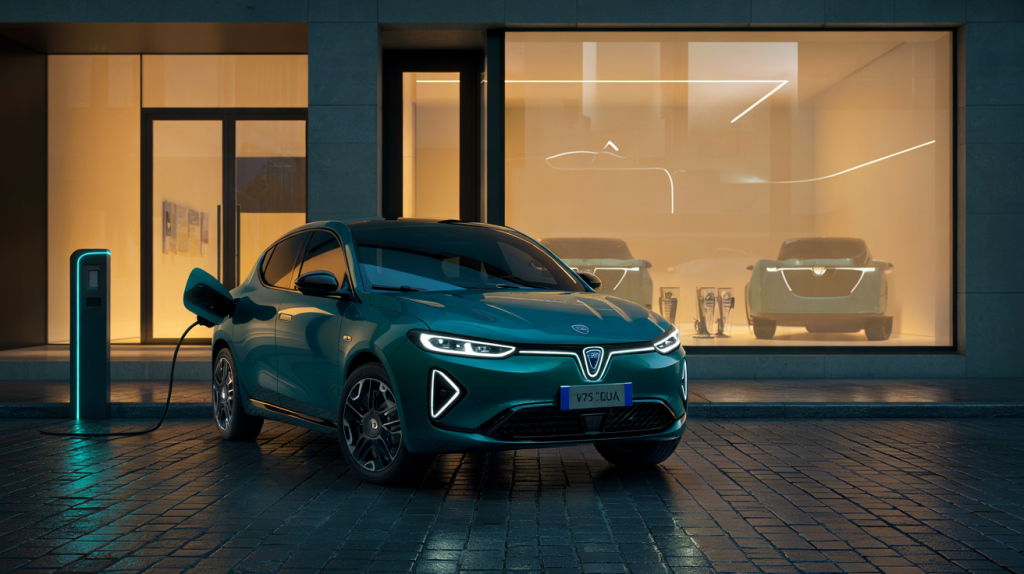
The 2024 Ypsilon relaunch signals Lancia’s true comeback: new design, real EV tech, and a roadmap to 2028. What changes now – and what still has to prove itself.
After a decade in near-silence outside Italy, Lancia returns to Europe with the all-new Ypsilon in 2024, backed by Stellantis and a clear plan for three models by 2028. The message lands fast: this is not a nostalgia tour. It is a relaunch built on modern platforms, electric power, and a design language that reconnects with a brand that once ruled rallies and boulevards alike.
Context matters. Formed in 2021 from the merger of PSA Group and Fiat Chrysler Automobiles, Stellantis gave Lancia a mandate and a calendar: Ypsilon in 2024, a new flagship around 2026, and the Delta’s comeback by 2028, with the brand set to go all-electric from 2028 in Europe according to its product plan. That timeline, paired with shared EV tech across the group, explains why the rebirth suddenly feels tangible – and why expectations are high.
Lancia, from cult status to comeback reality
The main idea is simple: turn heritage into momentum. Lancia’s modern story shrank to Italy after 2017, kept alive by the Ypsilon’s loyal base. Yet the badge still carries weight thanks to a trophy case few can match: Lancia holds 10 World Rally Championship manufacturers’ titles, a record built between 1974 and 1992. That halo did not vanish. It just waited.
The problem looked familiar in the car world: a beautiful name, not enough fresh metal. Product cadence slowed, markets faded, confidence with it. Stellantis changed the equation by pooling platforms, batteries, and software, cutting time to market. The Pu+Ra HPE concept, shown in 2023, set the new design tone with crisp geometry, circular motifs, and lighting that nods to the Stratos without falling into retro.
Readers hungry for a straight answer on viability get it later down the page, because the proof sits in the details: technology, range, pricing discipline, and dealer execution over the next 18 months. Sentiment opens the door. Delivery keeps it open.
Ypsilon 2024: design flair with EV substance
The new Ypsilon anchors the comeback. Under the sculpted body sits Stellantis’ familiar small-car architecture with a fully electric version using a 51 kWh battery and a 115 kW motor rated at 156 hp. Lancia quotes up to 403 km WLTP range, positioning the car for genuine daily use, not just city hops. Fast charging capability aligns with the group’s latest small EVs, keeping road-trip anxiety in check.
For buyers not ready to switch, a hybrid variant remains in the catalog, pairing a 1.2 liter three-cylinder with a 48 V system and about 100 hp. That dual-track approach answers a practical fear: transitioning to EVs without disrupting habits. Inside, the Cassina co-signed launch edition highlights materials and textures that feel premium rather than precious, a small but telling shift.
Common missteps during brand relaunches are already on the radar. Overpromising software updates. Underestimating charging costs. Ignoring resale values. Lancia tackles part of this by sharing components with high-volume siblings, which helps parts availability and reduces service anxiety. The rest will depend on transparent pricing and consistent aftersales, country by country.
Stellantis strategy: three models, 2028 electric target
The timeline is set. Lancia presented the Pu+Ra HPE concept in April 2023, launched Ypsilon sales in 2024, and plans a larger flagship around 2026 followed by a new Delta by 2028. The brand communicates a switch to all-electric from 2028 in Europe, aligning with Stellantis’ broader Dare Forward 2030 targets on electrification and emissions. The logic is industrial as much as emotional: scale batteries, standardize motors, then dress them with distinct Italian character.
A credible revival also leans on distribution. Lancia operated mainly in Italy after 2017; the new phase reopens select European markets with curated showrooms rather than sprawling networks. Quality metrics – warranty claims, software stability, real-world range in winter – will decide how quickly that footprint grows. Watch the first 12 months. Most make-or-break moments in relaunches occured early, when early adopters report back loudly.
History still helps. Rally greatness is not a business plan, yet it gives the design team permission to be bold. The triangular light signature and cleaner surfacing avoid kitsch, while recognizable cues keep longtime fans engaged without scaring off new ones.
How to tell a real revival from a nostalgia play
Shoppers and fans want signals, not slogans. A few markers separate a sustainable comeback from a seasonal billboard.
- Clear product cadence with dated launches, not vague promises
- EV range and charging times stated under WLTP, then verified by independent tests
- Software updates with documented version notes and timelines
- Residual values tracked by third parties to confirm long-term health
- After-sales coverage with parts shared across Stellantis brands to limit downtime
Follow the data points that matter next: independent WLTP-to-real-world range gaps once deliveries ramp up, safety ratings from Euro NCAP on the new Ypsilon, and the pace of market reopenings across France, Spain, Belgium, the Netherlands and beyond. If the flagship lands around 2026 with the same coherence – and Delta returns in 2028 as planned – then the renaissance of this cult Italian name turns from promise into daily sight on European streets.