
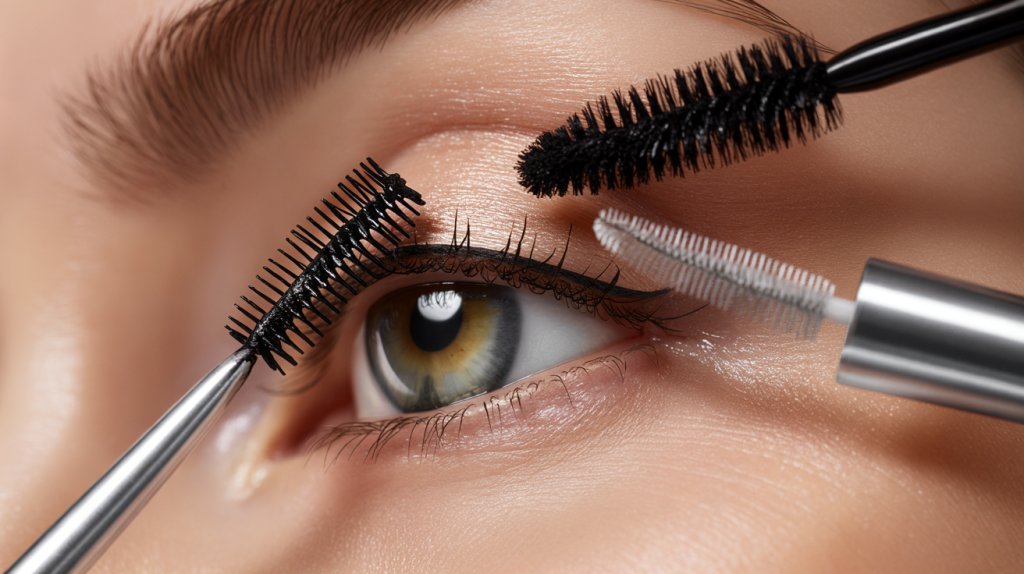
Two mascaras, one set of lashes. When layered the right way, the result reads longer, thicker, lifted, and clean. The core formula is simple : start with a defining or lengthening coat for grip, then add a volumizing coat for body once the first layer turns slightly tacky. Work the roots, feather the tips, and finish with a clean spoolie. That is how you get the drama without the mess.
Why it works comes down to chemistry and brush design. A thinner, comb like wand deposits a precise base and separates each lash, while a denser bristle or curved brush stacks pigment and soft waxes for bulk. The rule of thumb stays clear : thin to thick, roots to tips, wet to tacky. No wet on wet. Clicked for a quick fix on layering two mascaras, this delivers exactly that.
How to layer two mascaras without clumps
The main idea is to pair complementary formulas, not twins. Choose a lengthening or tubing formula first for structure. Its polymers wrap lashes evenly and keep them lifted. Then bring in a creamier volumizing mascara for fullness. This sequence solves the common problem of spiky volume or sagging curl.
Start at the base to create lift. Wiggle the first wand at the roots, then pull through to the middle. Pause. Give it a short breather so the layer turns tacky, usually under a minute depending on humidity. A tacky base grips the second coat so it builds up, not out.
Next, add volume with a light hand. Concentrate at the roots again, then lightly touch the tips. Cap the ends only once to avoid marshmallow tips. If a lash sticks, slide in a clean lash comb while the product is still pliable. Keep the lids relaxed so the curl sets instead of bending.
Common mistakes when mixing mascaras
Going in with two wet, heavy creams back to back floods the fringe. Clumps happen, curl drops, and smudges follow. A better pairing is precise first layer, plush second layer. Think defining or tubing first, volumizing second.
Skipping the wait is another hiccup. If the base is soaked, the second wand just displaces product. If the base is bone dry, flakes can appear. Aim for that in between moment when lashes feel slightly sticky, not wet, not fully set.
Old or shared mascara is a risk, especially when layering adds more wand to eye contact. The U.S. Food and Drug Administration advises replacing mascara every 3 months to lower contamination risk and to never share eye makeup (U.S. FDA : Eye Cosmetics, fda.gov). The Centers for Disease Control and Prevention reported an estimated 930,000 U.S. outpatient visits for keratitis in a single year, with an additional 58,000 emergency department visits, in an analysis published 2014 that included eye cosmetic use among potential contributors to eye irritation and infection (CDC : Estimated Burden of Keratitis in the United States, 2010, cdc.gov/mmwr).
Hard to remove stacks are also common. Waterproof on waterproof sounds bulletproof, yet repeated aggressive removal can lead to lash breakage. The American Academy of Ophthalmology cautions against rough eye makeup removal and sharing eye products, and echoes the three month discard guideline for mascara (AAO : Eye Makeup Safety, aao.org). For long days, a waterproof base and regular top coat is kinder to lashes and still resists smudging.
Smart, safe choices : brushes, formulas, and eye health
Brush shape steers the finish. Sparse, comb like rubber bristles excel at separating and lengthening, perfect for round one. Dense fiber bristles deliver bulk and a softer look, ideal for round two. Curved brushes hug the lash line for lift if lashes tend to point straight.
Formula matters. Tubing mascaras use film forming polymers that remove with warm water and gentle pressure, a good pick for sensitive eyes or contact lens wearers. Volumizing creams build faster with less swipes, which helps avoid overworking the fringe. If eyes water, keep any waterproof layer closest to the roots and choose a flexible non waterproof formula on top so removal stays easy.
Hygiene keeps glamour from turning into grit. Cap tubes tightly, do not pump the wand since that forces air into the bottle, and wipe excess on the neck with a clean tissue. Contact lens wearers sit closer to risk for irritation when debris gets under a lens. Clean tools, fresh formulas, and careful removal at night reduce that friction.
Step by step routine to layer mascara like a pro
Here is the quick routine many artists rely on, neatly adapted for busy mornings and different lash types.
- Curl lashes and apply a thin lash primer if desired, then wait 30 to 45 seconds.
- First coat : lengthening or tubing mascara. Wiggle at the roots, pull to mid length. Do not overload the tips.
- Wait until lashes feel slightly tacky. Quick test : touch a lash, it should feel sticky, not wet.
- Second coat : volumizing mascara. Press at the roots, lift through, then lightly cap the ends once.
- Separate with a clean spoolie or a metal comb while product remains pliable, not dry.
- Optional third touch : micro tip defining mascara only on outer corners to elongate the eye shape.
- Cleanup : a pointed cotton swab dipped in micellar water to lift any dots on lids. Let spots dry first, then flick off.
- Removal at night : tubing comes off with warm water and gentle pressure, other formulas with a bi phase remover held 10 seconds before sliding away. Replace tubes every 3 months as per FDA guidance.