
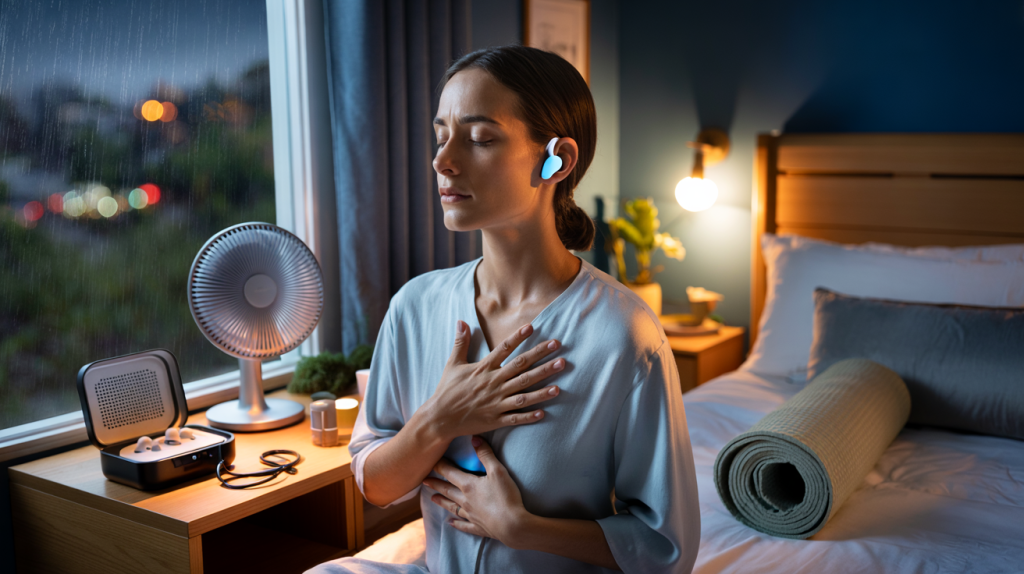
The noise does not ask permission. It rings, hisses, or pulses through meetings and quiet nights, hijacking focus and sleep. You are not alone : a 2022 JAMA Neurology analysis estimated tinnitus affects 14.4% of people worldwide, with 2.3% experiencing it severely. That is roughly 749 million lives touched, and more than 120 million seriously limited.
Good news exists. Small, practical changes can turn down the distress fast. Gentle background sound, smarter volume habits, steady sleep cues, and stress-calming routines ease the brain’s threat response. Layer in proven therapies and hearing care, and daily life starts to feel manageable again.
What is tinnitus : the reality in numbers and why the brain keeps ringing
Tinnitus is a perception of sound without an external source. It often follows noise exposure or accompanies hearing loss, but it can also appear after ear infections, jaw or neck issues, or certain medications. The World Health Organization warned in 2022 that over 1 billion young people risk noise-induced hearing problems due to unsafe listening, which raises lifetime tinnitus risk.
The brain plays a central role. When the ear sends reduced input, neural networks can boost internal gain, surfacing the ringing. This is why total silence tends to make tinnitus louder, and why adding neutral sound helps the system relax. The aim is not to chase silence but to reduce the alarm linked to the sound.
Daily tinnitus tips you can actually use
These moves are practical, low risk, and align with expert guidance. Try two or three today and build from there.
- Use soft sound enrichment : a fan, rain noise, or low-volume nature audio. Silence often amplifies ringing.
- Follow safe listening rules : NIOSH recommends 85 dB for 8 hours, about 15 minutes at 100 dB, and under 2 minutes at 110 dB. Earplugs at concerts are non-negotiable.
- Set a volume ceiling on headphones : keep it under 60% and take 5-minute breaks every 30 minutes.
- Create sleep signals : dim lights, cooler room, consistent bed and wake times, and a 30-minute wind-down with gentle sound.
- Breathe to downshift : 4-6 breaths per minute for 5 minutes can calm the autonomic system and reduce reactivity.
- Move daily : 20-30 minutes of brisk walking lowers stress chemistry that fuels tinnitus distress.
- Keep caffeine steady, not extreme : evidence on caffeine is mixed, and a 2014 American Journal of Medicine cohort linked higher intake with lower tinnitus risk. Consistency beats sudden changes.
- Review medicines with a clinician : some drugs are ototoxic. Never stop by yourself.
- Protect ears during yardwork and flights : carry high-fidelity plugs and use noise-cancelling on planes with low volume.
- Track patterns for two weeks : note loudness, stress, sleep, and noise exposure. Patterns reveal leverage points.
- Check the jaw and neck : clenching or TMJ pain can flare tinnitus. A dentist or physio can help.
- Book a hearing evaluation : even mild hearing loss can sustain tinnitus, and hearing aids may help.
What science supports : CBT, hearing care, and sound therapy
Cognitive behavioral therapy has the strongest evidence for reducing tinnitus distress. A 2020 Cochrane review found CBT improves tinnitus-related quality of life and emotional burden. Loudness may not change, but how the brain reacts does, which is what frees attention and sleep. Online CBT programs and group formats work too, which makes care easier to recieve.
Hearing care is a pillar. Many people with tinnitus also have hearing loss. Restoring audibility with hearing aids can reduce listening effort and often softens the perception of ringing. Systematic reviews report meaningful benefit for a share of patients, especially when sound therapy features are enabled.
Sound therapy – steady, neutral audio that blends with tinnitus – aims to retrain the brain. Evidence varies by method, yet combining sound with CBT or counseling performs well in clinics. Mindfulness-based approaches show promise in small trials for reducing distress and improving sleep. The thread is consistent : reduce fear and uncertainty, restore control, and the noise loses power.
When to seek medical care : red flags, tests, next steps
Some signals need prompt evaluation. Seek urgent care for sudden hearing loss within the past 72 hours, new one-sided tinnitus with noticeable asymmetry in hearing, tinnitus after head trauma, or tinnitus with neurologic symptoms like facial weakness. Pulsatile tinnitus – a rhythmic whooshing in time with the heartbeat – warrants medical assessment to rule out vascular causes.
First-line testing usually includes a full audiologic exam with pure-tone thresholds and speech testing. Impacted earwax is common and fixable. Depending on findings, an otolaryngologist may order imaging such as MRI for one-sided tinnitus with asymmetrical hearing loss, or vascular studies for pulsatile tinnitus. Thyroid, jaw, and neck evaluations can be relevant if symptoms point that way.
Then comes a plan : protect against hazardous noise, optimize hearing, address sleep and stress, and consider CBT-based care. Many clinics now offer stepped pathways combining education, hearing solutions, and brief psychological support. Real-world result : the sound may still be there, but attention returns to life, and nights get quiet enough where it counts.