
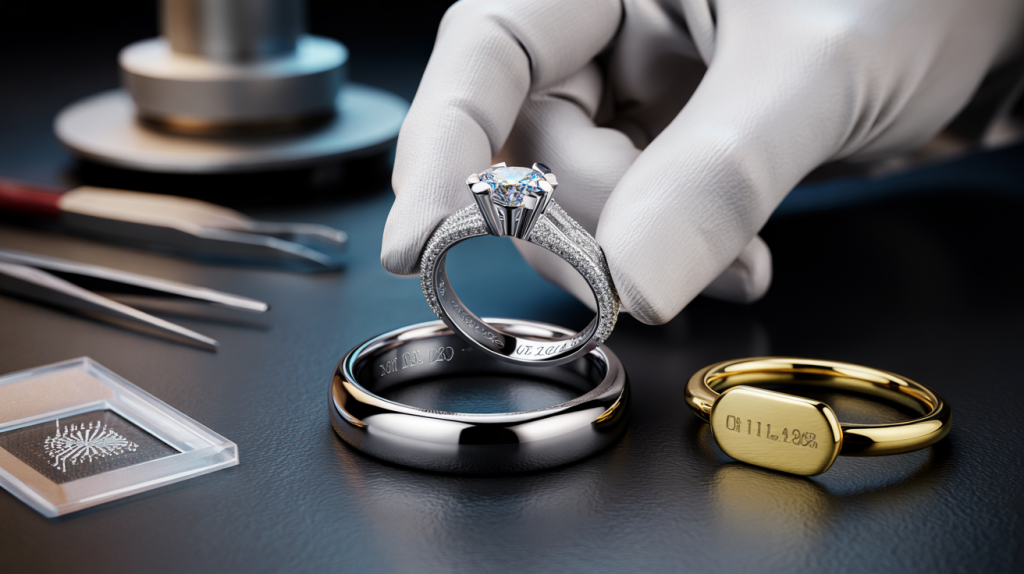
Spotting true luxury should not feel like a gamble. The quickest tells sit in plain sight: metal hallmarks, diamond or gemstone grading reports, consistent craftsmanship, and clean provenance. When these four line up, quality follows.
From a crisp “750” inside a ring to a GIA report number lasered on a diamond girdle, tangible evidence outperforms gut feeling. The goal here is simple : decode what to look for, why it matters, and where the real proof comes from, using standards that retailers and expert appraisers rely on every day.
Read the metal: hallmarks, fineness, and what the stamps really mean
Precious metal purity is standardized. For gold, common fineness marks are 999, 916, 750, 585, and 375, which correspond to 24k, 22k, 18k, 14k, and 9k purity. The World Gold Council documents these karat conventions across markets.
Sterling silver equals 92.5 percent silver and carries “925” under ISO 9202:2019, the international standard on precious metal fineness. Platinum luxury pieces often carry “950” for 95 percent purity, also per ISO 9202:2019.
Hallmarks add a legal layer. The Hallmarking Convention of 1972 created a Common Control Mark recognized by participating countries, easing cross-border authentication. In France, the eagle head mark has identified 18k gold since 1838, a rule enforced by the Bureau de la Garantie.
Not just the stamp but how it is applied matters. Marks should be sharp, proportionate, and placed in low-wear zones such as inner shanks or clasp undersides. Over-polished, crooked, or inconsistent stamps signal caution.
Diamonds et colored stones: the 4Cs, magnification, and treatment disclosure
The Gemological Institute of America systematized the “4Cs” in the 1950s: color, clarity, cut, and carat. That language is universal in high jewelry today. A quick baseline check starts with the carat itself : since 1907, one carat equals 0.2 grams under the international mass standard.
Clarity is graded at 10x. GIA specifies that inclusions visible under 10x define the grade, which is why a jeweler’s loupe is more than a prop. If clarity claims do not match what you see at 10x, the narrative wobbles.
Reports are the backbone. Independent labs like GIA, HRD Antwerp, and IGI issue grading reports with unique numbers. GIA introduced laser inscription services in 1999, letting buyers match a stone’s girdle engraving to the report. No match, no certainty.
Treatments must be named. GIA notes that heat treatment for sapphires or oiling in emeralds is common, and reputable sellers disclose it on invoices and reports. The US Federal Trade Commission updated its Jewelry Guides in 2018 to require clear disclosure of lab-grown diamonds as well as gemstone treatments in advertising.
Workmanship clues: settings, finishing, clasps, and serials that hold up
Quality shows in the engineering. Prongs should match, hug the stone evenly, and show no pits or file marks. Micro pavé looks precise when bead sizes are consistent and rows stay straight under magnification.
Finishing tells its own story. Interior surfaces should be smooth, with even polishing in hard-to-reach areas and tight, invisible solder seams. Loose end links, rattling components, or a clasp that bites the skin point to shortcuts.
Serial numbers help. Many maisons and independent ateliers engrave model and serial references on discreet zones, paired with brand stamps and country of origin. Numbers that lack matching paperwork or appear re-etched reduce confidence.
A real-world example hits home. A platinum ring marked “950” should weigh more than a similar white gold ring due to platinum’s higher density. If the feel in hand does not match expectations for “950” platinum, it deserves testing.
Proof on paper: certificates, invoices, provenance, and the fast checklist
Documentation closes the loop. A detailed invoice lists metal fineness, total carat weight, individual stone grades, treatments if any, and reference numbers. For diamonds, reports from GIA, HRD, or IGI add independent verification. For vintage pieces, auction catalogs and previous appraisals build a chain of custody.
Policy signals matter. Authentic retailers provide return windows, manufacturer warranties, and aftercare like prong tightening or replating schedules. The absence of these basics raises questions before money moves.
The FTC’s 2018 update also clarified naming for man-made diamonds. Sellers may use “laboratory-grown” or “lab-created,” but they must disclose it clearly. That clarity protects buyers and keeps value comparisons honest.
For a quick field test, this lean checklist keeps eyes on the essentials.
- Find clean fineness marks: 750 for 18k gold, 925 for sterling silver, 950 for platinum, placed where wear is minimal.
- Confirm diamond or gemstone reports from GIA, HRD, or IGI, and match any laser inscription to the report number.
- Use a 10x loupe to check prongs, symmetry, pavé alignment, and polish inside hidden areas.
- Cross-check weight and feel against the claimed metal and size, then ask for test results if doubt remains.
- Demand clear disclosure of treatments and origin, including “lab-grown” wording when applicable.
- Keep copies of invoices, serial numbers, service records, and photos for insurance and future resale.
When the story aligns across metal marks, lab reports, build quality, and paperwork, confidence rises fast. If one piece of the puzzle is missing, slow down, verify with an independent appraiser, and compare like for like. Even the best jewellry deserves a second look before it becomes yours.