
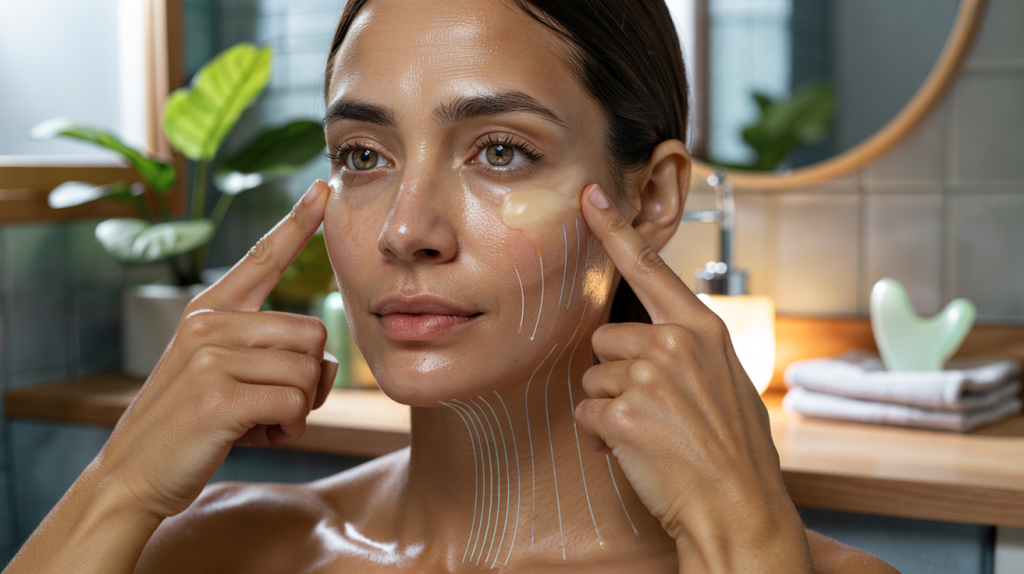
De puff your face fast with facial lymphatic drainage. Learn the simple routine, science backed tips and safety rules that keep eye bags away.
Waking up with puffy under eyes is a mood killer. Facial lymphatic drainage targets exactly that: slow moving fluid under the skin that pools overnight and makes eyes look tired. By nudging lymph toward the nearest nodes and out of the face, this gentle routine helps deflate bags and brings back definition within minutes.
The mechanism is not fluffy wellness talk. The lymphatic system moves roughly 20 liters of fluid out of capillaries daily, reabsorbs about 17 liters, then returns the remaining 3 liters via lymph vessels to the bloodstream. That baseline physiology is described in OpenStax Anatomy and Physiology 2016. The National Cancer Institute estimates the body contains around 600 lymph nodes, many clustered at the jawline and neck, exactly where a facial routine directs flow. Translation: when done correctly, drainage can look visible on the face, especially in the eye contour.
What facial lymphatic drainage does against eye bags
Here is the core idea. Under eye puffiness often reflects fluid accumulation rather than fat. Overnight, lying flat slows lymph return, salt heavy dinners pull in water, and allergens irritate tissues. Allergic rhinitis affects 10 to 30 percent of adults according to the American Academy of Allergy, Asthma and Immunology 2018, which explains those sudden morning bags during pollen season.
Manual lymphatic drainage uses feather light, directional strokes to stretch the skin and open superficial lymph capillaries. It is not a deep tissue massage. Results show up as a softer under eye, less shadowing at the tear trough, and a crisper jawline. Effects are temporary at first, then last longer when repeated several times a week.
Clinical use gives more context. Hospitals and rehab centers incorporate lymphatic drainage to manage post surgical edema and lymphedema, because moving protein rich fluid reduces swelling and discomfort. While most trials focus on limbs, the same principles apply to facial tissues after cosmetic procedures, where therapists use the technique to speed de swelling in the first days. The signal is consistent even if face specific trials remain fewer.
How to do a safe at home anti puffiness routine
Set aside five minutes on clean, well moisturized skin. Work symmetrically. Always guide fluid to the nodes in front of the ears and along the sides of the neck where it drains.
- Start the exits : With two fingers, trace slow downward sweeps from the ears to the base of the neck ten times per side. Pressure should feel like moving a coin on a table.
- Clear the jawline : Glide from the chin to just in front of the ear, then down the neck. Repeat five to eight times.
- Under eye deflate : Place ring fingers at the inner corner, slide outward under the eye to the temple, then down to the jaw and neck. Three to five slow passes. Never drag.
- Cheek decongest : From the side of the nose, move diagonally toward the ear, then down the neck. Five passes.
- Brow lift effect : Above the brows, glide to the temples, then down. Three passes.
- Finish the exits : Repeat the first neck sequence another ten times to send fluid out.
Use a light slip with a fragrance free moisturizer or squalane so fingers do not tug. Tools like a flat gua sha can help, but fingers work just as well and are easier to control first thing in the morning.
What the science and daily habits change
Sodium and sleep are the two big levers. The World Health Organization 2023 reports the global average salt intake at about 10.8 grams per day while recommending less than 5 grams. High salt pulls water into tissues and worsens periorbital puffiness. Cutting evening salt supports any massage routine more than fancy gadgets ever will.
Sleep quantity matters too. The National Sleep Foundation 2022 recommends 7 to 9 hours for most adults. Short nights alter fluid balance and increase inflammatory mediators, so people often wake up puffy after a run of 5 hour sleeps. Fixing bedtime sometimes beats another serum.
Allergies add a hidden layer. When histamine spikes, vessels leak and the under eye balloon appears. Over the counter antihistamines or a chat with a clinician can calm that cycle. Cool compresses constrict superficial vessels as well, which is why a chilled spoon or eye mask reduces swelling in five to ten minutes. A caffeine eye gel can enhance this effect. Small cosmetic studies have shown caffeine temporarily tightens skin by vasoconstriction, an extra nudge on busy mornings.
When to avoid lymphatic massage and who to see
There are red flags. Cleveland Clinic patient guidance 2022 warns against manual lymphatic drainage during acute infection, active blood clots, untreated heart failure, or severe kidney disease. If there is intense pain, hot redness, or sudden one sided swelling, stop and seek medical care.
After injectables or surgery, timing matters. Providers often recommend pausing facial massage until cleared at follow up. A licensed lymphatic drainage therapist or a board certified dermatologist can tailor the sequence when there is rosacea, recent cosmetic work, or thyroid related eye puffiness.
Bottom line for daily life. Drainage is not a forceful rub. It is a rhythm. When combined with realistic habits lower salt at dinner, consistent sleep, allergy control it delivers a face that looks awake faster than makeup can fake. The technique is simple enough to learn in an evening and definitly soothing to do before coffee.