
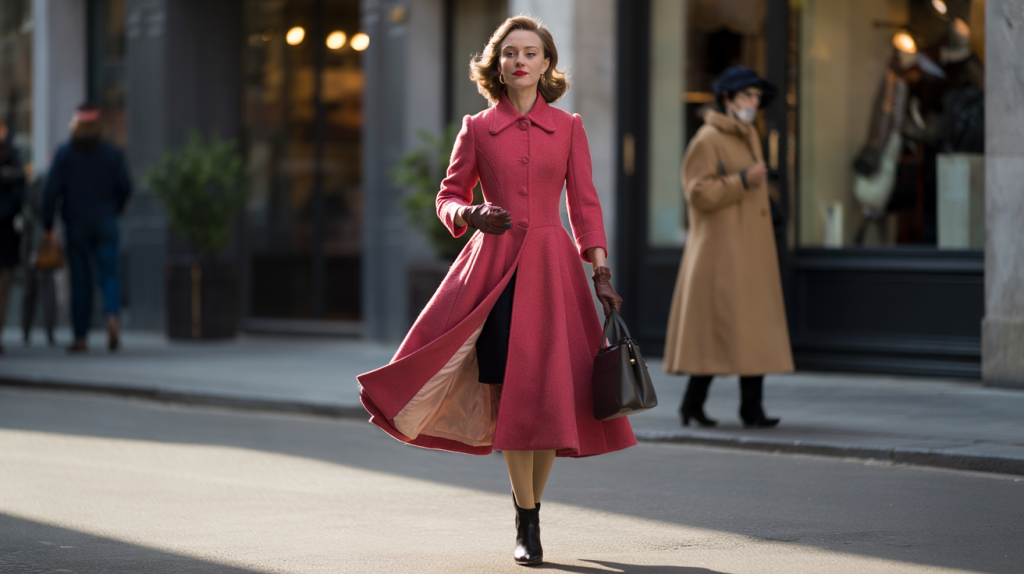
Searches for “manteau années 50” climb every cool season, and for good reason. These coats deliver drama and comfort in one move – a swing of wool that skims the body, frames the face, and turns any sidewalk into a small stage. The look feels cinematic yet wearable, which explains the rush to find the right one now.
Here is the core: a true 1950s coat leans on sculpted shoulders, an emphasized waist or a generous A-line, and premium wool that hangs with weight. The story starts in 1947 when Christian Dior launched the New Look with nipped waists and ample skirts, a silhouette that quickly translated into outerwear, as documented by The Metropolitan Museum of Art. By 1957, Cristobal Balenciaga had pushed volume further with the cocoon coat, a rounded, architectural shape also recorded by The Met. Between those poles sit swing coats, princess coats, and the practical car coat – the trio most shoppers hunt today.
What Defines a manteau années 50: Dior silhouettes to Balenciaga volume
The decade prized structure and movement. Dior’s early 1950s coats emphasized a cinched middle over full skirts, then moved toward softer swing-backs mid decade. Balenciaga’s cocoon in 1957 eased the waist entirely, letting the fabric float from shoulder to hem. The Victoria and Albert Museum’s fashion timelines confirm this evolution from tailored control to sculptural ease.
Common versions include the swing coat with bracelet-length sleeves and a stand collar, the princess coat with a fitted bodice and flared panels, and the car coat – shorter, sturdy, designed for daily life. Materials tell a lot: dense wool, cashmere blends, alpaca, camel hair. Fur collars were frequent in the period, widely seen in museum collections, even if many modern buyers prefer removable trims or faux replacements.
Hardware and finishing close the case. Bound buttonholes, rayon or satin linings, and deep hems point to quality. The best pieces feel balanced on the body – not stiff, not flimsy – because weight distribution was a craft, not an afterthought.
How to identify an authentic 1950s coat without guesswork
Shoppers hit two walls: inconsistent vintage sizing and modern reproductions. The fix is a methodical check that mixes fabric, construction, and period details. Quick and calm wins here.
Use this short checklist when a label or listing looks tempting :
- Look for period cuts: swing-back drape, princess seaming, or cocoon volume from shoulder to hem.
- Feel the fabric: dense wool or cashmere blend with a heavy, even hand. Mohair reads fuzzy but still weighty.
- Inspect finishing: bound buttonholes, hand-set linings, generous seam allowances, and a deep hem you can actually see.
- Check the lable: older typography, union tags from mid-century makers in the U.S., or couture house tags documented by museums.
- Measure, do not trust the size tag: compare pit-to-pit, shoulder, sleeve, and back length to a coat you own.
- Test movement: a real swing coat pivots cleanly at the shoulder and swirls without catching at the hip.
Museum references help. The Metropolitan Museum of Art and the Victoria and Albert Museum keep searchable records with dates and silhouettes; cross-checking a collar shape or sleeve length against their 1950s examples prevents costly mistakes.
Styling a 1950s coat today: ease, not costume
Modern outfits need balance. A princess coat likes lean trousers and ankle boots, nothing bulky underneath. A swing coat loves cropped knits and narrow skirts, so the volume reads intentional, not oversized by accident.
Colors do the heavy lifting. Camel or navy lands quietly at work. Lipstick red or bottle green brings that mid-century cinema glow at night. Keep accessories minimal – a leather top-handle bag, small studs, clean gloves – so the coat’s line stays the headline.
Length matters in motion. Mid-calf coats frame sneakers as well as heels, which keeps the look from feeling museum-only. And yes, many original collars button all the way up, so the coat doubles as scarf and shell on cold, windy days.
Where to buy a 1950s coat: trusted places, real-market numbers
Local vintage boutiques remain the surest path, because you can test weight, check seams, and confirm fit. Reputable online platforms – Vestiaire Collective, The RealReal, eBay with strong seller histories – come next, especially when listings include full measurements, inside-out photos, and return windows.
The resale engine behind all this is not small. The 2024 thredUP Resale Report projects the U.S. secondhand apparel market to reach 73 billion dollars by 2028, a scale that brings more 1950s outerwear into circulation season after season. That breadth helps locate specific details – bracelet sleeves, stand collars, or a true cocoon – without rushing.
One last, practical loop: plan basic maintenance from day one. Hang on broad, padded hangers, brush with a soft garment brush after wear, and air out between uses. For linings that pull or seams that gape, a good tailor can restitch by hand, preserving the interior architecture that gives a manteau années 50 its quiet swing.