
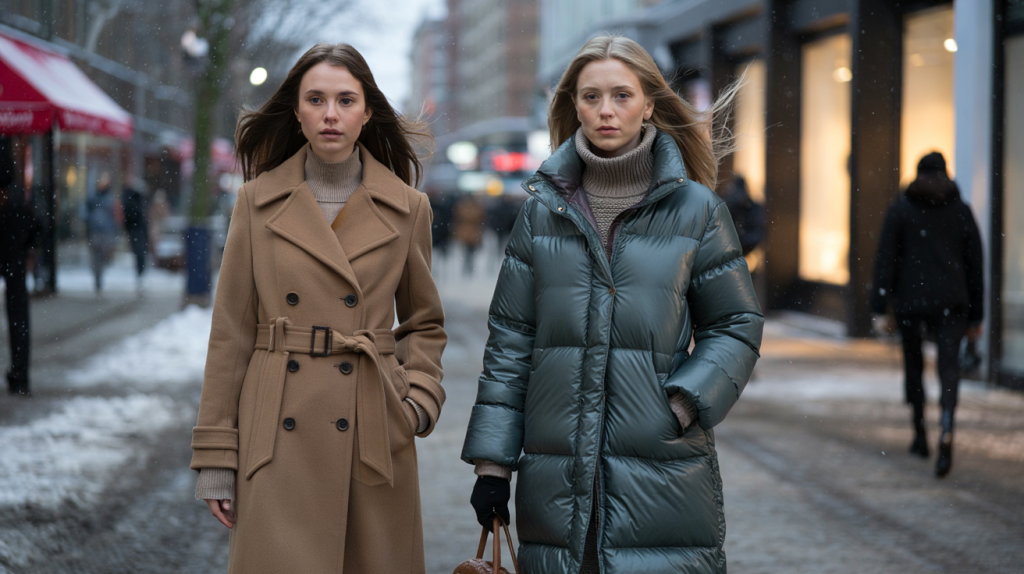
Warm et Other Stories winter coat for women : straight to what matters
Cold days hit, the wardrobe test begins. If the goal is a manteau et Other Stories that actually keeps a woman warm in winter, the winning formula is simple : high wool content or real insulation, wind stopping details, and a length that covers more of the body. That mix decides comfort on the sidewalk before style even enters the room.
Context helps. Et Other Stories, launched in 2013 by H et M Group, rotates timeless wool coats and padded silhouettes each season. The warmest picks tend to be dense wool blends with full lining and a snug closure, or puffers with technical fill and a high collar. Readers come for a quick, confident choice. Here is how to lock it in without guesswork.
Materials decoded : wool blends, lining and the science of insulation
Start with fabric. Wool traps air and manages humidity better than most fibers, which keeps skin drier when temperatures drop. The Woolmark Company notes that wool can absorb up to 30 percent of its own weight in moisture vapor while still feeling dry, a key reason it stays comfortable in cold, damp weather. Look for labels listing a high percentage of wool, then check the density by hand : the fabric should feel tight, not flimsy.
When a puffer enters the picture, insulation quality tells the story. Down and advanced synthetics are rated by loft or gram weight. Allied Feather and Down explains that fill power shows how much space down occupies, with 700 and above considered high loft for warmth at lighter weight. If the fill is synthetic, gram weight per square meter is the clue, paired with a wind resistant shell and a proper storm flap to seal the zipper.
Labels are not just marketing. In the European Union, Regulation No 1007/2011 requires brands to list fiber composition by percentage on the garment tag. Care symbols follow ISO 3758 : 2012, so you can read cleaning instructions consistently from one coat to another. Those two lines on a tiny label reduce surprises, and they help compare coats in seconds.
Fit, length and smart details that change how warm you feel
Warmth is not only fabric. A coat that fits the shoulders, allows a knit underneath and closes cleanly at the neck will feel warmer than a looser piece in the same material. Mid calf lengths add noticeable coverage when wind picks up. Shorter silhouettes can still work if the collar rises high and cuffs block drafts.
Several details do heavy lifting on a freezing commute. A double breasted front overlaps fabric and traps air. A belt tightens the waist and reduces heat loss. Hidden ribbed cuffs inside sleeves stop wind sneaking in. Quilted lining adds an extra air layer, especially in the torso. One missed button at the collar, and warmth leaks out fast, it happens, shoppers recieve the coat and only notice on the first cold morning.
Quick checklist for evergreen shopping
- Fiber label : look for a high wool percentage for tailored coats, or clear insulation info for puffers.
- Lining : full lining in the body and sleeves improves glide and traps air.
- Closure : double breasted, zip with storm flap, or buttons that reach the chin.
- Cuffs and collar : ribbed or adjustable cuffs, stand collar or hood that seals tight.
- Length : knee to mid calf for daily city cold, short only if layered smartly.
- Shell density : for puffers, a tightly woven shell fabric reduces wind penetration.
- Care tag : dry clean or gentle wash guidance under ISO 3758 : 2012 keeps insulation performing.
From browsing to wearing : a simple way to choose the right et Other Stories coat
Most mistakes show up at two moments. First online, when photos make all coats look equally warm even if one is unlined. Then in store, when fit feels great under air conditioning but fails outdoors. The fix is boring and effective : compare labels by percentages, test closures all the way up to the chin, and sit down while wearing the coat to see if the back lifts and exposes the lower back to cold.
A practical example clarifies the trade offs. A dense wool blend with 70 percent or more wool, full lining and a double breasted front will handle daily city winter, including light rain if you add an umbrella. If the plan includes long waits outside or travel to colder regions, a puffer with high loft down or clearly stated synthetic gram weight, plus a tall collar and inner cuffs, outperforms for the same weight on the shoulders. Either way, pick the longest length that still feels agile on stairs.
The last piece is maintenance, since warmth fades when fibers mat down. Follow care symbols stated under ISO 3758 : 2012 and hang coats on broad shoulders, not wire hangers. Brushing wool lifts the nap and restores air pockets. For insulated coats, gentle cleaning protects loft. Those small habits keep a manteau et Other Stories performing from the first frost to the last cold snap, which is the point of choosing carefully in the first place.