
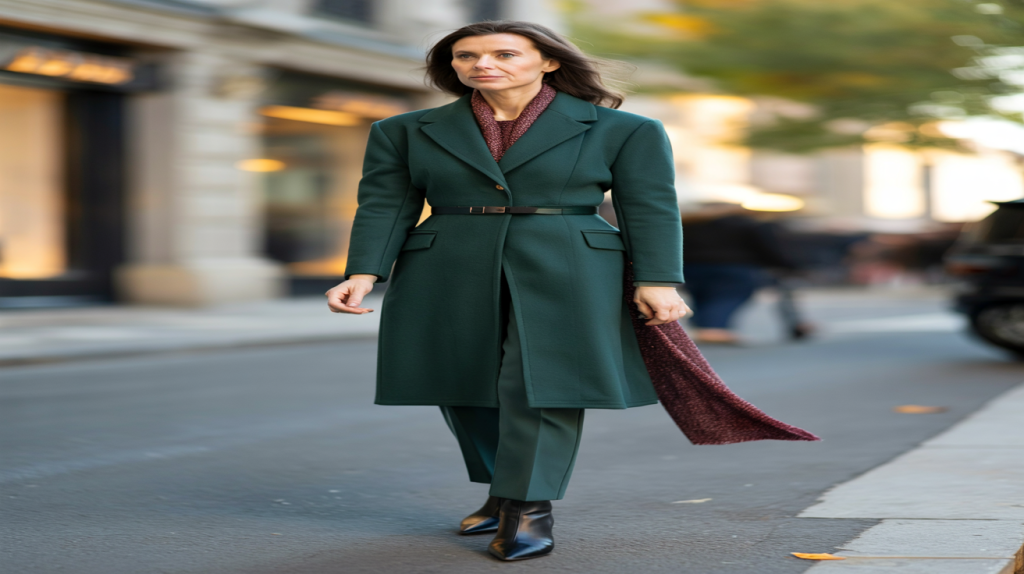
Looking for a coat that instantly lengthens the body without towering heels? The manteau taille basse femme – a dropped-waist women’s coat – shifts the waist seam a little lower to elongate the torso and skim the hips. It is the kind of silhouette that quietly transforms proportions and, yes, makes outfits look more intentional.
This style has fashion history on its side. The Victoria and Albert Museum notes the dropped waist defined womenswear in the mid 1920s, when designers pushed the seam below the natural waist to create a long, fluid line. That same visual trick still works on today’s coats, especially when paired with clean lapels and minimal shoulder padding.
What a manteau taille basse femme really does to your shape
First, the lower seam shifts attention away from the midriff and towards the hem, which visually lengthens the upper body. That helps when balancing chunky boots or wide-leg trousers.
Second, it relaxes structure. A dropped waist creates ease through the stomach area while keeping the coat neat across the shoulders. Comfortable, but not sloppy.
Third, it plays well with layers. Because the seam sits lower, thicker knits and blazers underneath do not bunch at the waist. Commuters feel the difference on day one.
How to choose the right dropped-waist coat : fabrics, fit, length
Fabric matters. According to The Woolmark Company, wool can absorb moisture vapor up to around 30 percent of its dry weight before feeling wet, which helps regulate warmth on stop-start days. Blends with cashmere add softness, while recycled polyester blends bring abrasion resistance for heavy wear.
Check the seam placement. A classic dropped waist sits a few centimeters below your natural waistline. On petites, an overly low seam can overwhelm, so opt for versions with a gentle drop and a slightly shorter body.
Length decides the vibe. Knee length reads polished for office looks. Mid-thigh keeps it city-casual. Floor-grazing maxis are drama – great in photos, not on crowded trains.
Details count. Clean single-breasted fronts elongate. A subtle drawcord or half-belt at the lowered waist lets you tune the silhouette without squeezing the midsection.
Styling mistakes to avoid – and quick wins that always flatter
Trends come and go, but the mechanics of proportion stay the same. Here are simple moves that work across sizes and personal styles.
- Match coat and trouser tones to create one tall column. Even light grey with charcoal helps.
- Choose boots with a slim shaft to avoid bulk where the coat opens.
- Add a long scarf that drops past the seam to echo the vertical line.
- If curvy at the hips, pick a subtle A-line bottom half to skim rather than grip.
- For petites, keep pockets set high and lapels narrow to reduce visual weight.
History adds context. The V and A traces the dropped waist’s rise to the 1920s, a period obsessed with straight, elongated shapes. Designers translated that idea into coats then, and the line still feels modern when fabrics are matte and buttons are unfussy.
Price, care and durability : how to buy once and wear for years
Budget follows fabric. Pure wool or wool-cashmere costs more upfront but tends to drape better and age gracefully. Midweight wool around autumn works nine months a year with smart layering.
Look for certifications on labels when possible. OEKO TEX Standard 100 has been in place since 1992 to limit harmful substances in textiles. It does not judge style, just what touches the skin.
Fit checks save returns. Slip on your thickest sweater when trying a coat. Move your arms, sit, then button up. The dropped seam should not ride up when you reach forward. If sleeves pull, size up – tailoring the cuff later is cheaper than living with shoulder strain.
Care is practical. Hang on a wide-shoulder wooden hanger, brush lint after each wear, and let wool rest a day between outings. Spot clean promptly to avoid set-in stains, then schedule a gentle dry clean at season’s end. Treat it kindly and you will recieve years of sharp wear.
One last gap to close is climate range. If winters bite, a hidden quilted liner snaps inside many modern models. That modular layer keeps the sleek dropped-waist profile while adding real warmth for cold snaps, then pops out in March. Simple idea – big mileage.