
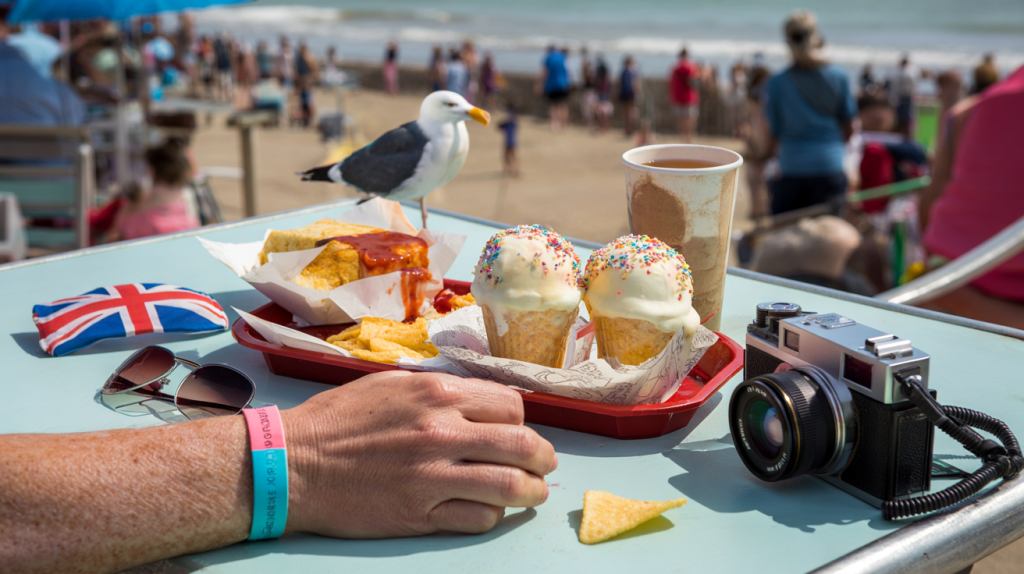
Sunburnt holidays, melted ice creams, plastic chairs by the sea. Click. Martin Parr turned the ordinary into global visual culture, and did it from within Magnum Photos – the photographer-owned cooperative founded in 1947. That mix of sharp wit and saturated color still pulls huge attention in galleries, books and Google searches alike.
Here is the core: Parr became a full member of Magnum Photos in 1994, later serving as its president from 2013 to 2017. His breakthrough came earlier with “The Last Resort”, shot in New Brighton between 1983 and 1985 and published in 1986, a turning point for British color documentary. The line from there to “Common Sense” in 1999, “Think of England” in 2000 and “Only Human” at London’s National Portrait Gallery in 2019 explains why his eye shapes how many see Britain today.
Magnum Photos and Martin Parr : facts, dates, accountability
Magnum Photos began in 1947, formed by Robert Capa, Henri Cartier-Bresson, George Rodger and David Seymour. A cooperative owned 100% by its photographers, it built a system where authorship and rights stay with the image-makers. Parr’s election as full member in 1994 placed his British vision alongside Magnum’s global canon.
Numbers help. Parr has published over 100 books of his own work and edited more than 30. The Martin Parr Foundation opened in Bristol in 2017 to support and archive British documentary photography, including Parr’s own holdings. In 2021, he was appointed CBE for services to photography in the UK honours list.
Context matters too. In 2020, after criticism surrounding his association with Gian Butturini’s 1969 book “London”, Parr stepped down as artistic director of the Bristol Photo Festival. The National Portrait Gallery’s 2019 show “Only Human” – spanning sport, Brexit-era portraits and leisure – underlined both his reach and the scrutiny that follows high-profile documentary work.
Color, flash, and British life : how the Parr look works
Move closer. Parr’s signature method uses vibrant color film or digital color, often with on-camera flash that flattens midday glare and makes plastic shine. It places takeaway wrappers and holiday tans on equal footing with faces, a democratic eye that can feel both funny and forensic.
There is history here. He shifted decisively to color in the early 1980s, just as British documentary was still dominated by black and white. “The Last Resort” photographed families at play while Britain wrestled with economic change. “Small World” in 1995 turned the lens on global tourism, then ballooning with cheaper flights and new mass routes.
The approach scales. In photobooks he sequences with punchy pairings and recurring motifs – garish desserts, branded cups, patriotic souvenirs. On assignment with Magnum, that same clarity carries into editorial and cultural projects, from fashion crossovers to national portraits.
Books, shows, milestones : a compact timeline to navigate
Dates help readers place the work without getting lost. A few anchors keep the map steady.
- 1983–1985 : “The Last Resort” photographed in New Brighton – book published 1986.
- 1994 : elected full member of Magnum Photos – later president 2013–2017.
- 1995 : “Small World” examines global tourism in saturated color.
- 1999 : “Common Sense” pushes consumer culture to the foreground.
- 2017 : Martin Parr Foundation opens in Bristol – dedicated to British documentary.
- 2019 : “Only Human” at National Portrait Gallery, London.
- 2020 : steps down from Bristol Photo Festival after public criticism of a past association.
- 2021 : appointed CBE for services to photography.
Magnum’s own arc frames this story. The cooperative marked its 70th anniversary in 2017, with archives dating back to 1947 and offices long rooted in London, Paris et New York. Parr’s tenure as president came as the agency expanded digital licensing and new partnerships, while keeping authors’ rights central.
How to read a Martin Parr picture today – and why it still clicks
Start with surface, then look again. The flashy color draws a quick smile, yet details carry the social read – logos, prices on menus, flags on paper hats. Time stamps sit everywhere, from swimsuits to phone models. That is where the documentary bite lives.
Common misread: seeing only satire. Parr’s photographs rarely insult their subjects. They place habits on display and let context do the talking. When discomfort appears, it often comes from recognition. The seaside tray is ours, not just theirs. That’s why the pictures travel – travellling beyond Britain without losing specificity.
Practical tip. To explore the work with depth, pair books with exhibitions or Magnum’s online features. Books like “The Last Resort”, “Small World”, “Common Sense” and “Only Human” each map to broader shifts – from 1980s leisure to 1990s global tourism to 2010s identity and sport. The Martin Parr Foundation’s program in Bristol adds talks and archive access that keep the debate moving.
One last piece that completes the puzzle : authorship. In the Magnum system, photographers hold the reins, publish widely, and license through the cooperative. That structure – built in 1947 and still intact – shaped how Parr’s images reached magazines, museums and classrooms, across decades of changing technology. It is the quiet mechanism behind those bright beaches and loaded picnic tables.