
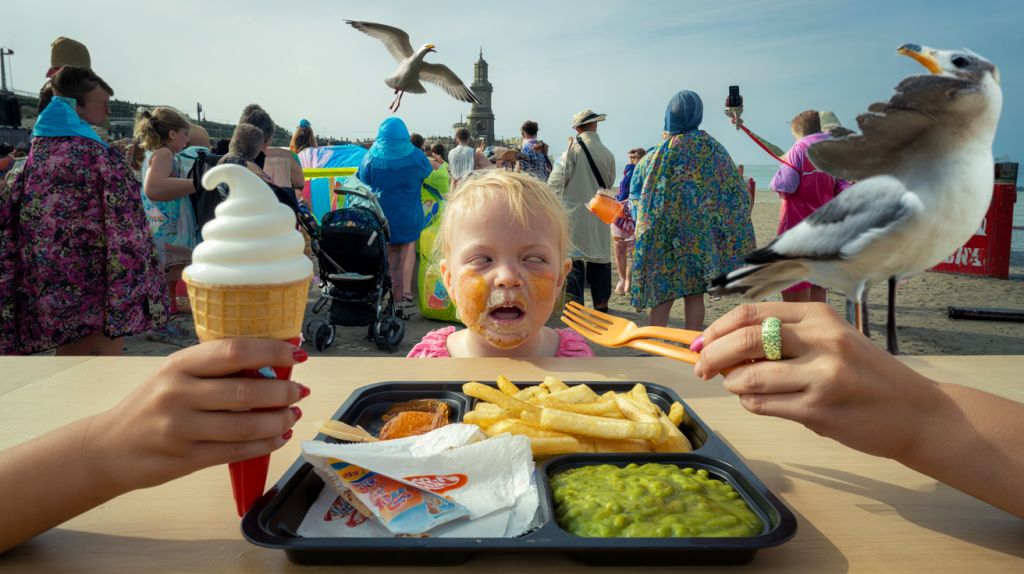
Martin Parr turned everyday British life into a global conversation, using bright color and razor sharp detail that refuses to whisper. Born in 1952, educated at Manchester Polytechnic from 1970 to 1973, then a full member of Magnum Photos in 1994 after nomination in 1988 and associate status in 1990, he placed leisure, consumption and class right under a ring flash. The breakthrough arrived with “The Last Resort”, photographed in New Brighton from 1983 to 1985 and published in 1986, a series that jolted documentary photography into modern color.
The work kept coming. “Small World” in 1995 explored mass tourism in vivid tones, “Common Sense” in 1999 pushed the close up language of food and kitsch, and “Only Human” at London’s National Portrait Gallery in 2019 mapped identity in a time of Brexit headlines. Parr has created and edited over 100 photo books, led Magnum Photos as president from 2014 to 2017, and since 2017 has anchored his archive and exhibitions at the Martin Parr Foundation in Bristol. The search intent is simple : what makes Parr’s documentary photography matter today, and how to read it without missing the cultural clues.
Martin Parr and documentary photography : context, color, clarity
The main idea lands fast. Parr photographs ordinary rituals, then reveals the social codes inside them. Cafeterias, beaches, street markets, package tours, all rendered in saturated color that arrived as a shock in the mid 1980s British scene still loyal to black and white reportage. Color here is not decoration, it is evidence.
The observation many viewers share comes next. At first glance, the humor looks like mockery. Look longer and the pictures hold a steadier balance, mixing comedy with a carefully observed class reality. Distance is short, flash fills, details stack up. Yes, that burger is the point.
The solvable problem : how to approach these images without flattening them into punchlines. Parr’s method offers a simple guide. Track the background, read the hands, check the typography of signs. Dates help anchor intent, from the 1983 to 1985 seaside pictures during deindustrialization, to global travel scenes gathered in the 1990s when budget tourism exploded. Context changes the reading.
Key series to know : The Last Resort, Small World, Common Sense
New to Parr or coming back after years away, start here. Each series marks a different angle of his documentary language, and each comes with a clear timeline.
- “The Last Resort”, photographed 1983 to 1985 and published 1986 : New Brighton leisure at the edge of economic strain, children and parents against bright plastic and melting ice cream.
- “Small World”, published 1995 : mass tourism from Blackpool to the Taj Mahal, postcards turned inside out, crowds and poses that feel both funny and precise.
- “Common Sense”, 1999 : close range flash, high saturation, objects and snacks as cultural artifacts, a catalog of desire that is hardly neutral.
- “Think of England”, 2000 : ceremonies, village greens, and social theater that reads like a mirror of national habits.
Methods and materials : how Parr’s images say what they say
Technique is content. The ring flash flattens shadows, colors jump, textures of skin and food turn tactile. Parr often works from close distance, which changes behavior and compresses a scene into layers of signs. He favors the moment right before or after the obvious gesture, when the social script slips.
The gear list matters less than repeatable choices. Color became standard in his practice across the 1980s, then digital workflows accelerated volume in the 2000s while keeping the same frontal language. Sequence does heavy lifting in the books, pairing images so that meaning emerges from contrast and accumulation rather than captions.
A concrete example clarifies the reading. In “Small World”, a tourist turns to a landmark, another person enters frame, souvenirs glow in the light. The joke is there, but so is the system, the choreography of global travel that expanded fast in the 1990s. That detail definitly matters.
Where to see Martin Parr today : books, Magnum, Bristol foundation
For access right now, the Martin Parr Foundation in Bristol has run exhibitions and talks since 2017, alongside an archive of British and Irish documentary work. Parr’s own publications remain the most direct route, with over 100 books across decades that map interests from food to fashion to politics.
Magnum Photos, where Parr became a full member in 1994 and served as president from 2014 to 2017, hosts portfolios and project notes that add context and dates. Museum shows have kept pace, from the National Portrait Gallery’s “Only Human” in London in 2019 to international group exhibitions that revisit 1980s color documentary. The path is clear : read the pictures with time and place in mind, then let the plain and the loud click together.