
Martin Parr’s Vogue Hommage, explained fast
Fashion rarely looks like real life. Martin Parr flips that script. His Vogue hommage blends glossy styling with everyday scenes, revealing how desire and daily habits collide in color.
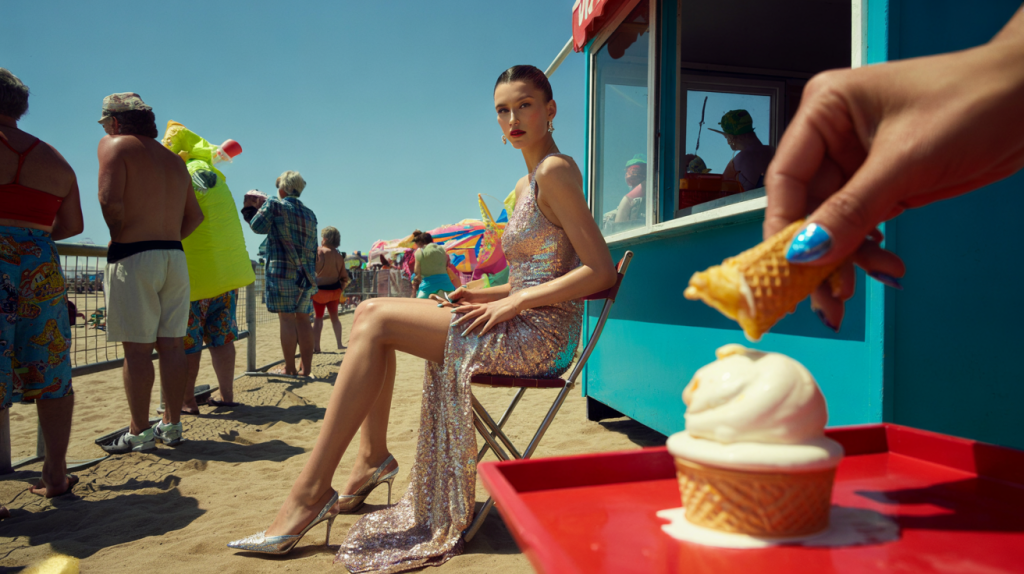
The premise is simple and sharp. Take couture or sharp ready-to-wear, step outside the studio, and place it where people shop, sunbathe, snack, wait, and glare. The result hits the eye first, then the nerves. That is why this topic is surging across searches: readers want to decode how Parr made Vogue feel candid without losing the thrill.
Why Martin Parr and Vogue fit so well
At heart sits a tension. Vogue stands for aspiration. Martin Parr documents consumption, taste, and class with a mischievous lens. Put them together and the homage becomes a mirror that flatters and questions at once.
Facts anchor the pairing. Martin Parr was born in 1952 and joined Magnum Photos in 1994, a trajectory that shaped his saturated palette and close-up flash. Vogue’s US edition dates to 1892, while British Vogue began in 1916, a century-long editoral engine that loves reinvention.
Parr has published over 100 books. That scale matters. It trained a visual grammar that makes lipstick, plastic trays, seaside chips, or suntan oil read like cultural evidence. When used inside Vogue’s fashion story, those props become context rather than clutter.
Key moments that put the tribute in context
A centenary changed the mood. British Vogue marked 100 years in 2016, a reminder that fashion history thrives on new eyes. Around the same time, Martin Parr’s museum presence hit a wider audience, with “Only Human: Martin Parr” at London’s National Portrait Gallery running from 7 March to 27 May 2019. The show sharpened public appetite for his view of British rituals.
The Vogue connexion works because both sides speak fluently about taste. Parr’s images zero in on how people display belonging through shoes, nails, snacks, souvenirs. Vogue speaks to the same codes through fabric, silhouette, and casting. Together, the homage treats a handbag and a melting ice cream like equal cultural clues.
Numbers tell part of the story. Vogue’s British edition counts from 1916 and remains a monthly touchpoint. Magnum membership for Parr since 1994 confirms decades of reporting on everyday theatre. When a Vogue commission taps that training, the homage reads as editorial research, not just a quirky location shoot.
How to spot a true Parr x Vogue homage
Readers ask the same thing: what makes a Vogue homage look distinctly Martin Parr, not just any fashion-in-the-street set up. A few markers keep returning.
- Color that pops against banal settings, with flash or hard light flattening space to highlight texture and shine.
- Everyday props that steal the scene: trays, cones, receipts, foldable chairs, souvenir towels, queue barriers.
- Close framing near hands and mouths, where consumption reads instantly.
- A social hint, never lecturing: class codes, tourist habits, local signage, and tiny price tags sitting near couture.
- Humor that stays deadpan, letting the viewer fill the silence rather than a caption doing the work.
There is a practical reason this works for Vogue. Real places provide scale. A sequined dress changes meaning on a pier or in a supermarket aisle, because price labels and linoleum quietly measure extravagance. The homage becomes a conversation between fantasy and receipt.
A common mistake is thinking the look is accidental. It is built. Parr’s alignment favors tidy edges, parallel lines, and a foreground detail that hooks the gaze in one second. That discipline keeps chaos readable and avoids pastiche.
Another pitfall is over-the-top irony. Parr’s best fashion moments stay curious, not cynical. The image leaves room for delight, a tiny shock, and then the funny aftertaste. That balance is defintely the hard part.
Where does this go next. Sustainability pressure reshapes production and styling across fashion editorials. Parr’s method, which thrives on daylight, short setups, and public locations, can support leaner shoots while keeping narrative density. Brands and editors still crave aspiration, but audiences engage longer when the picture reveals how people actually live.
The missing piece is context on the page. Captions that name the place and time ground the homage inside fashion history. Dates matter, like 2019 for “Only Human” or 1916 for British Vogue, because they anchor individual images inside a century of style shifts. That context turns a striking page into a lasting reference, which is exactly what a Vogue hommage aims to achieve.