
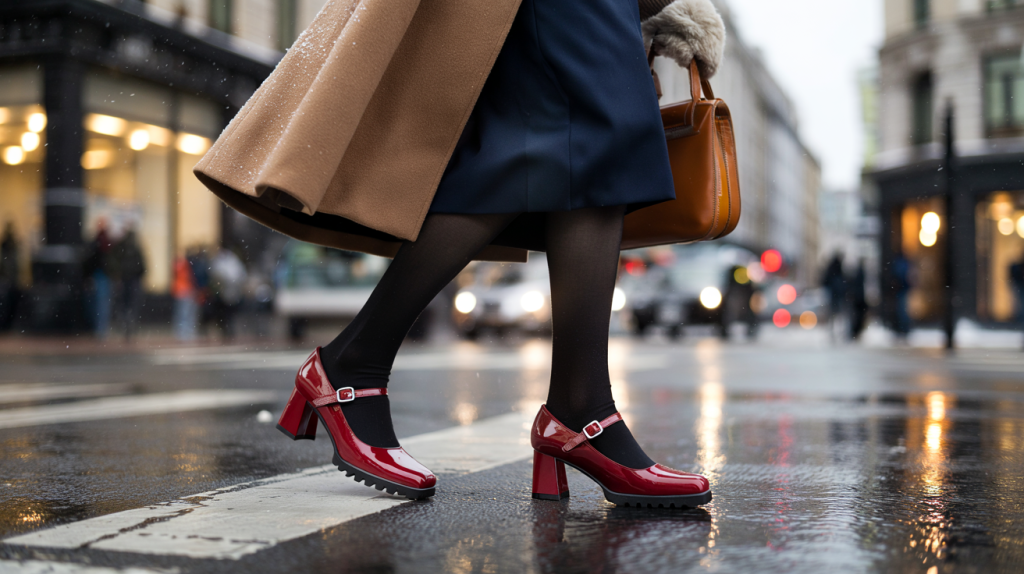
The strap is back in town. This winter, Mary Jane shoes jump from runway to sidewalk as the season’s most wearable trend, pairing classic charm with real-life warmth when styled right.
Designers doubled down during the Fall-Winter 2024-2025 season across Milan and Paris. Between 20 and 26 February 2024 in Milan and 26 February to 5 March 2024 in Paris, collections from Miu Miu, Prada and Gucci pushed buckled flats and block-heel Mary Janes into daily wardrobes. Shops followed with thicker soles, lined insoles and practical leathers. The silhouette feels nostalgic yet new, and yes, winter friendly.
Why Mary Jane shoes lead the winter trend in 2024-2025
The appeal is simple: secure, polished, adaptable. A strap supports the foot, a rounded toe softens outfits, and a modest heel keeps balance on long days.
There is history, too. The term “Mary Jane” traces back to 1904 and the Buster Brown comic character licensed by Brown Shoe Company. That schoolgirl DNA now meets grown-up materials and city-proof soles.
Design updates make the difference. Think low block heels between 2 and 5 cm for stability, slightly wider toe boxes for thicker socks, and rubber bottoms that grip wet pavements without shouting sneaker.
How to wear Mary Jane shoes in winter : socks, tights, and layers
Start at the base. Opaque tights in 60 to 100 denier lock in warmth while keeping a clean line. Black on black elongates the leg, while charcoal or burgundy adds depth without looking fussy.
Prefer socks with bite. Ribbed wool or cashmere blends look intentional peeking through the strap. A marl grey sock with patent black Mary Janes is quietly sharp.
A quick visual formula works on busy mornings: long coat, midi skirt, opaque tights, block-heel Mary Janes, structured bag. Picture a commuter in London wearing 80 denier tights, a 4 cm heeled pair, and a camel coat. Warm, polished, no drama.
Color is a smart tool. Red Mary Janes lift navy and black outfits instantly. Chocolate brown pairs beautifully with cream knitwear and trench-inspired wool coats.
Common mistakes to avoid with Mary Janes in cold weather
Choosing paper-thin soles for icy days. A smooth leather outsole can slip on wet leaves or metal grates. Opt for a rubber forepart or a full rubber sole with defined lugs.
Underestimating the strap fit. Feet can swell after a long walk in the cold. A fittted strap leaves marks and kills comfort. Leave a finger’s worth of ease or select adjustable buckles with multiple holes.
Ignoring materials. Unprotected suede and salt do not mix. If suede is the pick, use a waterproofing spray before the first wear and after any clean.
Forgetting insulation. Bare ankles with thin nylon in January feel brave and look tense. Switch to 80 denier tights or add a thin wool sock that blends with the shoe color to keep the line unbroken.
Buying guide : materials, soles, and heel heights that work
Winter-proof features turn a cute Mary Jane into a go-to pair. Use this quick checklist before buying.
- Upper : full-grain or patent leather resists drizzle better than untreated suede. Look for hidden gussets or padded straps for comfort.
- Sole : rubber with visible tread for traction. A slight platform of 1 to 2 cm helps insulation from cold ground.
- Heel : block styles between 2 and 5 cm balance posture while staying steady on wet streets.
- Strap system : adjustable buckle or dual straps for a snug fit over tights or socks. Avoid purely elastic straps in deep winter.
- Insole : cushioned or removable footbeds allow wool or shearling inserts on very cold weeks.
- Toe shape : softly rounded or almond toes give space to thicker hosiery without squeezing.
- Sizing : consider half a size up if planning to wear ribbed socks or thermal tights.
Care keeps the look fresh longer. Wipe road salt as soon as you get home, let pairs rest at least 24 hours between wears, and apply water-repellent spray every 2 to 4 weeks during peak winter. Shoe trees help maintain shape, especially with patent leather that can crease.
The last puzzle piece is wardrobe balance. A delicate single-strap flat softens tailored trousers and a chunky knit. A sturdier double-strap with a 4 cm heel anchors flowing midi dresses and heavy coats. Pick the model that stabilizes your cold-season outfits, not the one fighting them.