
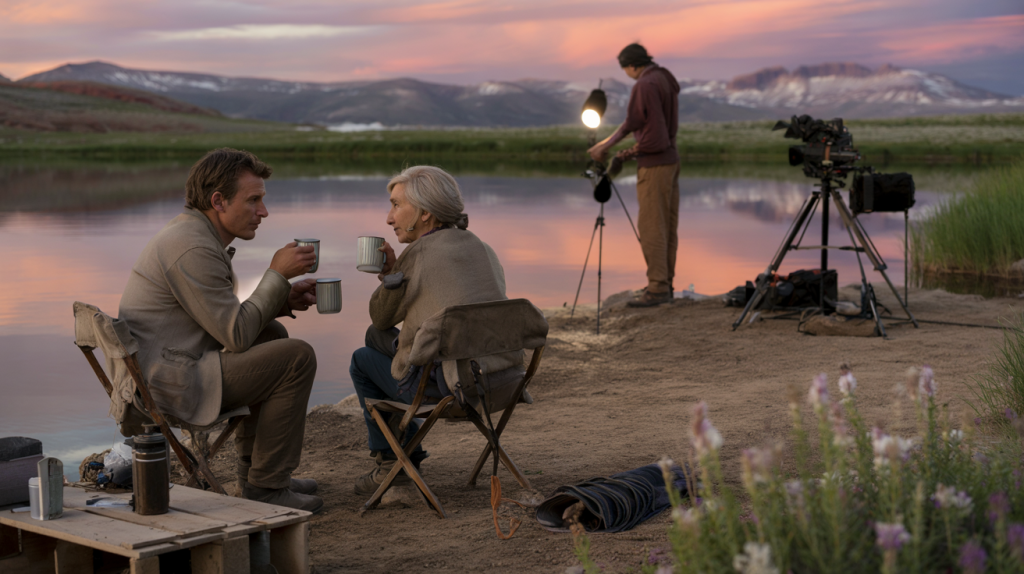
A filmmaker who trusts silence more than spectacle rarely steals headlines. Yet Max Walker-Silverman did just that with A Love Song, the tender feature that set the indie world buzzing in 2022. In a rare interview, the Colorado born writer director opens up about building emotion with restraint, why landscapes matter as much as lines, and how careful casting can turn a small story into something that lingers.
Context helps. A Love Song premiered at the Sundance Film Festival in 2022 and was released by Bleecker Street later that year, led by Dale Dickey and Wes Studi. The movie follows two childhood sweethearts reconnecting at a lakeside campsite. No pyrotechnics. Just patient filmmaking and a belief that time, faces and place can carry a feature. The interview traces the choices behind that belief and what they unlock for anyone working outside the studio system.
Max Walker-Silverman interview: the breakout after A Love Song
The main idea lands fast. Walker-Silverman argues that small stories travel when they protect detail. He points to practical constraints on set and the way they sharpened focus. A Love Song uses few locations and a tight ensemble. That choice kept attention on behavior, not plot gymnastics, and it shows.
There is a problem many indie directors face. Tight schedules flatten nuance, and scenes start to rush. Walker-Silverman explains that planning around daylight and natural sound kept scenes breathable. The movie’s rhythm came from the site itself, not a stopwatch. Click and you hear it in the pauses between lines.
He also credits casting with setting the compass. Dale Dickey’s face tells history without a monologue, while Wes Studi brings weight to the slightest gesture. That pairing gave the film its center and reduced the need for exposition. Simple, yes, but not easy to pull off on a first feature.
Place, process and why Colorado keeps showing up for Max Walker-Silverman
The conversation turns to place. Walker-Silverman grew up in Colorado, and the interview underlines how local knowledge shortens the distance between script and screen. Working where crews know the light and the wind patterns reduces guesswork and frees time for actors. It also keeps costs down, which matters when you do not have deep pockets.
Numbers do enter the frame, carefully. The film arrived in 2022, a year when festival lineups reopened to in person audiences in fits and starts. He says that timing shaped audience reactions, since A Love Song plays like a reunion itself. People had missed quiet rooms and shared attention. That context helped the movie connect without marketing bombast.
There is an empathetic nudge to young filmmakers in his remarks. Use what you have. If the location is a campground, let the ground do some storytelling. If a scene feels forced, strip away one prop or one line and see what remains. He makes it sound simple, then admits that the hardest edit is often the one that removes a favorite beat. Honest, and a bit tender.
From set discipline to next steps: practical takeaways from Max Walker-Silverman
The interview moves into tactics. He breaks down a few on set habits that kept A Love Song steady. Scenes began with a short walk through the space, not a sit down table read. That eased nerves and let actors locate their characters physically. Sound rolled a touch earlier than usual, just to catch the air and the boots and the chair creak. Those textures added continuity without calling attention to themselves.
He also describes a writing routine anchored by location scouting. Pages followed places, not the other way around. If a cliff edge or a pier changed the breath of a scene, the script bent to it. That flexibility prevented the usual clash between beautiful images and rigid story beats. The result feels lived in rather than staged.
So what comes next. Walker-Silverman keeps developing stories tied to the American West, again with intimate casts and a careful eye on time. He resists announcing titles or dates until they are locked, a choice that fits the patient cadence fans now expect. The method remains steady. A small crew that knows each other. Schedules that leave space for weather and for doubt. A commitment to characters who hold silence long enough for meaning to surface.
For readers searching the interview to solve a practical problem, he offers a quiet answer. The missing element in many micro budget shoots is not gear, it is alignment. Crew and cast need the same north star, the same sense of where attention should rest. When that is clear, the film can afford to be soft spoken and still be heard. It is a simple seperates from the rest, and a reminder that restraint, properly held, travels.