
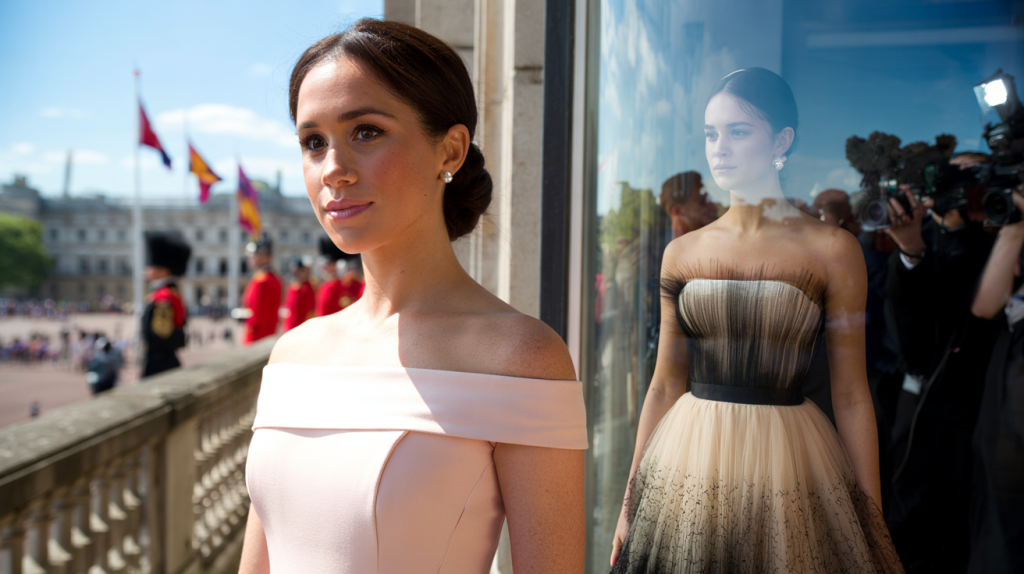
A single dress often sets off the debate. With Meghan Markle, it turned global more than once: the sheer Ralph et Russo gown unveiled for the couple’s engagement photos in December 2017, then an off the shoulder Carolina Herrera at Trooping the Colour on 9 June 2018. Both moments triggered questions about royal protocol, cost, and symbolism, right where fashion meets public scrutiny.
The timeline is clear. Kensington Palace released the engagement portraits on 21 December 2017, shot by Alexi Lubomirski. British outlets including the BBC and The Telegraph reported the dress price at about £56,000, which raised eyebrows given the couple’s new royal status. Six months later, Meghan Markle’s first Trooping the Colour came with a pale pink neckline that some commentators said broke tradition, while others pointed out no written rule bans bare shoulders.
Meghan Markle dress controversy: why the spark caught fire
Royal fashion lives under a magnifying glass. Every seam reads like a message. The engagement photos felt cinematic, luxurious, and instantly viral, which amplified the cost conversation. Then came the balcony moment. Trooping the Colour marks the monarch’s official birthday, and a newcomer’s outfit in that setting receives maximum visibility.
The visibility mattered. Nielsen measured 29.2 million viewers in the United States for the 2018 royal wedding broadcast on 19 May 2018, and UK audience data from BARB placed viewership around 18 million the same day. That level of attention means a dress is never just a dress. It becomes a public marker of tone, respect for tradition, and spending choices, rightly or wrongly.
There is also the guidebook myth. Buckingham Palace does not publish a formal rulebook for every event, as seasoned royal correspondents have noted. Instead, long standing custom, event briefings, and context steer what is appropriate. Which explains why interpretations differ so sharply from one photo to the next.
From the 2017 engagement gown to Trooping the Colour 2018
On 21 December 2017, the black and gold Ralph et Russo gown in the official portraits divided opinion. Fashion titles like Vogue chronicled the couture choice and the hand embroidered detail, while The Telegraph and the BBC cited the five figure price reported for similar pieces by the house. The conversation centered less on the design itself and more on optics: timing, cost, and a future duchess presenting a glamorous image before wedding day.
Fast forward to 9 June 2018. Meghan Markle arrived at Trooping the Colour in a blush Carolina Herrera with an open neckline and buttoned bodice. Several British newspapers framed it as a breach of tradition for a military parade setting. Others referenced past photos of royal women in off the shoulder looks at summer events, noting the absence of codified bans. The same dress, two interpretations. That is how the controversy kept rolling.
Designers featured in both moments are established. Ralph et Russo presented couture silhouettes that often hit six figures, which contextualizes the price discussion. Carolina Herrera has repeatedly dressed members of royal families for daytime and evening appearances. The labels were not the story, the setting was.
Royal dress code: what is written and what is custom
Most of what readers call protocol sits in custom and briefing, reported across years by outlets like The Telegraph, British Vogue, and the BBC. That is why a clear checklist helps make sense of the noise.
- Church services: covered shoulders and knee length hemlines are frequently seen in photo archives, noted by The Telegraph in 2018.
- Royal Box traditions at Wimbledon: no denim in the Royal Box, long documented by the All England Club and covered by BBC Sport.
- Official daytime events: hats for women are common in spring and summer, observed in British Vogue event roundups.
- Manicures on duty: neutral shades appeared consistently across engagements, a pattern catalogued by style desks at major UK newspapers.
None of these amount to statutory rules. They are patterns, reinforced by precedent and the formality of each venue. Which is why a neckline that looks fine at a summer garden party can spark debate at a military parade. Context writes the footnotes.
Money, optics, and what the audience really asks
Three threads keep returning in reader questions. How much, where, and why there. The cost point sticks because the monarchy is a national institution with taxpayer funded elements, even when a specific item is privately paid. The BBC and The Guardian have repeatedly clarified that wardrobes for working royals are often privately financed, while security and official travel carry public costs.
Venue sets the tone. Trooping the Colour is a ceremonial parade with centuries of history, which tilts expectations toward conservative lines. Engagement portraits are personal yet official, and couture in that setting reads as a statement of status. Neither moment was random, which is why reactions felt so strong, sometimes publicaly sharp.
What resolves the puzzle is simple context reading. Who is on duty, what is the event, and what message does the imagery send. Applied to Meghan Markle’s 2017 and 2018 outfits, it explains both the applause and the pushback without resorting to myths about a secret rulebook. The facts on the record, the dates, and the price tags tell enough of the story on their own.