
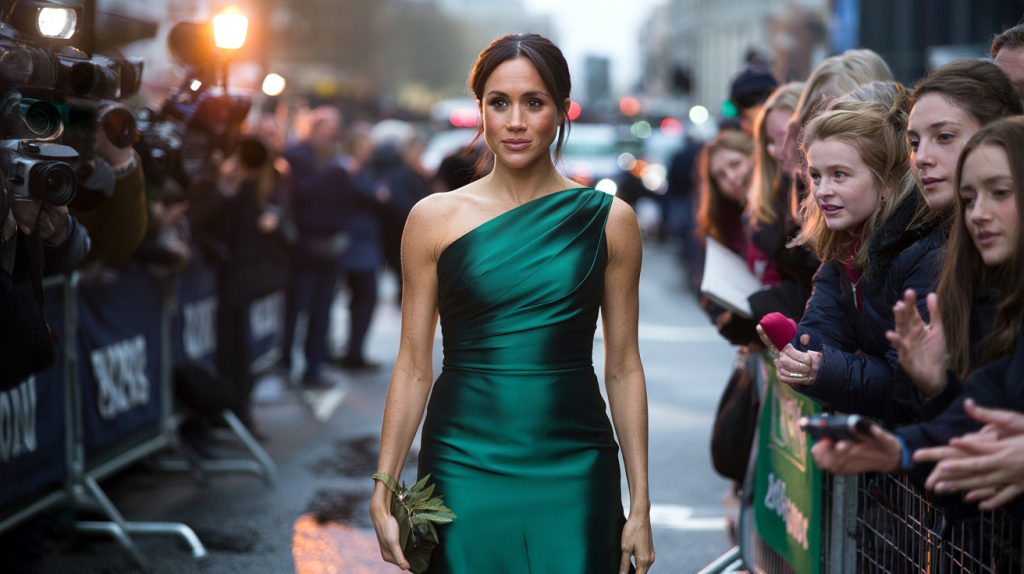
Meghan Markle’s latest appearance in a sleek dress priced around €1,700 reignited a familiar storm. Price tags on royal adjacent wardrobes always spark strong reactions, but this one hit a sensitive nerve again : optics, timing, and the public mood collide.
The flashpoint is simple. A high-end look worn in the spotlight meets a climate of economic anxiety and scrutiny. Royal fashion has long been audited in the court of public opinion, and the figure €1,700 is enough to set the tone for a wider argument about spending, image, and responsibility.
Why Meghan Markle’s €1,700 dress triggers controversy
The main friction is not the dress itself. It is what the number seems to say about priorities when households are watching every bill. In the United Kingdom, inflation peaked at 11.1 percent in October 2022 according to the Office for National Statistics. That spike left traces in wallets and in attitudes toward conspicuous luxury.
There is also the legacy of tracking royal wardrobes like balance sheets. Fashion watchdog site UFO No More estimated Meghan Markle’s clothing total in 2018 at roughly £406,662, then around £211,693 in 2019. Those public tallies shaped expectations and drove a narrative that resurfaces any time a price tag crosses into four figures.
One more layer matters. Visibility sells. When a public figure wears a specific brand, demand can jump. That dynamic, nicknamed the Meghan effect, turns a dress into a commercial signal. For supporters it boosts British and international labels. For critics it feels like a runway moment during a cost-of-living squeeze.
Numbers that frame the debate : prices, inflation, and royal wardrobes
Context helps. The median annual pay for full-time employees in the UK reached about £34,963 in 2023 per ONS data. For many readers, a single occasion dress approaching two months of take-home feels out of sync with daily realities.
Environmental concerns sit close by. The United Nations Environment Programme has reported that fashion accounts for between 8 and 10 percent of global carbon emissions and around 20 percent of global wastewater. Pricey outfits can be responsibly made or endlessly reworn, yet the headline number often overshadows sustainability credentials or rewear rates.
There is precedent for using fashion for public good. In September 2019, Meghan Markle partnered with Smart Works on a limited capsule collection where every item purchased funded one donated to the charity. That one-for-one mechanism turned shopping into direct support for job-seeking women, a reminder that wardrobe stories can serve purpose too.
Common mistakes when judging a royal outfit price
Emotions run high in minutes. That is where misreads creep in. Here is what often gets missed when a €1,700 figure trends :
- Who paid : personal purchase, brand loan, or archival piece changes the equation entirely.
- Price per wear : a dress worn five or six times cuts the effective cost dramatically.
- Tailoring and repeats : subtle alterations can disguise a rewear and reduce waste.
- Sourcing : ethical supply chains and durable fabrics can justify a higher ticket.
- Occasion standard : state-level or black-tie events carry stricter dress codes.
- Charity link : partnerships like Smart Works shift the impact beyond the photo.
Beyond the price tag : optics, transparency, and what would calm the storm
The pattern is predictable. A high figure lands, the economy feels tight, and a culture-wide conversation explodes about privilege and example setting. The outrage is less about a single dress and more about trust and alignment with public sentiment.
Two elements tend to defuse the tension. Clearer disclosure about whether a look is paid for privately or loaned, and a visible commitment to rewearing garments across years. Royals have done this with success. When a marquee outfit returns on a second or third outing, criticism softens and attention shifts to longevity rather than sticker shock.
One practical step is framing looks around purpose. Spotlighting local makers, ethical ateliers, or charity-linked capsules connects style to impact. That approach does not erase the number on a tag. It shows intent. In a season where travell costs more and patience is thin, that signal can make the difference between a headline that flares for a day and a story that actually lands well.
Meta description : Meghan Markle’s €1,700 dress sparked debate again. We unpack the real reasons why the price tag hits a nerve, with sourced figures and context.