
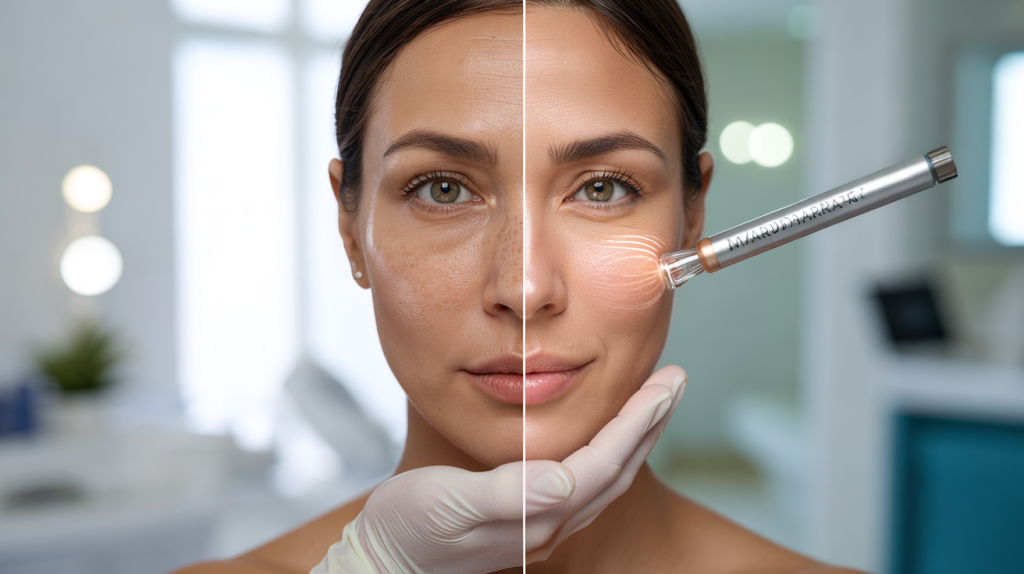
See microdermabrasion avant après results : what changes after 1 visit, how many sessions deliver, costs, downtime, and dermatologist-backed care tips.
Typing “microdermabrasion avant après” means chasing proof. The short answer : one session often gives a quick glow and smoother makeup, while a series refines texture and tone more clearly. The American Academy of Dermatology notes that visible improvement typically builds across several appointments and the skin usually looks pink for a day at most, not days off work. That is why before-and-after photos look modest at first, then more convincing later.
Timelines and numbers help set expectations. A single facial session lasts about 30 to 40 minutes according to Cleveland Clinic, and noticeable change often needs multiple visits spaced 1 to 2 weeks apart. The AAD estimates many people require a series of 5 to 16 treatments for best results. Cost adds up too : the American Society of Plastic Surgeons listed a 2020 average physician fee of 167 dollars per session in the United States. Great for dullness, uneven texture, superficial spots. Not a fix for deep acne scars or etched wrinkles.
Microdermabrasion avant après : what really changes after 1 vs 6 sessions
Right after the first pass, skin tends to feel softer. Light bounces off more evenly, so the face looks brighter. Foundation sits better. Pores appear less noticeable because surface debris and dead cells are gone. That is the classic day-one “after”.
Across sessions, results stack. Texture smooths more consistently, mild discoloration softens, and fine lines around the mouth or eyes may look less harsh. The AAD explains results are gradual and maintenance matters, often with regular sessions to sustain that polished look. Deep scars or pronounced wrinkles typically need something stronger like microneedling, chemical peels, or laser resurfacing guided by a dermatologist.
Prep and aftercare mistakes that blunt results
Small habits can flatten the glow. Skipping sunscreen, exfoliating too hard right after treatment, or using strong actives too soon creates irritation and stalls progress. A simple rutine works better than a complicated one.
- Before : pause retinoids and other exfoliants 24 to 48 hours, skip waxing, and come with clean skin.
- Right after : keep it gentle for 24 to 48 hours – hydrating cleanser, moisturizer, no scrubs or acids.
- Sun care : use SPF 30 or higher daily. The Skin Cancer Foundation notes SPF 30 filters about 97 % of UVB rays.
- Timing : plan sessions 1 to 2 weeks apart so the barrier recovers and gains stack.
- Lifestyle : hydrate, avoid hot yoga or steam the same day, and hold off retinoids until redness settles.
Dermatologist-backed facts : timing, safety, cost
The AAD describes microdermabrasion as safe for all skin tones with little downtime. Common short-lived effects include pinkness, mild swelling, and tightness for several hours to a day. Most return to routine immediately.
Procedure time stays short. Cleveland Clinic reports the face often takes 30 to 40 minutes, the neck around 20 minutes. For meaningful change, the AAD indicates many patients book a series – commonly 5 to 16 visits set every 1 to 2 weeks, then maintenance.
Budgeting matters. The American Society of Plastic Surgeons reported an average physician fee of 167 dollars per microdermabrasion session in 2020. That figure does not include facility or aftercare products, and prices vary by region and provider. Expect clinics to bundle series at a lower per-session rate.
Safety notes to flag : those with a history of keloids, active cold sores, or recent isotretinoin use should speak with a board-certified dermatologist first. The AAD advises waiting after isotretinoin before resurfacing procedures. Consistent sunscreen protects results and reduces post-inflammatory pigment shifts.
Who gets the biggest change and when a different treatment wins
The most striking “avant après” is seen in people with dullness, uneven texture, and superficial hyperpigmentation. If pores clog easily or makeup cakes by noon, microdermabrasion often resets things quickly. Oilier skin types appreciate the smoother canvas, while darker skin tones typically tolerate the treatment well when suction and passes stay conservative.
When concerns sit deeper – rolling acne scars, etched crow’s feet, melasma resistant to topicals – microdermabrasion alone underdelivers. That is where a dermatologist may pair it with targeted skincare or pivot entirely. Examples : microneedling for shallow scars, a series of chemical peels for pigment, or fractional laser for wrinkles. Even simple add ons like vitamin C in the morning and a retinoid at night – restarted once the skin calms – can amplify and sustain the visible “after”.
Bottom line on timing : expect a glow the same day, a cleaner canvas after one week, and more convincing texture changes after a short series. To personalize the plan, consult a board-certified dermatologist who can map sessions, home care, and the right upgrade if a stronger tool would deliver your version of before-and-after faster.
Sources : American Academy of Dermatology – Microdermabrasion ; Cleveland Clinic – Microdermabrasion ; American Society of Plastic Surgeons – Cost ; Skin Cancer Foundation – Sunscreen